FREE WHITE PAPER

Heading

Date
This is some text inside of a div block.
FREE WHITE PAPER

Heading 1

Heading 2

Heading 3

Heading 4

Heading 5
Heading 6

Lorem ipsum dolor sit amet, consectetur adipiscing elit, sed do eiusmod tempor incididunt ut labore et dolore magna aliqua. Ut enim ad minim veniam, quis nostrud exercitation ullamco laboris nisi ut aliquip ex ea commodo consequat. Duis aute irure dolor in reprehenderit in voluptate velit esse cillum dolore eu fugiat nulla pariatur.

Block quote

Ordered list

  1. Item 1
  2. Item 2
  3. Item 3

Unordered list

  • Item A
  • Item B
  • Item C

Text link

Bold text

Emphasis

Superscript

Subscript

Heading 1

Heading 2

Heading 3

Heading 4

Heading 5
Heading 6

Lorem ipsum dolor sit amet, consectetur adipiscing elit, sed do eiusmod tempor incididunt ut labore et dolore magna aliqua. Ut enim ad minim veniam, quis nostrud exercitation ullamco laboris nisi ut aliquip ex ea commodo consequat. Duis aute irure dolor in reprehenderit in voluptate velit esse cillum dolore eu fugiat nulla pariatur.

Block quote

Ordered list

  1. Item 1
  2. Item 2
  3. Item 3

Unordered list

  • Item A
  • Item B
  • Item C

Text link

Bold text

Emphasis

Superscript

Subscript

Download Resource
Thank you! Your submission has been received!
Oops! Something went wrong while submitting the form.

A deep dive into DMLS 3D printing with industrial CT

Edited by
Date
August 1, 2022
Introduction to DMLS

DMLS, or direct metal laser sintering, is a 3D printing process that builds metal parts by melting metal powder with a laser. It's similar to selective laser sintering, a polymer 3D printing process. DMLS printers allow engineers to create parts with complex geometries that would be difficult to cast or machine, but designing for DMLS is tricky, and these machines can introduce critical flaws that lead to part failure.

Industrial X-ray CT scanners are ideally suited to 3D printing workflows; they can quickly inspect both internal and external features and validate designs for production. Here we check for some common DMLS issues with a Lumafield Neptune CT scanner.

Explore this scan in Voyager by creating a free account.
Trapped powder

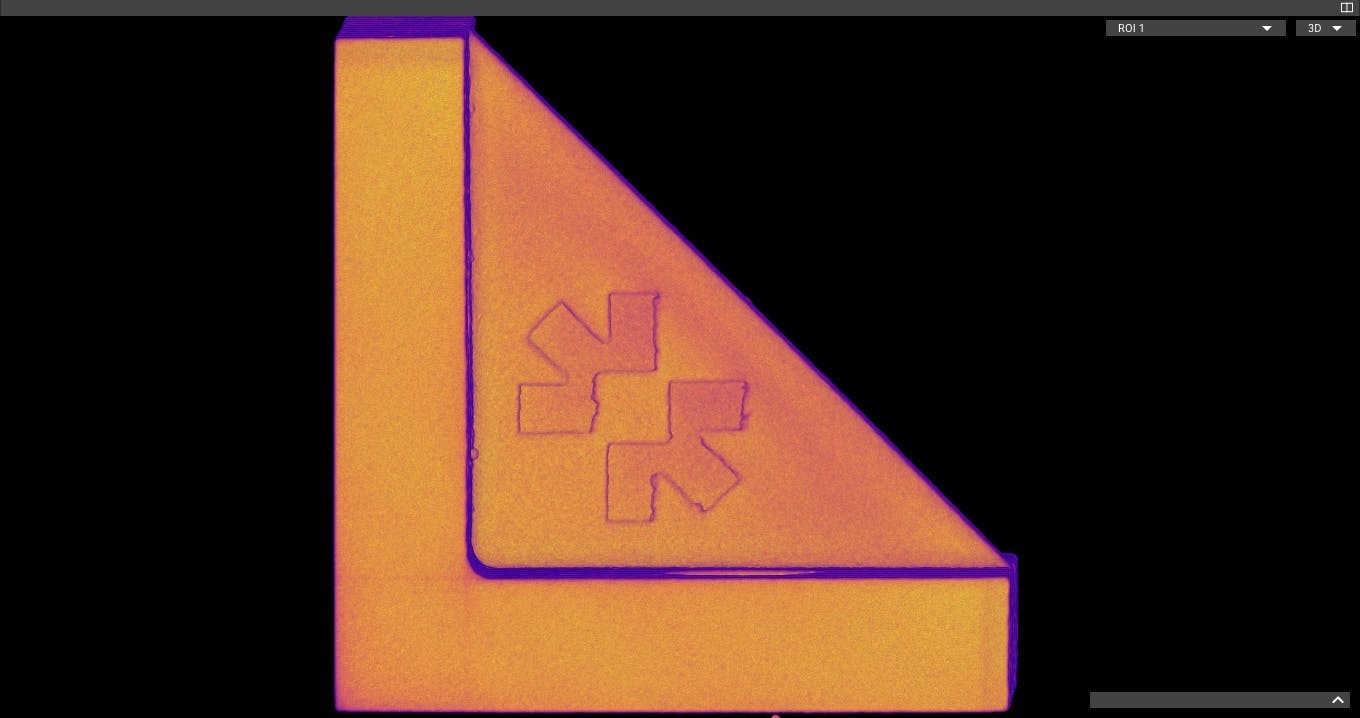
Powder-bed 3D printing processes like DMLS and SLS require post-processing to remove unfused powder from printed parts. In many cases, this post-processing requires painstaking manual work, and an invisible pocket of trapped powder could make a part unsuitable for its intended application.

Here, we notice a small amount of leftover powder that was not cleared during post-processing. In a production environment, this part might be returned for additional processing to remove the remaining powder, then re-scanned to ensure quality.

Dimensional accuracy

Thermal 3D printing processes can introduce warping and other problems with dimensional accuracy, especially on fine internal features that can't be inspected visually. In this case, our internal channel varies from its 1mm nominal diameter by as much as 13%.

Pores and voids

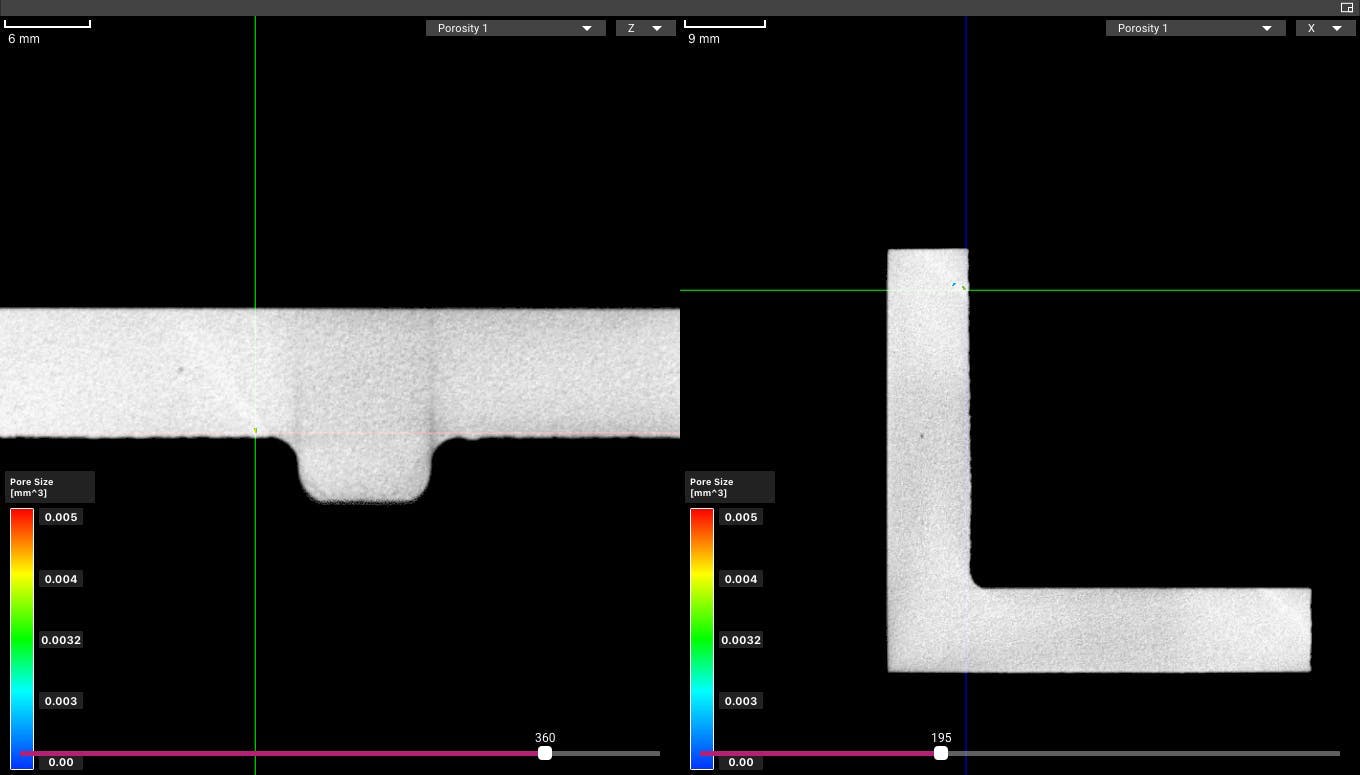
Like casting and molding, thermal 3D printing processes can leave invisible pores and voids inside parts, increasing the probability of mechanical failure. Our CT scan confirms that this part is largely solid, but these 2D slices show a pore in the upper half of the bracket, close to where the channel starts.

Other Articles in the Series
  • Main page: Inspect 3D printed parts with industrial CT
  • Fused Deposition Modeling (FDM)
  • Selective Laser Sintering (SLS)
  • Stereolithography (SLA)
  • Multi Jet Fusion (MJF)
Resource
Article

A deep dive into DMLS 3D printing with industrial CT

August 1, 2022
Resource

A deep dive into DMLS 3D printing with industrial CT

Introduction to DMLS

DMLS, or direct metal laser sintering, is a 3D printing process that builds metal parts by melting metal powder with a laser. It's similar to selective laser sintering, a polymer 3D printing process. DMLS printers allow engineers to create parts with complex geometries that would be difficult to cast or machine, but designing for DMLS is tricky, and these machines can introduce critical flaws that lead to part failure.

Industrial X-ray CT scanners are ideally suited to 3D printing workflows; they can quickly inspect both internal and external features and validate designs for production. Here we check for some common DMLS issues with a Lumafield Neptune CT scanner.

Explore this scan in Voyager by creating a free account.
Trapped powder

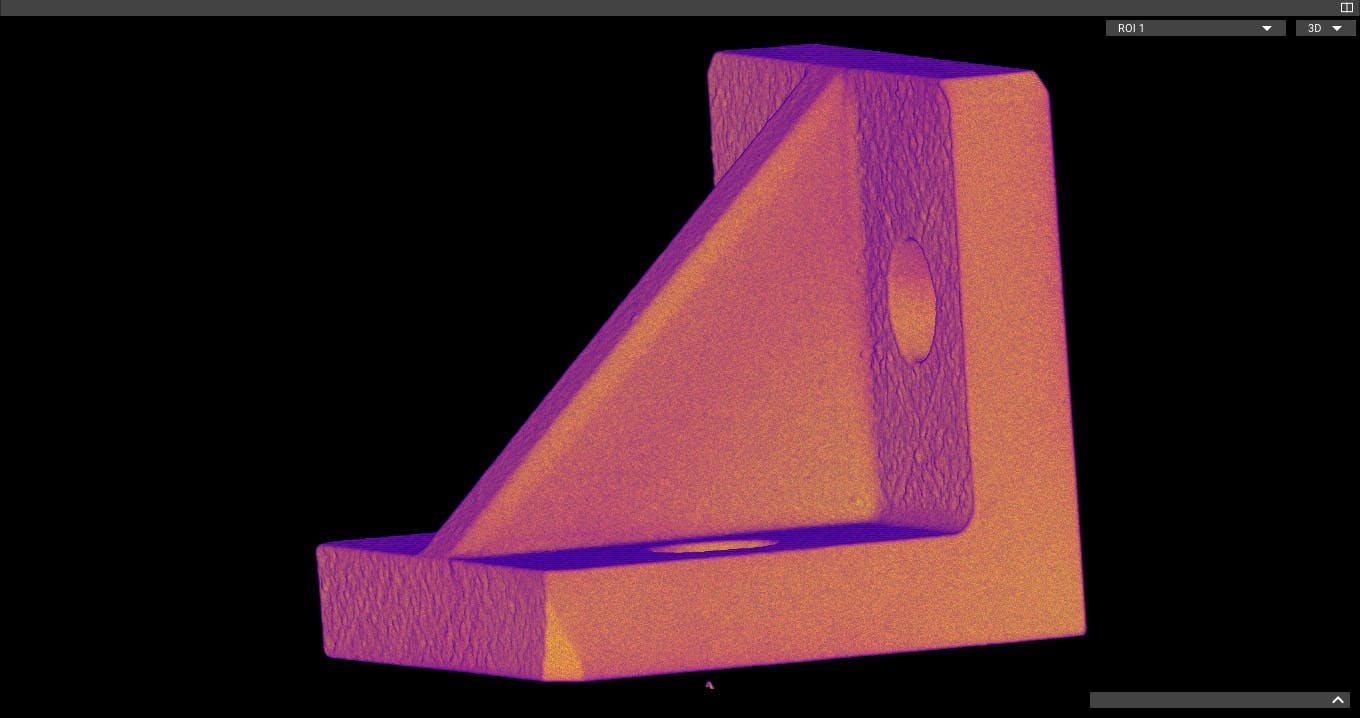
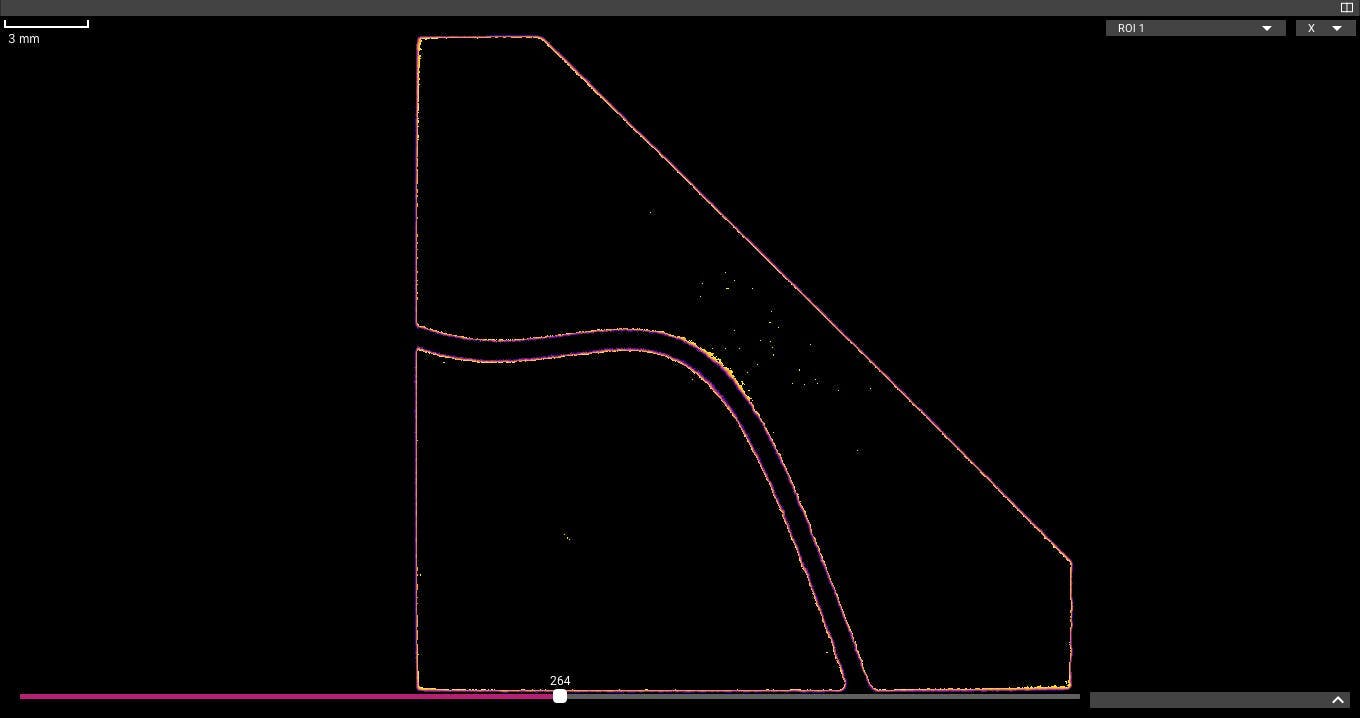
Powder-bed 3D printing processes like DMLS and SLS require post-processing to remove unfused powder from printed parts. In many cases, this post-processing requires painstaking manual work, and an invisible pocket of trapped powder could make a part unsuitable for its intended application.

Here, we notice a small amount of leftover powder that was not cleared during post-processing. In a production environment, this part might be returned for additional processing to remove the remaining powder, then re-scanned to ensure quality.
Dimensional accuracy

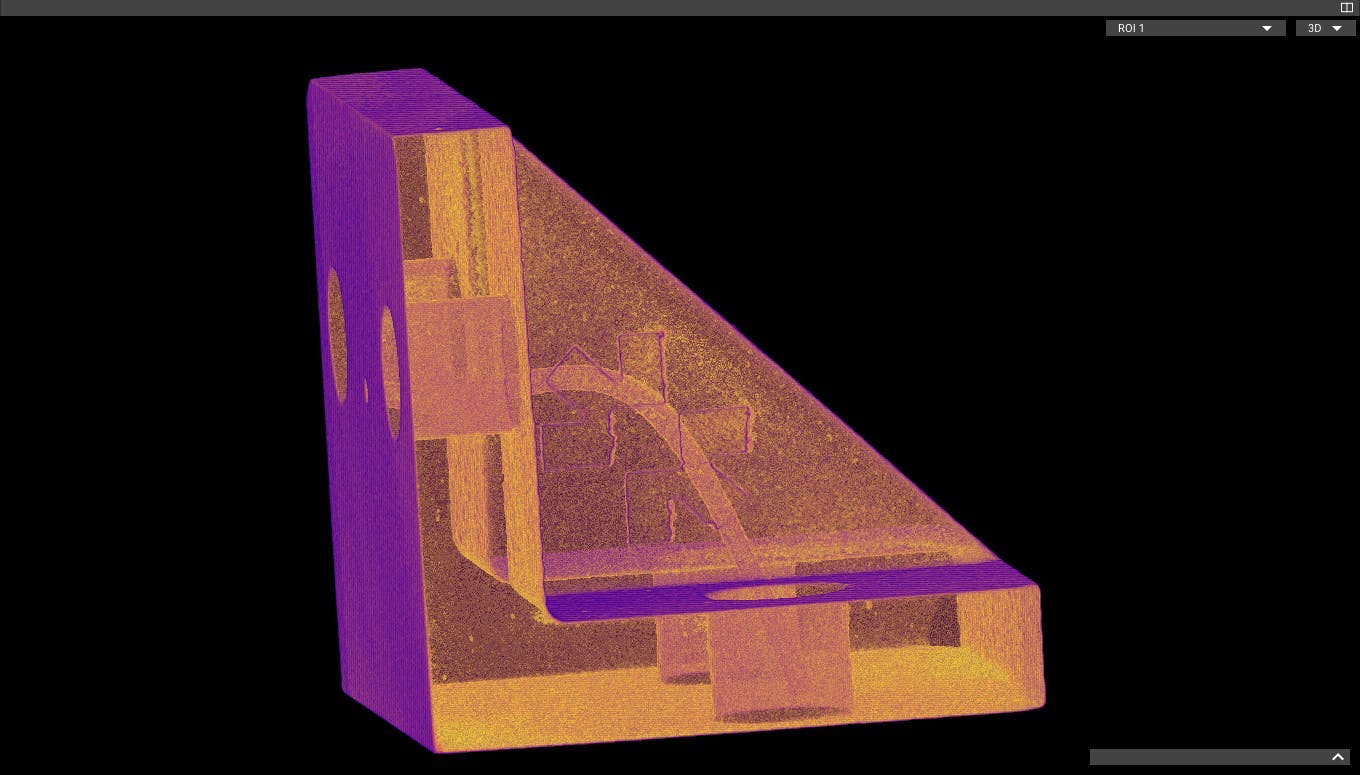
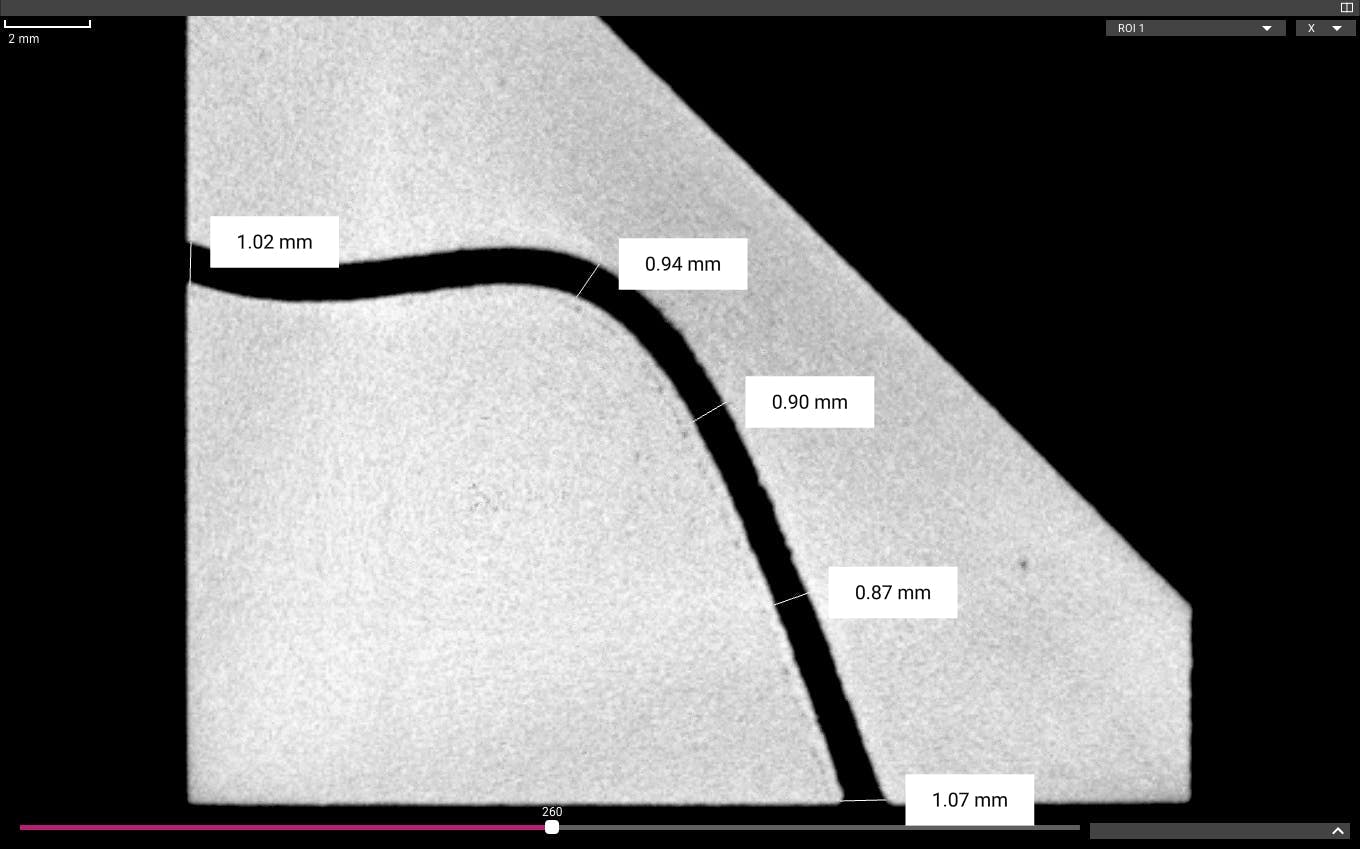
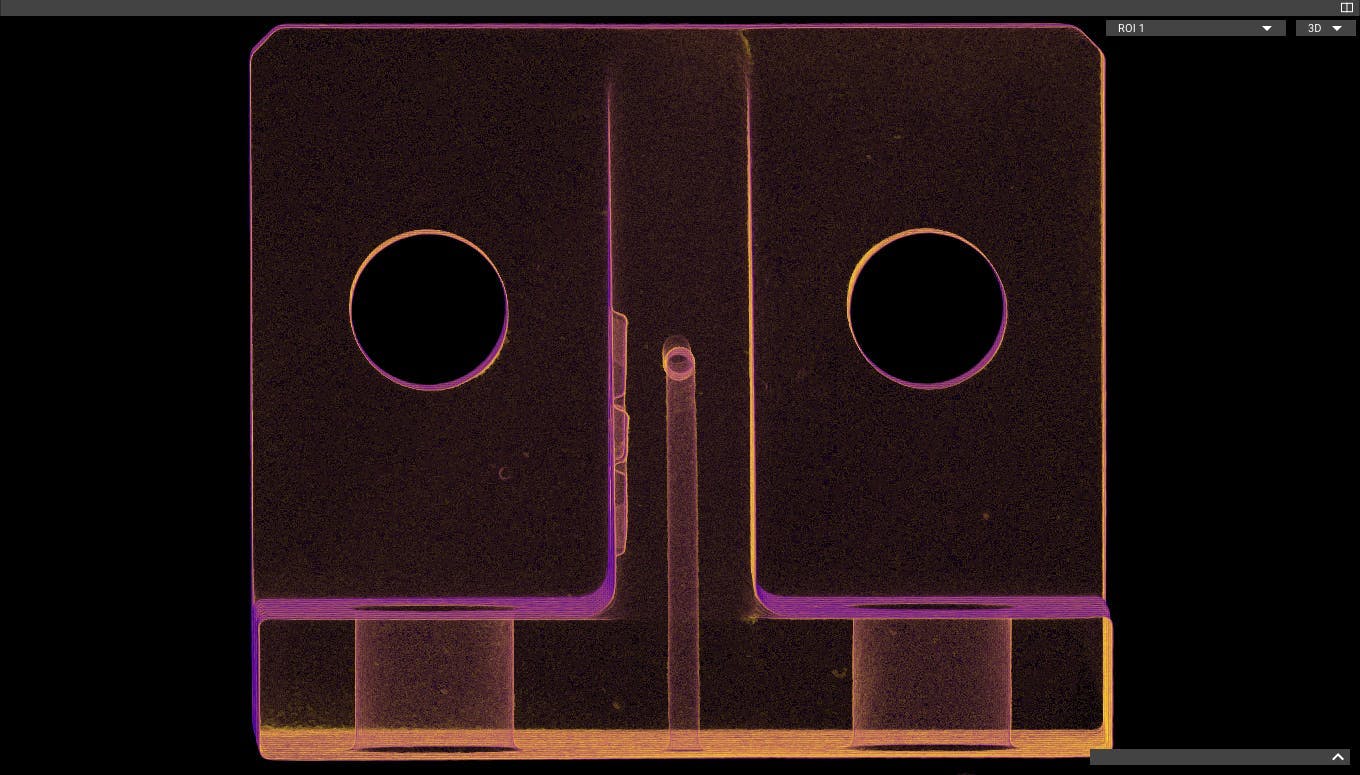
Thermal 3D printing processes can introduce warping and other problems with dimensional accuracy, especially on fine internal features that can't be inspected visually. In this case, our internal channel varies from its 1mm nominal diameter by as much as 13%.
Pores and voids

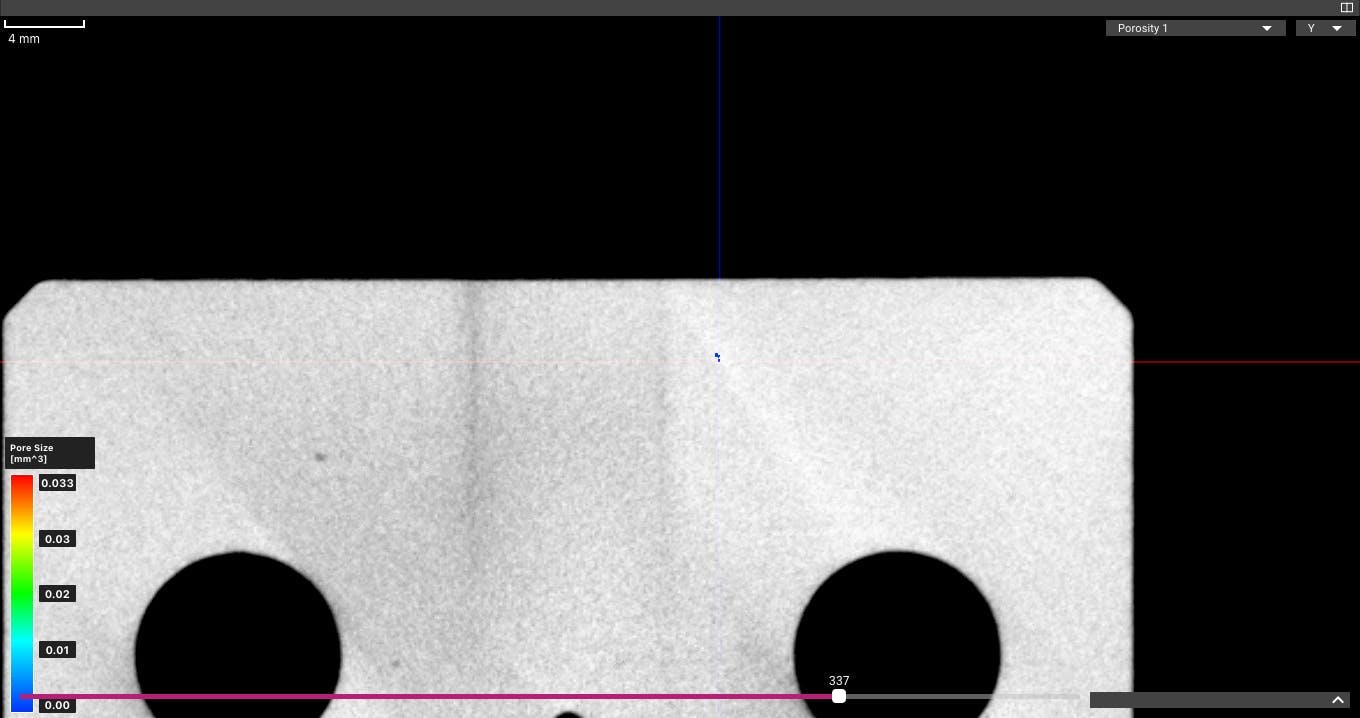
Like casting and molding, thermal 3D printing processes can leave invisible pores and voids inside parts, increasing the probability of mechanical failure. Our CT scan confirms that this part is largely solid, but these 2D slices show a pore in the upper half of the bracket, close to where the channel starts.
Other Articles in the Series
  • Main page: Inspect 3D printed parts with industrial CT
  • Fused Deposition Modeling (FDM)
  • Selective Laser Sintering (SLS)
  • Stereolithography (SLA)
  • Multi Jet Fusion (MJF)
Voyager Inspection Workflows
Introduction to Voyager
Introduction to Neptune
Introduction to Industrial CT
Introducing Mars for 100% Production Inspection
Advancing Automotive Inspection: Industrial CT for Better Outcomes
Introducing Neptune Performance and Triton Performance
Manufacturers Know Quality Costs Money. Most Don't Know How Much.
The Real Cost of a Product Recall and How to Prevent One
What Industrial CT Scanning Does for Manufacturing Quality
Explore more posts
Direkt zum Hauptinhalt
Mars: In-line arrayed X-ray system >
Platform
Branchen
Alle Branchen
Aerospace and Defense
Agriculture and Food
Athletic Equipment
Automotive
Batteries
Consumer Packaged Goods
Electronics
Medical Devices
Applications
Ressourcen
Whitepapers
Ressourcen
Webinare
Blog
Insights from lumafield
Go/No-Go
Manufacturing podcast
First Article
Editorial Publication
Firma
Über
Karriere
Drücken
Events
Starten Sie Voyager
Vertrieb kontaktieren
Speisekarte
ProdukteBranchen
Branchen
Alle Branchen
Medical Devices
Electronics
Consumer Packaged Goods
Automotive
Athletic Equipment
Batteries
Agriculture and Food
Aerospace and Defense
Applications
Ressourcen
Ressourcen
Whitepapers
101. OKTOBER
Webinars
Erster Artikel
Go/No-Go Podcast
First Article
Firma
Firma
Über
Karriere
Drücken
Events
Vertrieb kontaktieren
Starten Sie Voyager
© 2000 Lumafield. All Rights Reserved.
den Weg ändern
die Welt macht
alles
Branchen
Aerospace and Defense
Agriculture and Food
Athletic Equipment
Automotive
Batteries
Consumer Packaged Goods
Electronics
Medical Devices
Alle Branchen
Anwendungen
Assembly Verification
Competitive Benchmarking and Analysis
Defect Detection
Design Verification and Validation
Dimensional Measurement
Failure Analysis
First Article Inspection (FAI)
Material Characterization
Non-Destructive Testing (NDT)
Quality Assurance and Control (QA & QC)
Reverse Engineering
Supplier Qualification
All Applications
Produkte
NeptunTritonVoyagerMarsAtlas
Ressourcen
LernenErster ArtikelWhitepapersEreignisseWebinareUnterstützungFallstudien101. OKTOBERBlog der Ingenieure
Firma
EinloggenÜberKarriereDrückenBlogKontakt

Melde dich für unseren Newsletter an

info@lumafield.com
DatenschutzInformationssicherheitVereinbarung über Bereitstellungsdienste
© 2000 Lumafield. All Rights Reserved.