FREE WHITE PAPER

Heading

Date
This is some text inside of a div block.
FREE WHITE PAPER

Heading 1

Heading 2

Heading 3

Heading 4

Heading 5
Heading 6

Lorem ipsum dolor sit amet, consectetur adipiscing elit, sed do eiusmod tempor incididunt ut labore et dolore magna aliqua. Ut enim ad minim veniam, quis nostrud exercitation ullamco laboris nisi ut aliquip ex ea commodo consequat. Duis aute irure dolor in reprehenderit in voluptate velit esse cillum dolore eu fugiat nulla pariatur.

Block quote

Ordered list

  1. Item 1
  2. Item 2
  3. Item 3

Unordered list

  • Item A
  • Item B
  • Item C

Text link

Bold text

Emphasis

Superscript

Subscript

Heading 1

Heading 2

Heading 3

Heading 4

Heading 5
Heading 6

Lorem ipsum dolor sit amet, consectetur adipiscing elit, sed do eiusmod tempor incididunt ut labore et dolore magna aliqua. Ut enim ad minim veniam, quis nostrud exercitation ullamco laboris nisi ut aliquip ex ea commodo consequat. Duis aute irure dolor in reprehenderit in voluptate velit esse cillum dolore eu fugiat nulla pariatur.

Block quote

Ordered list

  1. Item 1
  2. Item 2
  3. Item 3

Unordered list

  • Item A
  • Item B
  • Item C

Text link

Bold text

Emphasis

Superscript

Subscript

Download Resource
Thank you! Your submission has been received!
Oops! Something went wrong while submitting the form.

Men's vs. women's cartridge razors: CT scanning the Pink Tax

Edited by
Date
April 17, 2023

The razor industry serves a multi-billion-dollar market, with companies like Gillette consistently launching new products that deliver ever-closer shaves. Just after launching the first safety razor for men more than 100 years ago, Gillette introduced the Milady Decolletée in 1915, the first safety razor targeted toward women. The market has been segmented ever since, and the difference in price between men’s and women’s razors has recently drawn scrutiny, leading to discussions about the so-called “pink tax.” The pink tax refers to the phenomenon where products specifically marketed towards women tend to cost more than their male counterparts, even if they’re virtually the same.

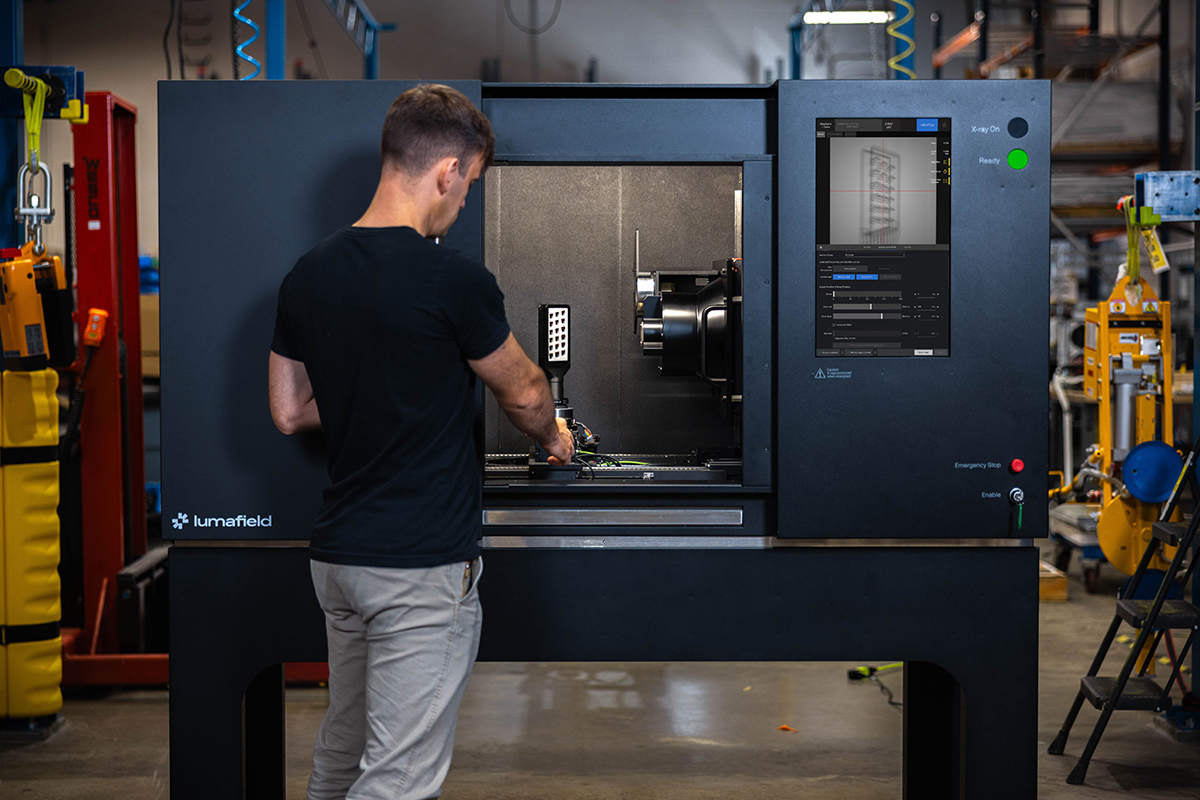
To get to the bottom of this, we turned to our Neptune industrial CT scanner to examine the internal and external design features of two popular contemporary cartridge razors: the Gillette Venus Platinum Extra Smooth Razor for Women and the Gillette Fusion5 Razor for Men.

Body vs. Facial Razors: Key Distinctions

Women’s razors may more accurately be described as body razors, designed for any hair type on the body. Unlike facial razors, which are engineered to cut shorter, coarser hair (beard hair has the tensile strength of copper wire!), body razors are better equipped to remove longer, finer hair in extended strokes.

The first noticeable difference between the Venus and the Fusion Razors is their design and aesthetics. The Venus razor features a curvier handle, which is said to be ergonomically designed for a better grip and improved control during shaving. The handle also has a sleek metallic finish and pastel color scheme.

On the other hand, the Fusion has a busier appearance, with a flatter handle, bolder colors, and a matte finish. The handle design is also ergonomic but seems to cater more to a grip that needs to apply greater pressure.

Blade Technology

The Venus and most women’s razors have rounded oval edges to avoid nicking sensitive areas, while the Fusion and other men’s razors tend to have smaller, boxy heads. The Venus has five thin, closely-spaced blades designed to provide a close shave while minimizing irritation. This model incorporates a “ribbon of moisture” surrounding the blades, which helps to provide a smooth glide and reduce the risk of cuts.

The Fusion Razor also features five blades, which are said to be slightly farther apart, allowing for better rinsing and preventing clogging. Using Voyager's dimensioning tools, we measured our CT scans of one sample cartridge of each razor and found the blades to be 1.05 mm apart on average. We saw no significant difference between the blade spacing on the Venus and Fusion. One functional difference is the precision trimmer on the back of the Fusion cartridge (visible above the row of blades), designed for trimming sideburns, under the nose, and other hard-to-reach areas. The Venus razor lacks this feature.

CT Scan Analysis

Using the Lumafield Neptune industrial CT scanner, we were able to take a detailed look at the internal components of both razors. The CT scans revealed that the internal structures of the two razors were mostly similar, with minor differences in the positioning of the blades and the design of the cartridge attachment mechanism.

The cartridge attachment mechanism in the Venus razor seems to be more flexible than the one in the Fusion, which could be an attempt to adapt to the contours of full-body shaving and may provide a more comfortable shaving experience.

The Pink Tax

According to a 2015 report by the New York City Department of Consumer Affairs, women pay an average of 13% more than men for equivalent personal-care products. A 2018 study by the US Government Accountability Office also found that women’s razors and replacement cartridges are often, but not always, more expensive than those marketed toward men.

A representative from Gillette explained that variations in pricing between men’s and women’s razors are due to “differences in technology, materials, manufacturing, and promotional factors.” Comparing models, it’s clear that women’s razors often include more-robust lubricating strips and have larger cartridges and wider handles than men’s razors. Although we can’t say how much, if any, of the so-called pink tax is justified by material differences, we can tell you that there is a real difference between facial and body razors.

For a deeper dive into other hair removal technologies including an electric shaver, an epilator, and a bottle of shave gel, see the March 2023 Scan of the Month.

Article
Article

Men's vs. women's cartridge razors: CT scanning the Pink Tax

April 17, 2023
Article

Men's vs. women's cartridge razors: CT scanning the Pink Tax

The razor industry serves a multi-billion-dollar market, with companies like Gillette consistently launching new products that deliver ever-closer shaves. Just after launching the first safety razor for men more than 100 years ago, Gillette introduced the Milady Decolletée in 1915, the first safety razor targeted toward women. The market has been segmented ever since, and the difference in price between men’s and women’s razors has recently drawn scrutiny, leading to discussions about the so-called “pink tax.” The pink tax refers to the phenomenon where products specifically marketed towards women tend to cost more than their male counterparts, even if they’re virtually the same.

To get to the bottom of this, we turned to our Neptune industrial CT scanner to examine the internal and external design features of two popular contemporary cartridge razors: the Gillette Venus Platinum Extra Smooth Razor for Women and the Gillette Fusion5 Razor for Men.

Body vs. Facial Razors: Key Distinctions

Women’s razors may more accurately be described as body razors, designed for any hair type on the body. Unlike facial razors, which are engineered to cut shorter, coarser hair (beard hair has the tensile strength of copper wire!), body razors are better equipped to remove longer, finer hair in extended strokes.

The first noticeable difference between the Venus and the Fusion Razors is their design and aesthetics. The Venus razor features a curvier handle, which is said to be ergonomically designed for a better grip and improved control during shaving. The handle also has a sleek metallic finish and pastel color scheme.

On the other hand, the Fusion has a busier appearance, with a flatter handle, bolder colors, and a matte finish. The handle design is also ergonomic but seems to cater more to a grip that needs to apply greater pressure.

Blade Technology

The Venus and most women’s razors have rounded oval edges to avoid nicking sensitive areas, while the Fusion and other men’s razors tend to have smaller, boxy heads. The Venus has five thin, closely-spaced blades designed to provide a close shave while minimizing irritation. This model incorporates a “ribbon of moisture” surrounding the blades, which helps to provide a smooth glide and reduce the risk of cuts.

The Fusion Razor also features five blades, which are said to be slightly farther apart, allowing for better rinsing and preventing clogging. Using Voyager's dimensioning tools, we measured our CT scans of one sample cartridge of each razor and found the blades to be 1.05 mm apart on average. We saw no significant difference between the blade spacing on the Venus and Fusion. One functional difference is the precision trimmer on the back of the Fusion cartridge (visible above the row of blades), designed for trimming sideburns, under the nose, and other hard-to-reach areas. The Venus razor lacks this feature.

CT Scan Analysis

Using the Lumafield Neptune industrial CT scanner, we were able to take a detailed look at the internal components of both razors. The CT scans revealed that the internal structures of the two razors were mostly similar, with minor differences in the positioning of the blades and the design of the cartridge attachment mechanism.

The cartridge attachment mechanism in the Venus razor seems to be more flexible than the one in the Fusion, which could be an attempt to adapt to the contours of full-body shaving and may provide a more comfortable shaving experience.

The Pink Tax

According to a 2015 report by the New York City Department of Consumer Affairs, women pay an average of 13% more than men for equivalent personal-care products. A 2018 study by the US Government Accountability Office also found that women’s razors and replacement cartridges are often, but not always, more expensive than those marketed toward men.

A representative from Gillette explained that variations in pricing between men’s and women’s razors are due to “differences in technology, materials, manufacturing, and promotional factors.” Comparing models, it’s clear that women’s razors often include more-robust lubricating strips and have larger cartridges and wider handles than men’s razors. Although we can’t say how much, if any, of the so-called pink tax is justified by material differences, we can tell you that there is a real difference between facial and body razors.

For a deeper dive into other hair removal technologies including an electric shaver, an epilator, and a bottle of shave gel, see the March 2023 Scan of the Month.

Voyager Inspection Workflows
Introduction to Voyager
Introduction to Neptune
Introduction to Industrial CT
Introducing Mars for 100% Production Inspection
Advancing Automotive Inspection: Industrial CT for Better Outcomes
Introducing Neptune Performance and Triton Performance
Manufacturers Know Quality Costs Money. Most Don't Know How Much.
The Real Cost of a Product Recall and How to Prevent One
What Industrial CT Scanning Does for Manufacturing Quality
Explore more posts
Direkt zum Hauptinhalt
Mars: In-line arrayed X-ray system >
Platform
Branchen
Alle Branchen
Aerospace and Defense
Agriculture and Food
Athletic Equipment
Automotive
Batteries
Consumer Packaged Goods
Electronics
Medical Devices
Applications
Ressourcen
Whitepapers
Ressourcen
Webinare
Blog
Insights from lumafield
Go/No-Go
Manufacturing podcast
First Article
Editorial Publication
Firma
Über
Karriere
Drücken
Events
Starten Sie Voyager
Vertrieb kontaktieren
Speisekarte
ProdukteBranchen
Branchen
Alle Branchen
Medical Devices
Electronics
Consumer Packaged Goods
Automotive
Athletic Equipment
Batteries
Agriculture and Food
Aerospace and Defense
Applications
Ressourcen
Ressourcen
Whitepapers
101. OKTOBER
Webinars
Erster Artikel
Go/No-Go Podcast
First Article
Firma
Firma
Über
Karriere
Drücken
Events
Vertrieb kontaktieren
Starten Sie Voyager
© 2000 Lumafield. All Rights Reserved.
den Weg ändern
die Welt macht
alles
Branchen
Aerospace and Defense
Agriculture and Food
Athletic Equipment
Automotive
Batteries
Consumer Packaged Goods
Electronics
Medical Devices
Alle Branchen
Anwendungen
Assembly Verification
Competitive Benchmarking and Analysis
Defect Detection
Design Verification and Validation
Dimensional Measurement
Failure Analysis
First Article Inspection (FAI)
Material Characterization
Non-Destructive Testing (NDT)
Quality Assurance and Control (QA & QC)
Reverse Engineering
Supplier Qualification
All Applications
Produkte
NeptunTritonVoyagerMarsAtlas
Ressourcen
LernenErster ArtikelWhitepapersEreignisseWebinareUnterstützungFallstudien101. OKTOBERBlog der Ingenieure
Firma
EinloggenÜberKarriereDrückenBlogKontakt

Melde dich für unseren Newsletter an

info@lumafield.com
DatenschutzInformationssicherheitVereinbarung über Bereitstellungsdienste
© 2000 Lumafield. All Rights Reserved.