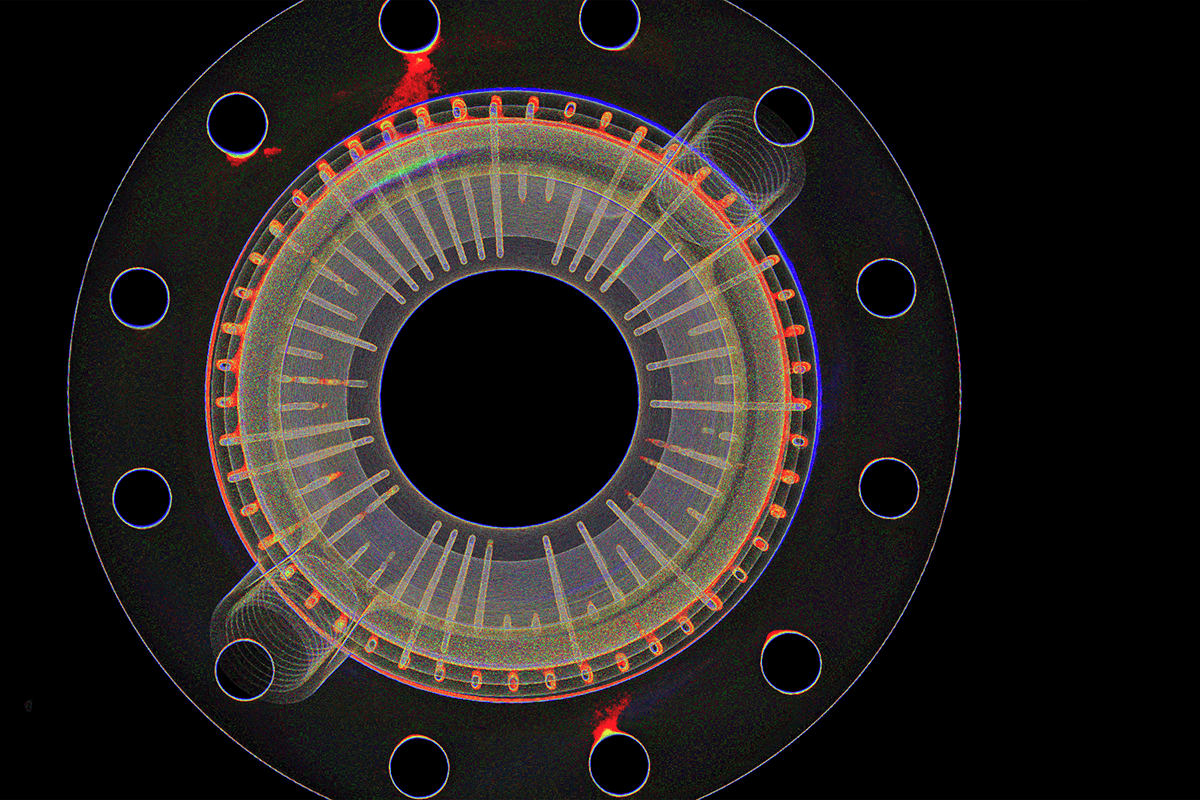
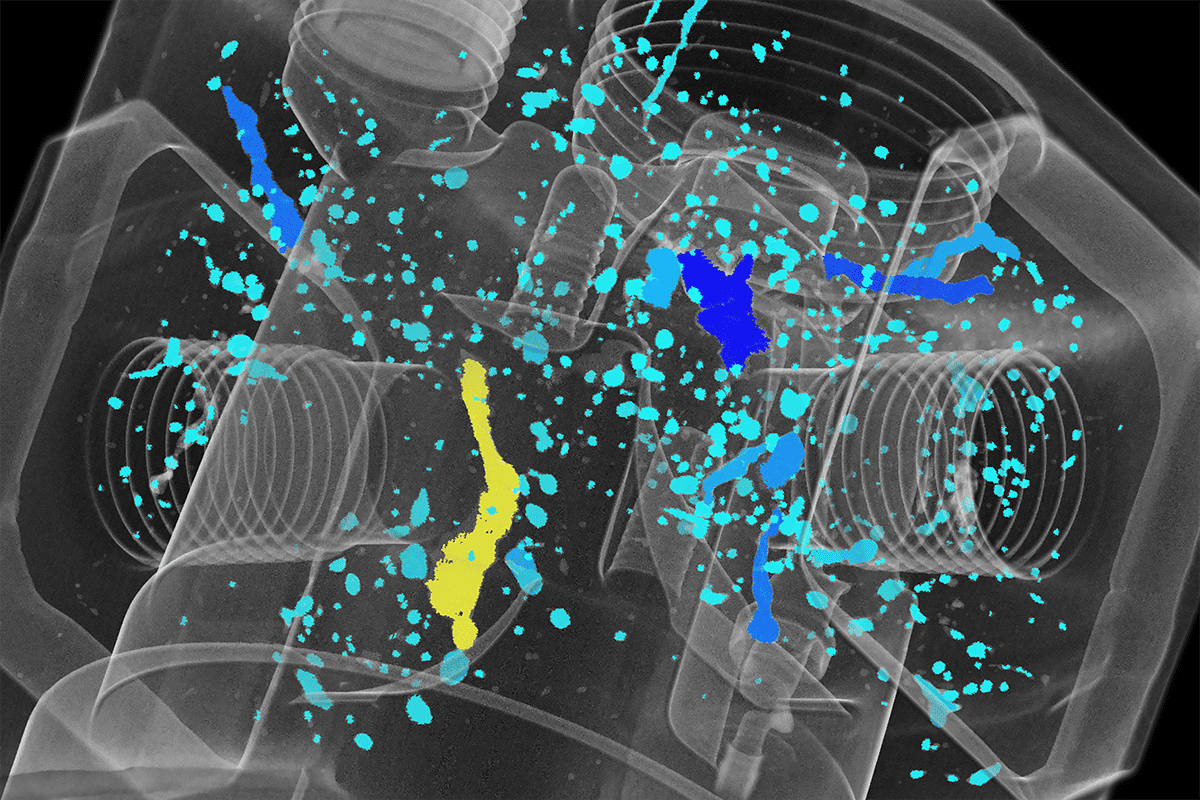
Lumafield scanned 20 fully assembled trocars, 10 Ethicon B12XT units and 10 generic units from an online marketplace, and measured the internal geometry that governs how a trocar reseals between instrument passes. Functional testing confirms a trocar opens, closes, and holds pressure. It cannot see the geometry that determines whether it keeps doing so.
The brief walks through what CT resolves inside a sealed trocar, and what the measurements reveal about the manufacturing process behind each device:
- Piercing cone concentricity measured in the assembled state, where the generic units ran a median 2.46% offset against Ethicon's 0.31%, nearly eight times worse, with every generic unit falling outside the entire Ethicon range
- Why an off-center cone applies asymmetric force on insertion and degrades the valve seat contact that maintains the CO2 working space a surgeon depends on
- Casing tube straightness, where every generic unit exceeded the worst deviation in the Ethicon population
- How outer diameter consistency looked comparable between the two until a single process excursion surfaced in one generic unit
- What unit-level measurement across every incoming shipment and production shift makes possible for a device portfolio at scale