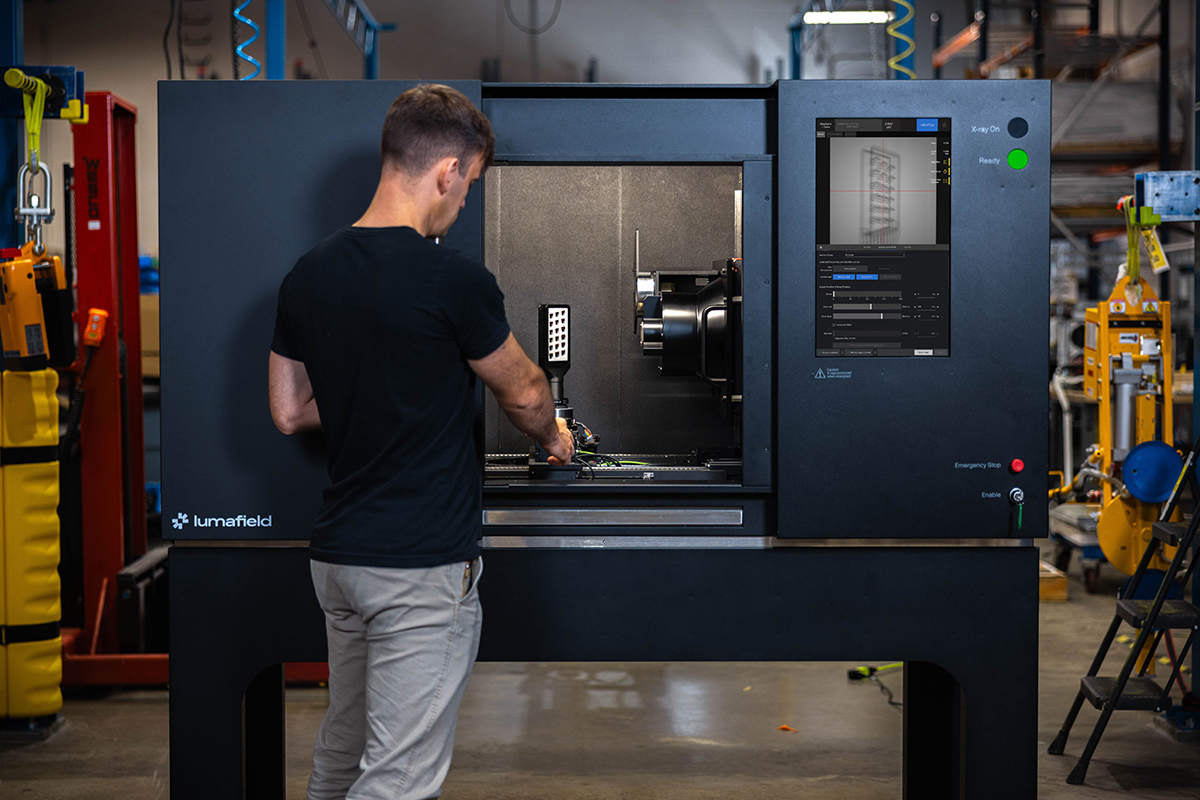
Introducing Neptune Performance and Triton Performance
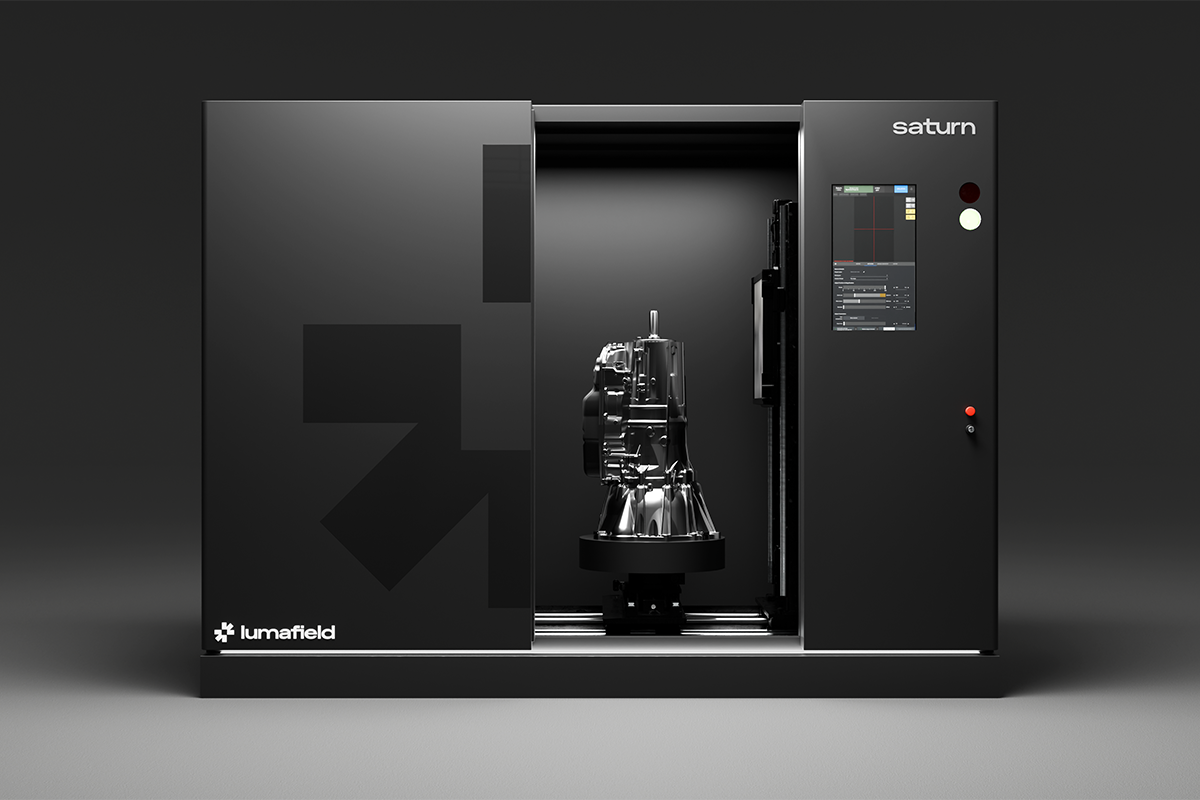
Lumafield has supported engineering and quality teams with accessible, practical CT scanning at every stage of the product lifecycle since Neptune was introduced in 2022 and Triton in 2025. Today, we are introducing a new performance tier of both. Neptune Performance and Triton Performance are upgraded CT scanning solutions designed to push the ceiling on what industrial X-ray CT inspection can do across organizations.
Neptune Performance
Lumafield's original Neptune scanner transformed the accessibility of X-ray CT inspection, making it possible to replace destructive sectioning and expensive outsourcing with capable in-house machines and software. As Neptune has been deployed globally and across industries, the opportunity for CT to support metrology applications that can be difficult or even impossible to capture with traditional CMM tools became clear.
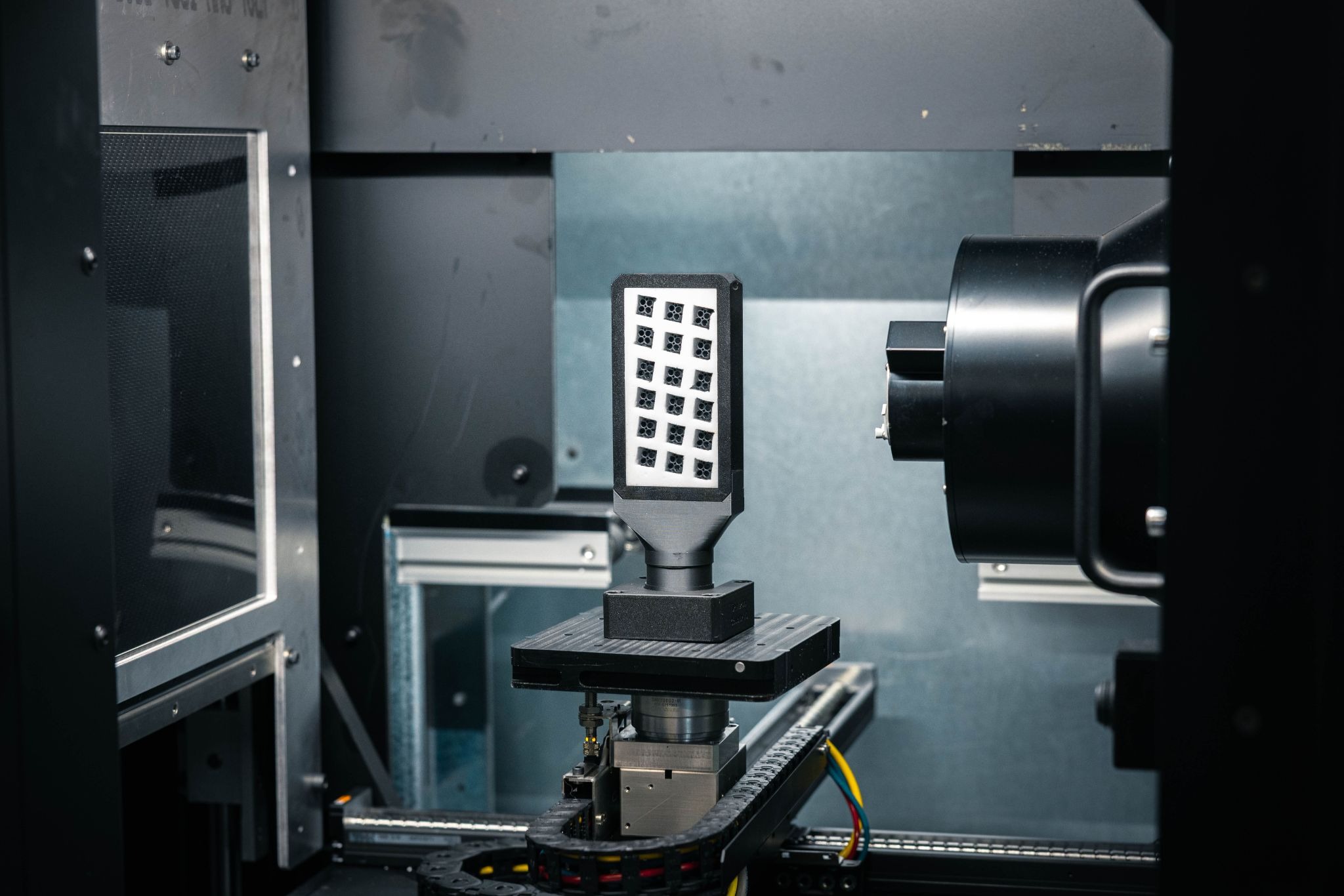
Neptune Performance is a transformative hardware redesign for dimensional work. A granite base in the scanner provides thermal stability and vibration damping. A precision gantry and rotary stage, alongside active thermal management ensure the consistency of scan geometry across an entire shift, regardless of operator. Fully actuated source and detector Z towers enable a 550mm source-to-detector distance that expands scan volume and ensures accuracy. Microfocus X-ray sources and a flat panel detector produce the data quality dimensional work demands.
The result is 12x faster scans and 4x the data quality compared to our standard Neptune. At ±(7 + L/20) µm, the metrology specification is precise enough for demanding tolerance work, and applicable to features that contact metrology simply cannot reach.
Hardware accuracy is only half the story. Voyager's Auto Dimensioning suite brings GD&T support with subvoxel precision, letting engineers measure internal features that no contact probe could reach, such as bore diameters, gap measurements across internal interfaces, and 3D profiles. Studies are templatized and reusable, so a measurement program built for first article inspection runs consistently on every subsequent lot.
"The image quality we saw on complex multi-material assemblies was beyond what we expected. Having that level of visibility completely changes how we think about QA." -Sam Farmer, Mechanical Engineer at BioFire
Triton Performance
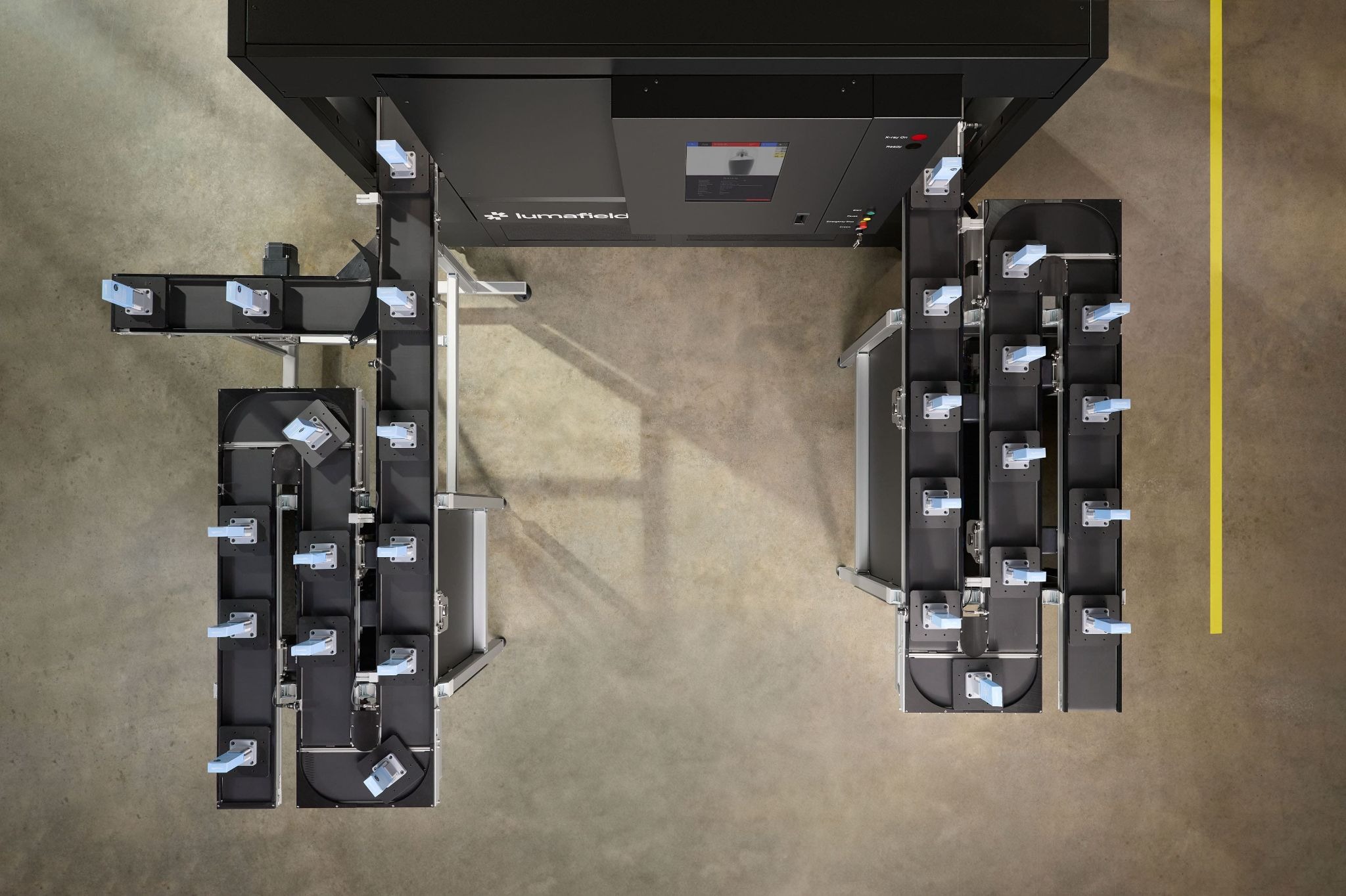
Manufacturing happens in real time, and quality inspection has to keep pace. Triton brought automated, non-destructive CT inspection to the factory floor for the first time, making it possible to scan parts at production scale and speed. From supporting larger batch sampling to enabling 100% inspection for critical assemblies, Triton allows organizations to catch internal defects before they escape and build a traceable inspection record without specialized staff or dedicated facilities.
Triton Performance builds on that foundation. New hardware improvements deliver full 3D CT insight in manufacturing environments where CT was previously too slow to be practical, providing complete volumetric CT reconstructions in as little as 10 seconds per part, with the ability to layer automated analysis and go/no-go decisions into every scan cycle.
Scaled volumetric CT reveals defects and characterizes process variation invisible to other inspection techniques.Automated analysis converts pass/fail decisions into measurements for real time RCA.
Part of a connected platform
Neptune Performance and Triton Performance empower organizations to drive quality improvements throughout the product lifecycle. Development requires dimensional precision and confidence in the design and manufacturability of a part. Production requires speed, throughput, and automations that keep pace with the line. Meeting both demands has historically meant different systems, different workflows, and disconnected records that had to be reconciled manually.
The Lumafield platform enables organizations to streamline their inspection systems. Neptune Performance and Triton Performance connect upwards into the same Voyager environment, enabling the knowledge generated at one stage of product development to carry over into the next. A measurement study built on Neptune Performance in the lab becomes the inspection template for Triton Performance on the factory floor. The tolerances that matter, the features most likely to drift, the failure modes engineers identified during development, and more travels with the product as it transitions into volume manufacturing, growing rather than restarting.
That accumulated knowledge becomes more valuable as organizations leverage industrial X-ray CT inspection across multiple sites. Inspection findings become measurements and trends that accumulate meaning over time, and Voyager consolidates everything into a single view of production quality across the entire organization. For businesses operating at scale, that kind of visibility is the difference between managing quality as a local problem and controlling it as an organizational capability.
Neptune Performance and Triton Performance systems are now available. Schedule a demo, or visit https://www.lumafield.com/platform to learn more.


%20header.jpg)