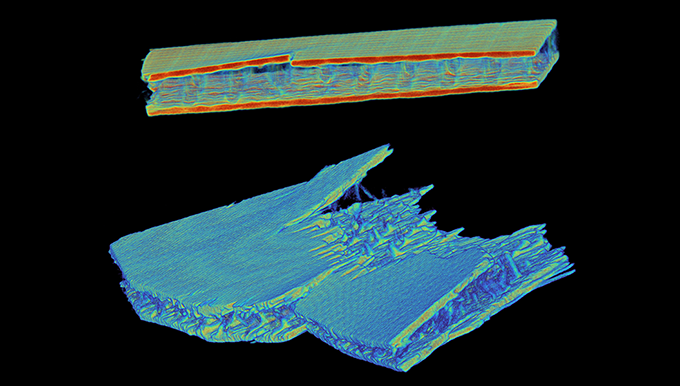
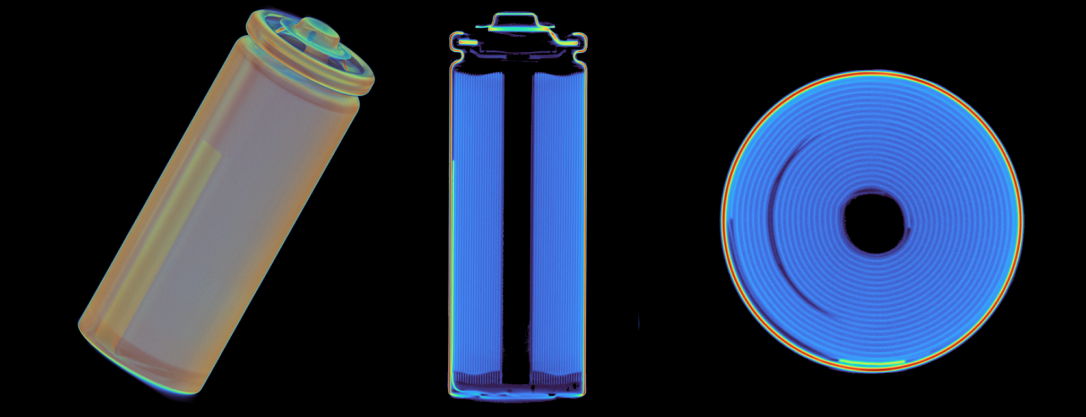
Neptune helped this footwear brand uncover the source of micro-punctures in developmental shoe soles.
Summary
- An iconic shoe brand enhanced quality and innovation across a number of product teams with Lumafield's Neptune CT scanner.
- Neptune helped the company’s running department uncover the source of micro-punctures in developmental shoe soles faster and without destructive waste.
- Collaboration with Lumafield's team led to a solution for pinpointing and characterizing these punctures using contrast agents.
- Lumafield's Expanded Scan Volume module unlocked CT analysis of larger shoe sizes, increasing the scanner's impact across the company.
Background
Our customer is an iconic brand best known for footwear and apparel products that have become synonymous with modern athletic performance and style. They are known globally for creating innovative footwear worn casually by millions and competitively on the track, court, and field by top athletes.
Their running department designs and builds many of the most technologically advanced products on the market. Engineers in the running department maximize the performance of their footwear with unique components ranging from large foam padding to metal plated soles and even large air pockets. With performance driving these advancements in footwear technology, engineers are constantly searching for new ways to test and evaluate products in development.
Solving Problems Big and Small
The company’s running department was not, however, the first team in the company to adopt Lumafield’s industrial CT technology. The team that originally brought the Neptune industrial CT scanner in-house allows any other company employee to reserve time with the system as part of their R&D or testing processes. Engineers from the running department quickly jumped at the opportunity to scan a component that had proven very challenging to analyze when defective.
We have a variety of running shoes with a cushioned pad in the sole, which is great for comfort but can be punctured by sharp objects like thorns during a run. Before Lumafield, we were submerging shoes in water and poking them with pressure gauges just to understand where these punctures had occurred.
— VP of R&D, Running
The running department’s access to Neptune shed new light on the locations of these small punctures. In most cases, analyzing scan data in Lumafield’s browser-based Voyager software allowed the engineers to pinpoint the location of the puncture and make design adjustments to strengthen weaker areas of the sole. They soon found, though, that some punctures were so small that they were incredibly difficult to identify in raw scan data.

The Lumafield team offered a unique solution to this challenge in the form of a contrast agent. Within a few days, Lumafield helped the engineers incorporate a contrast agent — typically a liquid or gas added to the scanned product to make internal components more easily identifiable — into the scanning process to more clearly highlight the minuscule holes.
The team at Lumafield acted fast and helped us find the most efficient solution when we weren’t quite sure how to scan for such small punctures. Improving our products has always been a team effort, and we’re grateful to have Lumafield on our team.
— VP of R&D, Running
Unlocking Neptune's Full Potential
It is typical for this company to use prototype shoes between men’s size 9 and 11 for a variety of quality, performance, and material-related tests. The problem: their existing Neptune was only capable of scanning footwear size 8 and below. While partially scanning larger shoes still yielded results, they needed a comprehensive solution.
With more and more teams clamoring to scan footwear, their R&D team quickly realized that increasing their scan volume was non-negotiable. Within a few days, the company implemented Lumafield’s Expanded Scan Volume module and achieved scan volumes up to 80% larger than was previously possible. With continually-improving software modules like these, Lumafield can add new features and capabilities to your existing hardware without making any physical modifications to the machine itself.
Expanding our scan volume is another great example of how responsive Lumafield has been to our evolving needs. Their willingness to collaborate and help us maximize what we can do with our scanner has been a huge value add.
— Sr. Director of Product Development
.png)