



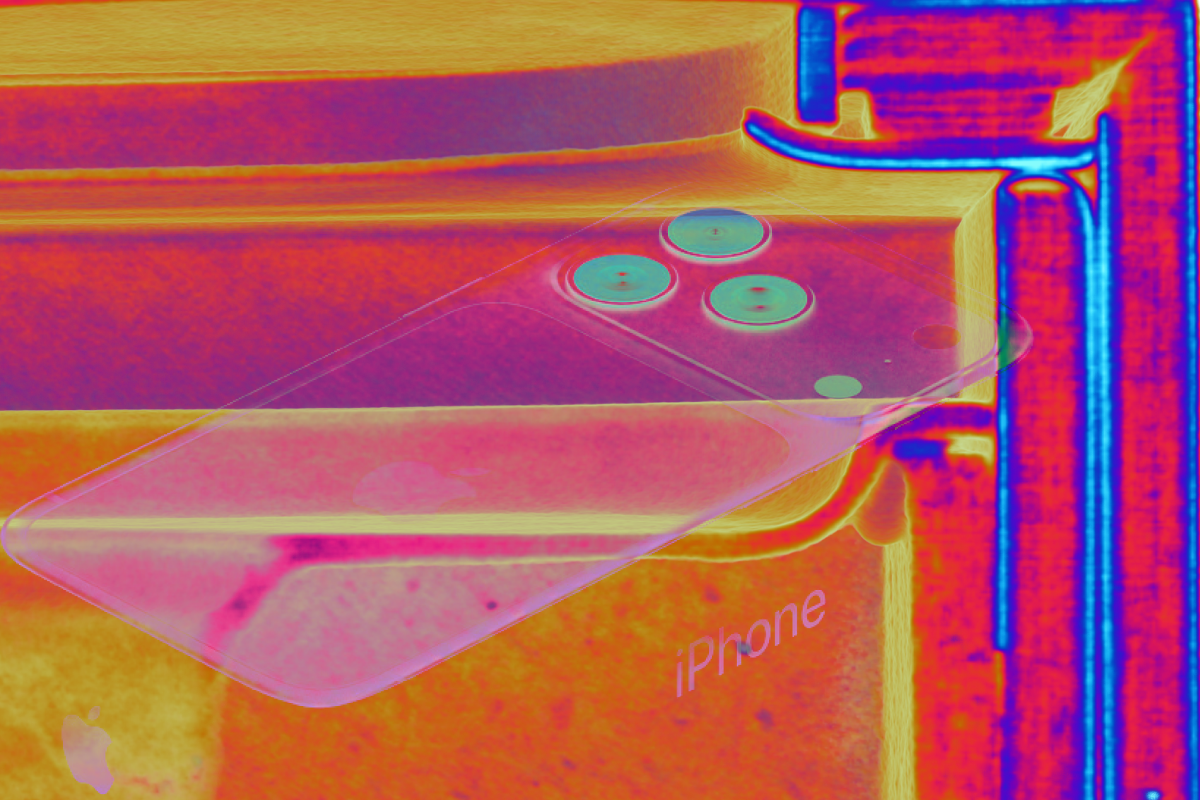


Apple’s product experience has always started long before a device is powered on. The box matters, so much so that we probably owe the entire “unboxing” phenomenon to Apple. For decades, the company has treated packaging as an extension of the product itself, engineered to guide the user’s hands, stage the reveal, and convey precision through sound and resistance.
Today, that same design discipline has been redirected toward sustainability. The changes here are almost imperceptible, a far cry from the effect of compostable straws replacing plastic ones. Apple’s latest packaging, seen through the eyes of industrial CT, shows how far the company has gone to replace plastic with paper, down to the smallest fold and insert.
What the scans show
Industrial CT imaging exposes what we normally can’t see: the layered structure that gives this iPhone 17 Pro box its rigidity. Its walls are built from stacked sheets of laminated paperboard, compressed and bonded under heat and pressure. The result is a square, seamless enclosure, its visible surfaces wrapped in a continuous paper layer that conceals every joint.
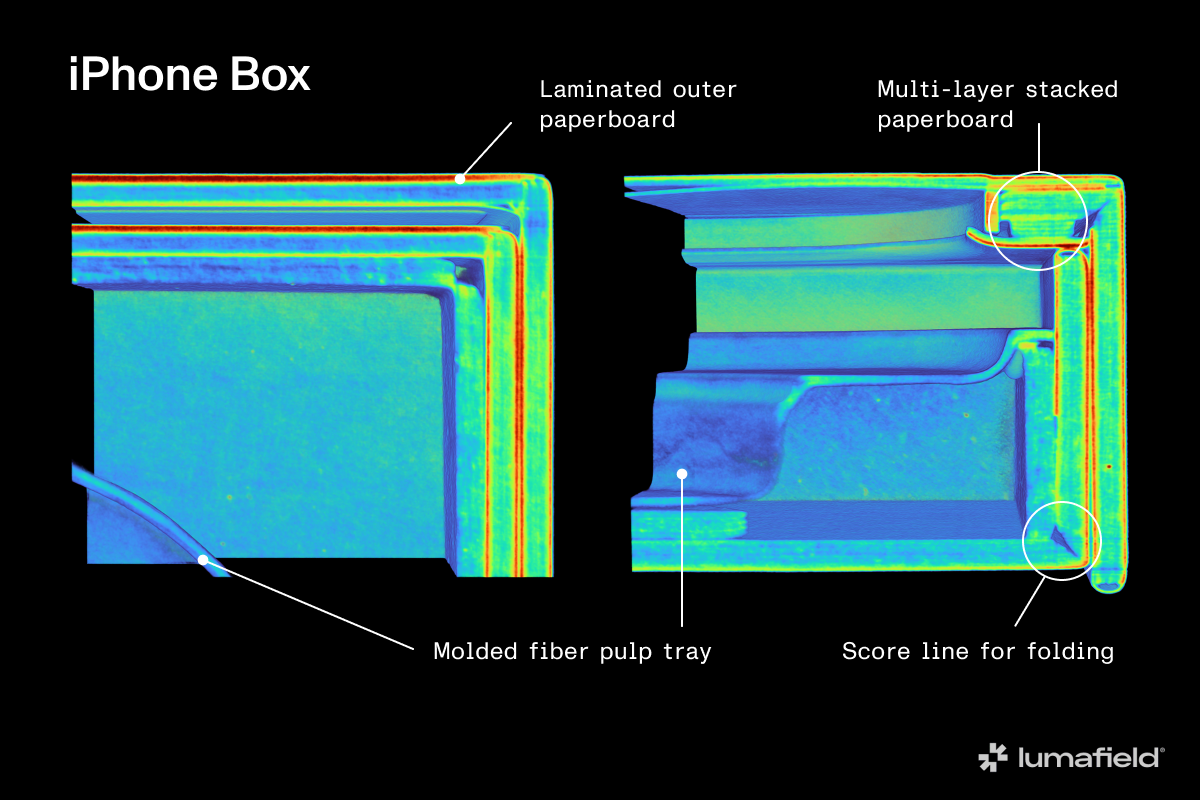
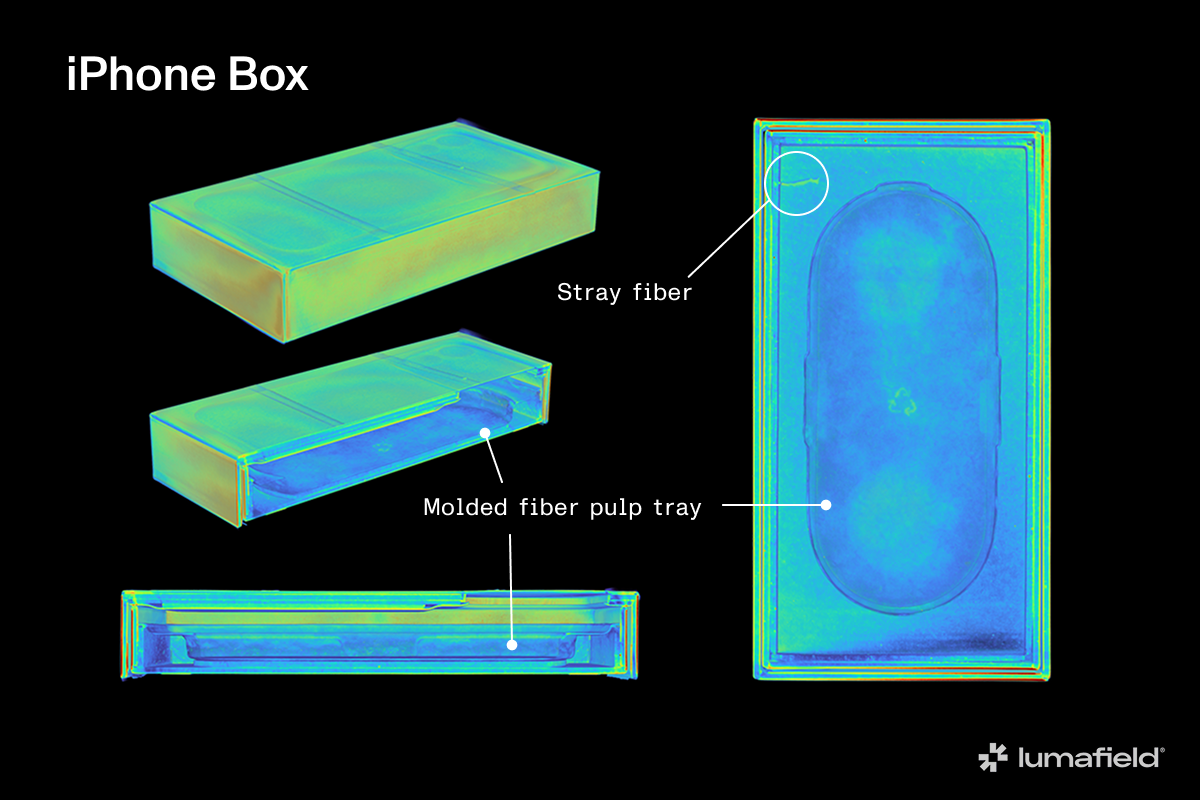
Inside sits a molded fiber pulp tray, formed by vacuum suction in a heated aluminum tool. The fibers, drawn from a mix of recycled and virgin sources, are pressed to a density that rivals injection-molded plastic. This tray holds the phone in place and absorbs shock during shipping, performing the same structural role as plastic but with a lower carbon footprint.
Engineered paper, not cardboard
What strikes us as simple is the result of several refined paper-engineering techniques. The outer shell’s score lines are cut before lamination, allowing it to fold sharply without cracking. Corners are glued and stacked for thickness, then wrapped by a laminated outer layer that gives the box its continuous surface.
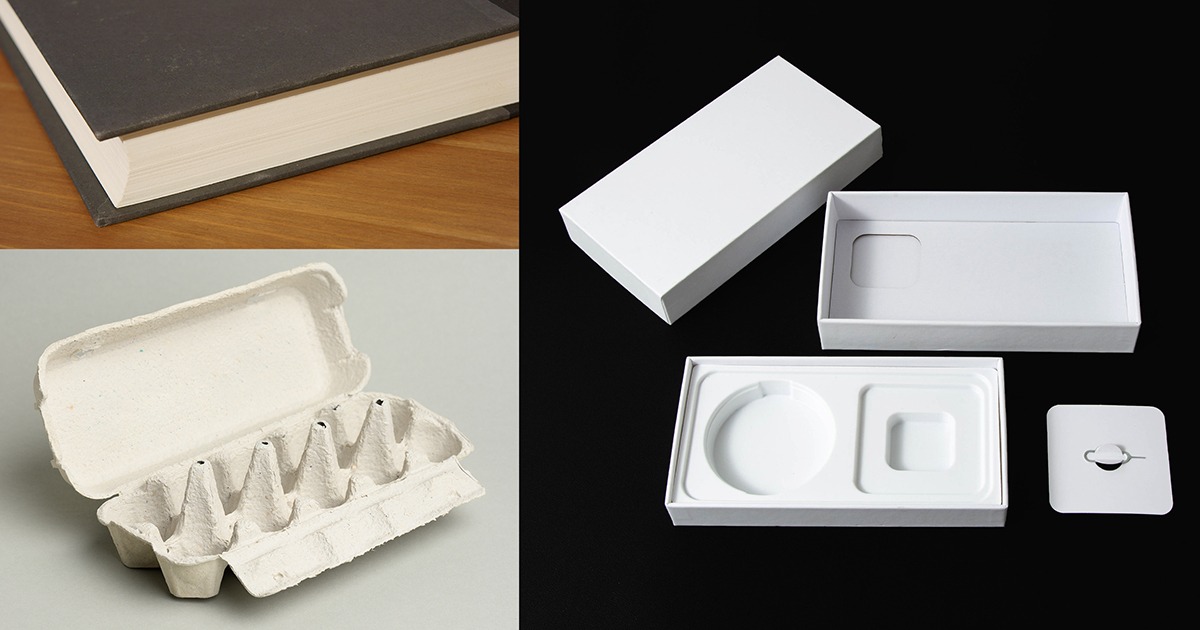
In effect, Apple’s packaging combines two crafts: bookbinding and molded pulp forming. The outer box is built like a miniature hardcover book, while the inner tray is the product of advanced fiber-molding technology, similar in principle to an egg carton but executed with the signature finesse of a company with a $4 trillion market cap.
From excess to refinement
A decade ago, opening an iPhone box meant peeling away multiple layers of plastic and lifting molded trays holding chargers, cables, and earbuds. The new iPhone 17 Pro box is smaller by nearly half, contains no charger, and is made entirely from fiber-based materials. The difference is more than aesthetic. Apple has replaced every plastic component with laminated paperboard and molded fiber pulp while preserving the magic of unboxing.
Before Apple’s boxes became fiber sculptures, they were cavernous theaters of plastic and foam. This CT scan of the original iPod box (above) shows how much empty space, weight, and material Apple has since engineered away.
The fact that the original iPod packaging is now a collectible shows just how far we’ve come. Marketplaces like StockX use Lumafield industrial CT to verify the authenticity of sealed vintage Apple products, a testament to packaging's place in the brand’s cultural and material legacy.
The sustainability shift
According to Apple’s 2025 Environmental Progress Report, the company is on track to eliminate all plastic from its packaging by the end of 2025. In 2024, products including the iPhone 16, Apple Watch, and MacBook shipped in 100 percent fiber-based boxes. Packaging now consists of roughly 60% recycled fiber, 39% responsibly sourced virgin fiber, and less than 1% plastic.
All fiber is either recycled or sourced from forests managed under FSC, PEFC, or Bonsucro standards. Apple’s goal is for every box to be recyclable through mixed-paper streams, the same process (without disassembly or sorting) used for cereal boxes.
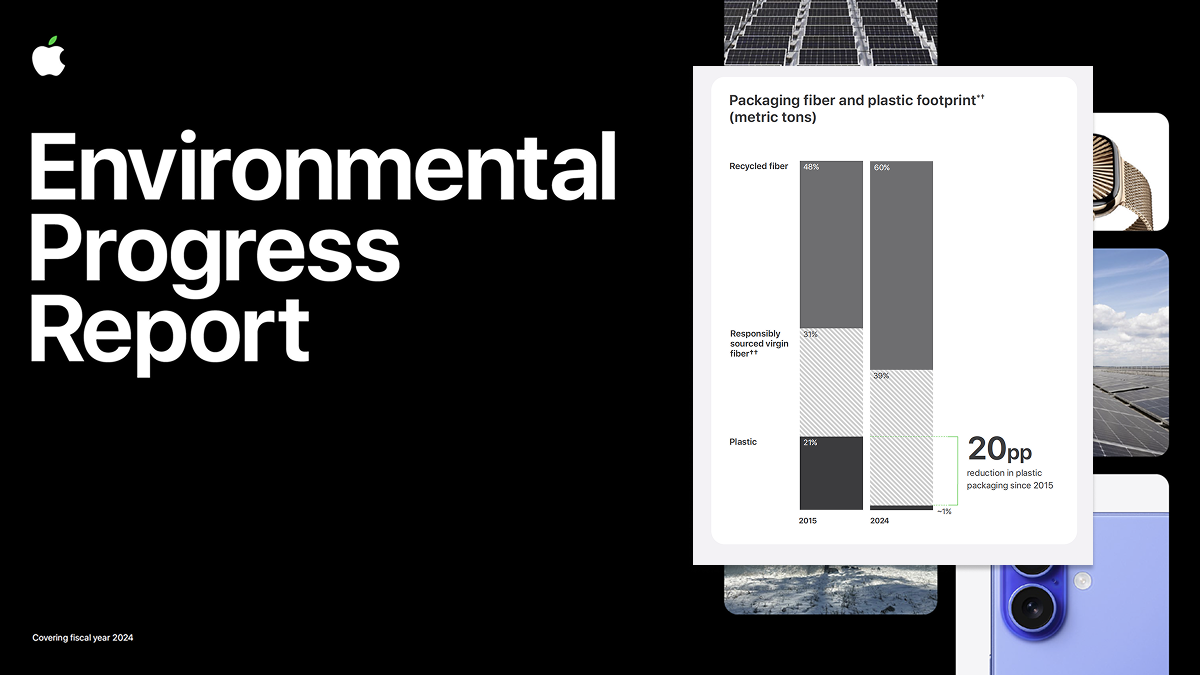
The company’s report notes:
“Along our journey, we’ve addressed many packaging components that typically rely on plastic, including large product trays, screen films, wraps, and foam cushioning. We’ve replaced each with fiber-based alternatives and implemented innovative alternatives to the small uses of plastics across our packaging — like labels and lamination. At the same time, we’re taking steps to confirm that our packaging is recyclable and that the fiber we source comes from recycled sources or responsibly managed forests.” (Apple Environmental Progress Report 2025, p. 21)
Engineering at scale
Transitioning to fiber packaging is far more complex than replacing one material with another. Paper behaves differently than plastic; it absorbs moisture, expands unevenly, and varies in thickness. To preserve the precise fit and slow-release “air cushion” feel of an iPhone box, Apple reengineered its production tools and quality-control systems to manage those variations. That transformation extends across its global supply chain: more than 70 packaging vendors have joined Apple’s redesign program, with 90 percent expected to complete the fiber transition by mid-2025.
Apple’s work also reflects a larger movement reshaping electronics packaging. Google committed to plastic-free designs for Pixel, Nest, and Fitbit by 2023, Samsung pledged a full switch to recycled paper packaging for the Galaxy S24, and Xiaomi (the so-called “Apple of China”) began cutting plastics from its boxes in 2020. Yet Apple’s influence is unmatched. When it standardizes a solution, the industry tends to follow.
This path builds on groundwork laid by Dell more than a decade ago, when they began experimenting with bamboo, mushroom-based foams, and molded pulp. “Almost every person on this planet of eight billion people touches packaging multiple times a day,” said Dell’s Director of Procurement & Packaging Engineering Oliver Campbell in a 2023 interview with Forbes. “If you’re anything like me, you wake up, stagger to the shower, and it’s packaging—everything.” That omnipresence is what makes even small changes in the CPG space have massive consequences.
The material frontier
Material science is continually expanding what fiber packaging can do. By blending virgin wood fibers with bamboo, agricultural waste, or recycled pulp, engineers can fine-tune stiffness, texture, and strength. Today, some of these composites can match the polish of plastic while remaining fully recyclable. For Apple, that progress is both technical and symbolic. The box that once defined the company’s design precision now speaks to its environmental commitments too, proof that sustainability has become part of the product itself.