





February's recall list is long and varied, but underneath the different product categories, the same problems keep appearing. Magnets turn up in toys not designed to contain them. Button cell batteries end up in housings that any child can open. Helmets reach consumers without passing the appropriate tests. If any of this sounds familiar, it should. These are the same hazard categories, the same regulatory violations, and largely the same root causes that have defined recall lists for months running.
The thread running through nearly all these recalls is child safety. Some of that is expected, as products made for infants and kids carry an obvious obligation to protect them. But several of this month's recalls involve products where the hazard only materializes because a child got to it first. Children are curious, and they live in the same homes as these products. Designing without this in mind is how a lighter becomes an emergency room visit and a decorative light becomes a poison control call. The standard for child safety isn't just about what a product is intended for. It's about the environment it has to exist in.
Small parts, big consequences
Several recalls this month expose children to ingestion hazards through either loose high-powered magnets or accessible button cell batteries.
Three separate magnetic chess game recalls, sold through Amazon under different seller names (Kaiwenshangpin, Zelbuck/n b plus, and Yiruikeji2024), cover roughly 6,800 units with an identical hazard. Loose magnets violate the mandatory toy standard, and when swallowed, they can attract across tissue and cause perforations, intestinal blockage, blood poisoning, and death. Three functionally identical products with the same defect reaching consumers independently points to a systemic gap in marketplace review. The Huaker Magnetic Balls and Rods Sets recall adds another angle, with small balls in a product intended for children under three, violating the small ball ban across about 780 units.
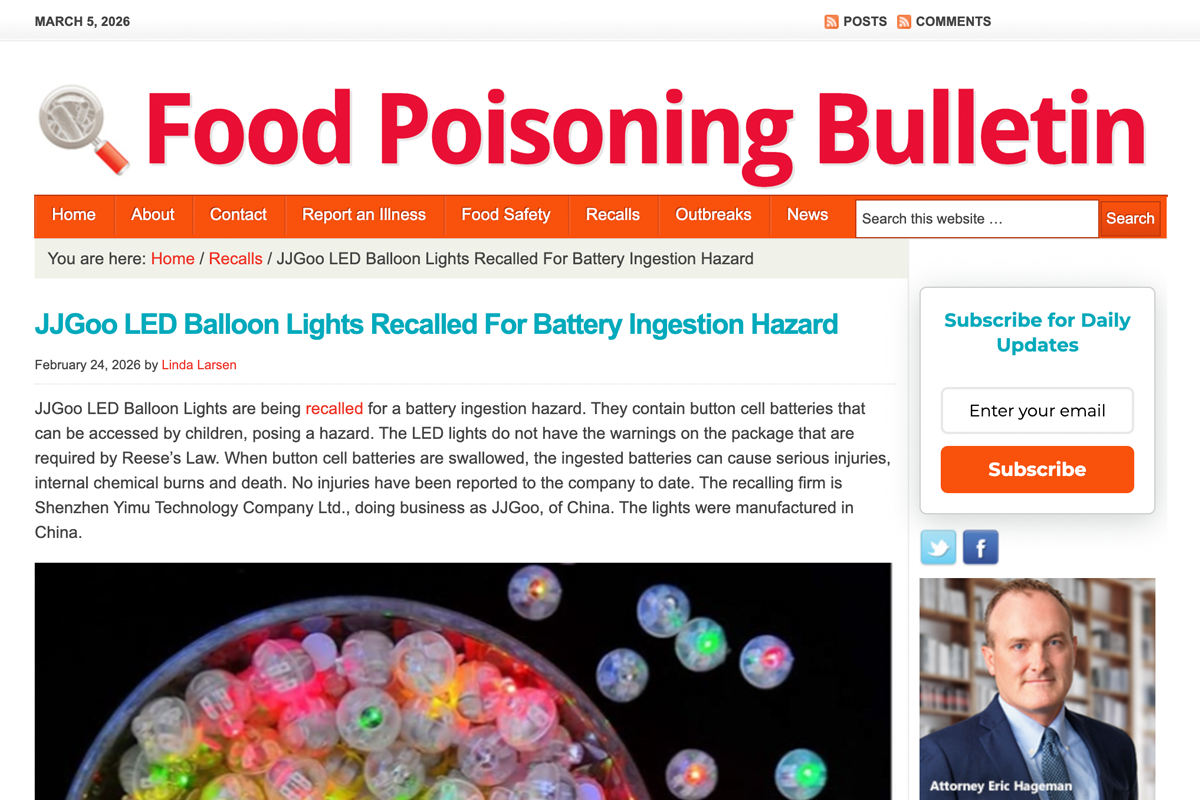
On the battery side, SumDirect LED Mini Lights, JJGoo LED Balloon Lights, and Cubimana Island Storm Building Sets all share the same recall root cause. Button cell batteries sit in compartments a child can open without tools, and all three lack the warnings required under Reese's Law. The Prismatic 3D Prints Book Nooks recall is a quieter version of the same problem, with a spare lithium coin battery included loose and not in child-resistant packaging. Together these four recalls span roughly 10,700 units.
The technical fix in each of these cases isn't complex. Compartment screws, packaging standards, and required labeling language are all well established. What's missing is verification that the production unit actually meets those requirements.
Helmets that don’t hold
Three helmet recalls this month cover a combined 43,840 units. The Todson Concord is an adult bicycle helmet; the SAMIT Youth Multi-Purpose and Semfri are marketed to children. All three fall short of mandatory bicycle helmet standards on impact attenuation, positional stability, and certification. A helmet that doesn't hold its position or absorb impact correctly isn't just a regulatory problem. It's a product that gives riders a false sense of protection, and may not do anything useful in a crash.
Lighters on the loose
Two lighter recalls cover a combined 202,270 units. The Somgem/Yomin Lighters, sold by Elepdv on Amazon, and Royal Oak Enterprises' multipurpose lighters both lack required child-resistant mechanisms, and the Royal Oak recall adds a labeling violation under the Federal Hazardous Substances Act.
Child resistance requirements for lighters have been in place for decades. The mechanism is not novel or technically demanding. The Elepdv case is notable because these products also failed to meet pre-market submission requirements, meaning they skipped the process meant to catch exactly this problem before reaching shelves.
Heat hazards at home
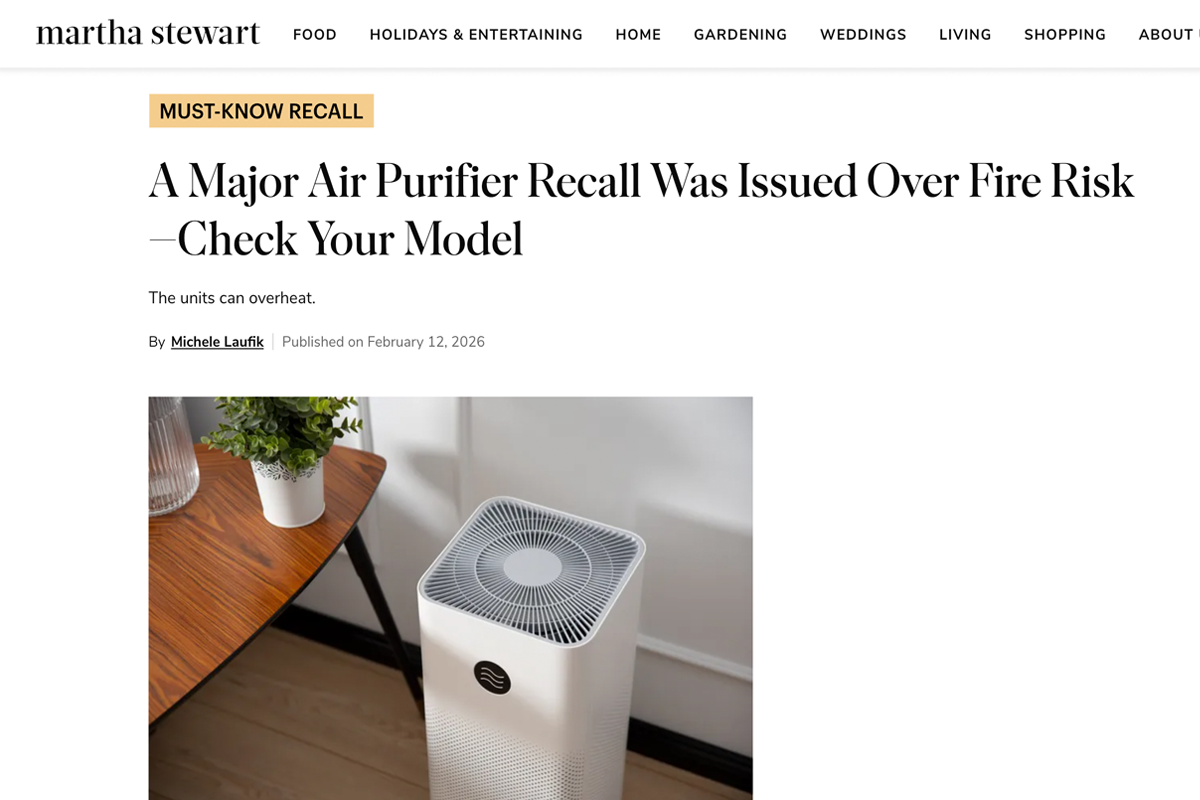
Five recalls this month involve fire or burn hazards from household devices, and together they cover well over a million units. The Dupray Neat Steam Cleaner recall is the largest at roughly 651,000 US units, where a combination of overfilling, corrosion, and pressure valve malfunction can cause the boiler to rupture. The Airova Aroeve Air Purifier (roughly 191,390 units) and the PQL High Bay Linear LED fixtures (roughly 186,520 units) both present overheating risks, though through different mechanisms: the purifiers can ignite outright, while the LED fixtures fail when degrading retaining pins allow the LED board to come loose inside the housing. The Babysense Max View Baby Monitor (roughly 81,800 units) overheats or sparks during charging, a thermal management problem in a tight enclosure that echoes several of January's compact electronics recalls.
Durability deficits
The Weber grill brush recall is the month's largest at 3.2 million units. Metal wire bristles can detach, adhere to grill grates or food, and pose an ingestion and internal injury risk. Weber is replacing them with nylon bristle brushes, a material-level fix that removes the hazard entirely rather than patching around it.
The Andersen Windows recall (roughly 91,000 units) involves opening control devices on 100 Series casement windows that can break or detach after impact, allowing the window to open freely and creating a fall hazard on upper floors. The Clark Associates Lancaster outdoor chair and barstool recall (roughly 158,000 units) is a more straightforward structural failure, with legs that bend or break under routine use. Both are products that see repeated mechanical stress in real-world conditions, and both represent the kind of failure that shows up when testing doesn't account for what the product actually goes through over time.
Highway hazards
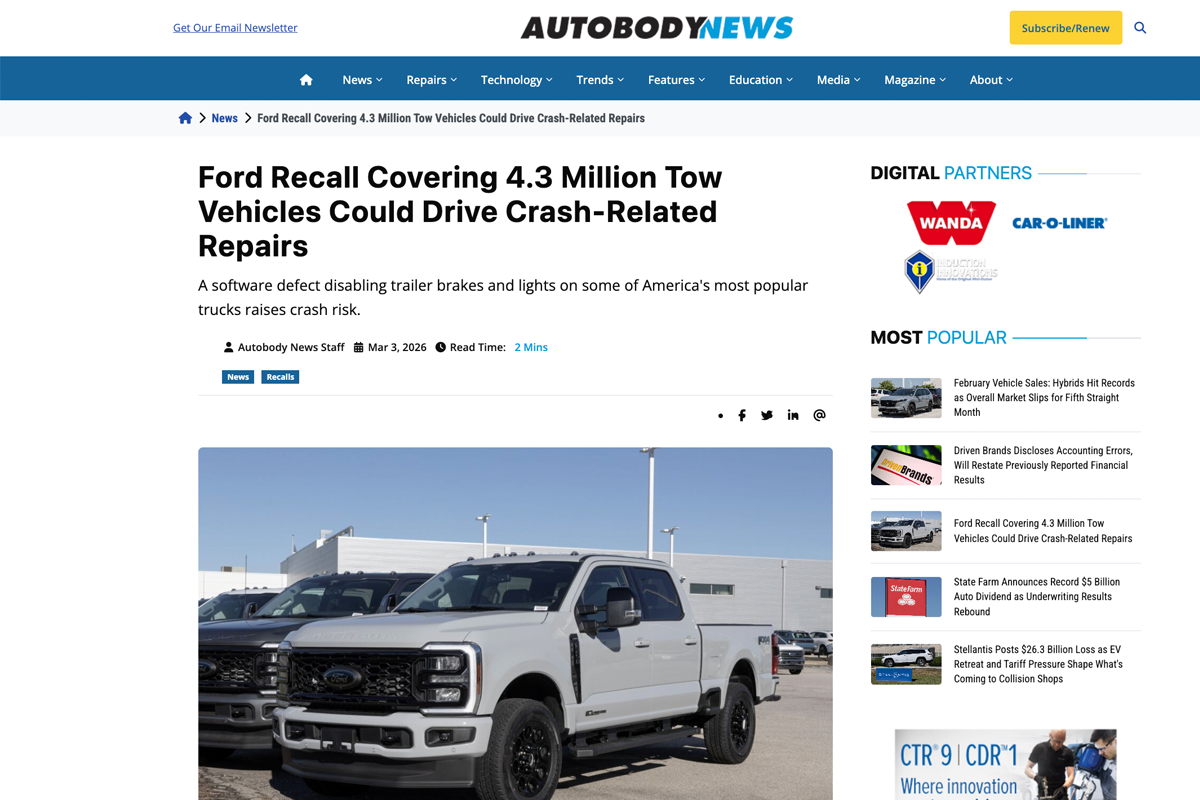
February also brought a cluster of notable automotive recalls. Ford accounts for the majority of them.. The most serious involves certain 2024-2025 F-250 and F-350 trucks where a driveshaft friction weld can fail, causing sudden driveshaft separation and loss of drive power. A separate Ford recall covers a wide range of popular models (F-150, F-250 through F-600, Maverick, Ranger, Expedition, Navigator, and E-Transit) where the integrated trailer module can lose communication with the vehicle while towing, potentially cutting brake and turn signal lights or disabling trailer brakes entirely. Ford is also recalling certain 2020-2022 Explorer, Escape, Lincoln Aviator, and Lincoln Corsair vehicles for windshield wiper motors that can fail mid-use, and certain 2026-2027 E-350 and E-450 vans for a backup alarm connector that can detach and leave drivers without an audible reversing alert.
Honda's recall of certain 2024 Acura ZDX and Prologue vehicles involves software errors that can cause the instrument panel and rearview camera display to fail, a direct compliance issue with federal rear visibility standards. International Motors recalled certain 2023-2027 IC Bus school buses for brake lines installed with incorrect hardware that can cause leaks. Land Rover recalled certain 2023-2026 Range Rover Sport and Range Rover vehicles for panoramic sunroof trim that can detach while driving. The three have little in common on the surface, but all involve failures in components that can have real consequences.
Takeaways
February's recalls are dominated by familiar failure modes recurring at scale. Loose magnets in toys, accessible batteries, helmets that skip certification, and lighters without child resistance are well-documented hazard categories with known solutions and long-established requirements. The volume of units involved suggests the problem isn't a lack of standards. It's a gap between what the standard requires and what gets verified before a product ships.