The Quality Gap
The Price of Trust: Behind the Takata Recall
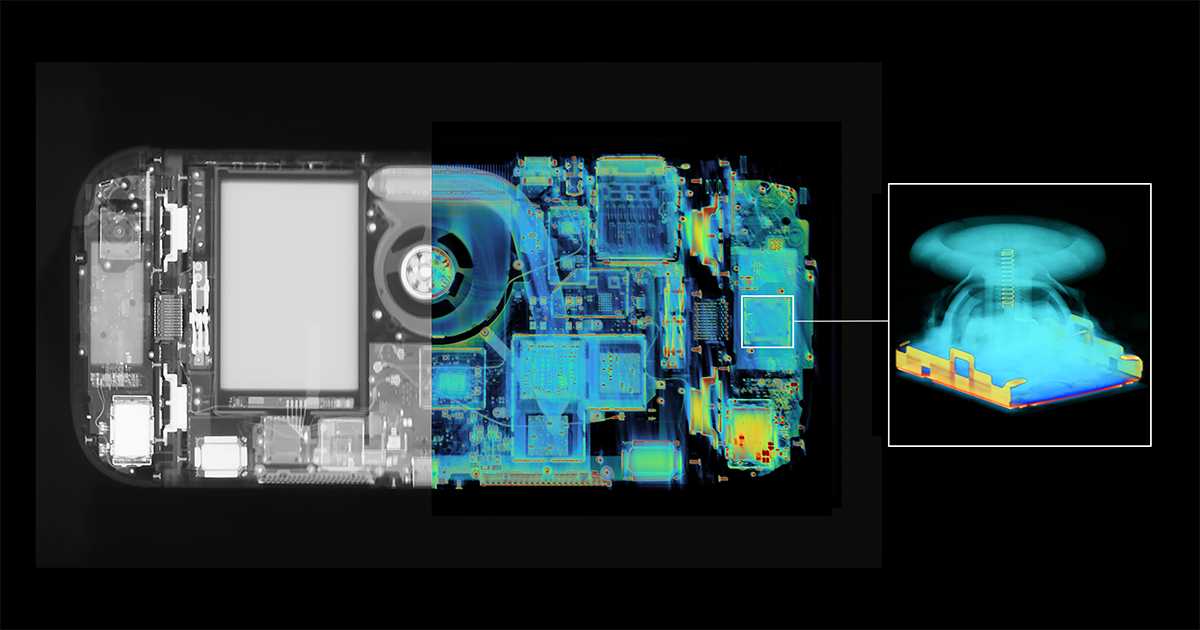
Sometime around the year 2000, an engineer at Takata's inflator facility in LaGrange, Georgia, heard an airbag explode from a floor away. Minutes later, a technician came running upstairs, splattered with blood. Her colleague had just been hurt by the device he was working on. Within days, the engineer had learned some new vocabulary. What had happened was not, in Takata's official language, an explosion. Their preferred term was energetic disassembly, a prime piece of Nineteen Eighty-Four Newspeak. He was told not to use the other word.That phrase is where this story begins. Not because the language itself caused any of the deaths that followed, but because it reveals an underlying organizational posture. Encompassing 67 million inflators, 19 automakers, 34 brands, 28 confirmed U.S. deaths, the Takata airbag recall strikes most people as a textbook case of corporate greed. But that reduces it to a just-so story. Underneath the simple moral tale we find something more instructive and (for anyone who builds products at scale) more uncomfortable: a failure of information architecture so complete that by the time the right people knew the truth, the wrong decision had already found its way into tens of millions of cars, many of which are still on the road today.Saving a few dollarsTakata had been making seat belts since the early 1950s. It got into the airbag business in the late 1980s and, by the mid-1990s, was looking for a way to compete with the industry's dominant propellant called tetrazole. Tetrazole worked, but it was also (relatively) expensive. Through a series of acquisitions, Takata had obtained patents from a rocket research facility in Moses Lake, Washington, and its VP of inflator development saw an opportunity in ammonium nitrate, a compound used in fertilizer and solid rocket boosters. It was significantly cheaper to produce and conveniently already the subject of considerable internal chemistry work.The problem with ammonium nitrate is well-known and extensively documented. It’s sensitive to moisture and temperature cycling, and even mild environmental swings can cause condensation to form inside a propellant wafer, causing its structure to break down over time. Autoliv, Takata’s Swedish-American competitor that now dominates the market, had explored this path but ultimately decided against it. According to Autoliv's head chemist Robert Taylor, the compound destroyed their test fixture: "We just said, 'No, we can't do it.'" The danger was documented in Takata's own patent filings, which described PSAN-containing propellants exhibiting "significant aggressive behavior with regard to ballistic properties" under thermal and humidity stress. A propellant expert at TRW, which briefly used ammonium nitrate before abandoning it, put it bluntly in a 2003 internal document: there were “well-known issues,” creating “conditions that stimulate an explosive response.”This Lumafield CT scan of a Takata airbag inflator recovered from a Volkswagen shows the internal propellant chamber in cross-section. The granular ring of PSAN propellant wafers is clearly visible surrounding the central initiator housing.Takata moved forward with it anyway. Linda Rink, then a senior scientist at Autoliv, recalled that Takata's inflators were roughly 30% cheaper than her company's, a price differential large enough that General Motors asked Autoliv to match it or risk losing their contract. Autoliv refused, and GM switched to Takata. Others followed, and within a few years, PSAN inflators were moving through the supply chains of nearly every major automaker on earth.Each unit ended up saving Takata a few dollars. The total liability would eventually reach $9 billion.Takata’s cover-upBy around 2000, the problems had become obvious to anyone working close enough to the product. Engineers at the LaGrange facility had documented that the PSAN propellant was not behaving predictably. When propellant wafers absorb moisture across temperature cycles (something that happens naturally over the life of any car from weather, etc.) the wafer structure degrades and fractures. Fractured wafers have irregular surface area, which leads to irregular burn rate. Irregular burn rate generates unpredictable pressure, and inside a steel housing, unpredictable pressure means the housing can rupture and send metal shards flying everywhere.Kevin Fitzgerald, who joined Takata in 1999 as Engineering Manager at LaGrange and eventually rose to VP of Inflator Engineering and Processing, commissioned an internal report catalogued as ERL-144, Propellant Integrity Evaluation, that concluded an official effort needed to be undertaken to address the defect. The report was handed back. In a detailed personal account published through Recall Awareness, Fitzgerald describes 15 years of sustained internal resistance before he resigned in November 2014, the same day the FBI opened its criminal investigation, and turned over to federal investigators the two reports he had personally commissioned. He describes those documents simply as "all that were needed."Takata employees altered and omitted failing test data in reports sent to automakers, deleted rupture results from validation reports, and in at least one documented case, assigned new barcodes to failed test units so they could not be tracked. The falsification, according to DOJ's criminal information and plea materials, was systematic. The lab producing accurate findings was shut down. A desiccant fix, adding moisture-absorbing packets to the inflator housing, was proposed and implemented, but according to Fitzgerald's account, the head of propellant development allegedly discarded desiccant samples recovered from failed units during an investigation, allowing the absence of desiccant to be used as evidence of manufacturing error rather than design flaw. The band-aid, in other words, was also being faked,.Three Takata executives, Shinichi Tanaka, Hideo Nakajima, and Tsuneo Chikaraishi, were indicted in January 2017 on wire fraud charges. Prosecutors described a scheme spanning more than 15 years, with the executives knowingly approving falsified reports to automakers from around 2000 onward. All three are in Japan. There is no extradition treaty covering this class of case, and Japan has not chosen to prosecute them domestically. None of them has faced trial to this day.Honda and TakataThe automakers buying from Takata had no independent window into any of this. Their view of the inflator program was exactly what Takata chose to show them, and no company had more at stake in that arrangement than Honda. Honda had been buying seat belts from Takata since the mid-1980s, when Japanese automakers were building transplant factories in the U.S. and bringing trusted domestic suppliers with them. The relationship deepened into something closer than a typical procurement arrangement. Honda held approximately 1.2% of Takata's shares, a small stake, but (in the framework of Japanese keiretsu relationships) a symbolically meaningful one. When Takata entered the airbag business, Honda was its launch customer for the PSAN inflator program and, by far, its largest account. Beginning with the 2001 model year, Honda installed Takata ammonium nitrate airbags in the Accord and Civic, two of the consistently top-selling vehicles in the United States. The financial weight of that relationship, and the cultural obligation that came with it, made the program exceedingly difficult to question and nearly impossible to stop.The keiretsu model was supposed to provide exactly what was missing here: mutual visibility into quality practices, shared values, and an OEM's ability to guide a supplier's strategic direction. In practice, it provided trust. And trust, extended to an organization that had decided at the highest levels not to honor it, is what created the conditions for a quality disaster of unprecedented scale.The only visibility Honda had into Takata was the validation report, which they appear to have taken at face value. By 2004, Honda had received reports of inflator ruptures in its own vehicles. By 2009, it requested new inflators from Takata without notifying NHTSA. In January 2015, the U.S. Department of Transportation fined Honda $70 million for failing to report 1,729 death and injury claims along with related warranty data (not limited to faulty airbags) between 2003 and 2014. Honda's failure to report followed the same instinct that had kept Takata's own engineers quiet for years, playing out one tier up the supply chain.NHTSA hits a wallNHTSA opened its first inquiry into Takata airbags in late 2009, following the death of 18-year-old Ashley Parham in a minor fender bender in a high school parking lot in Oklahoma. The airbag in her 2001 Honda Accord deployed, and shrapnel from the inflator severed Parham's carotid artery. The agency's investigation focused initially only on Honda and did not turn its full attention to Takata as the source until 2014, five years and several deaths later.When NHTSA finally did act, the primary lever it had was a $14,000-per-day fine for failure to cooperate with information requests. That number, set against a supplier doing billions in annual revenue, tells you something about the agency's authority relative to the scale of its mandate. In November 2015, after years of expanding recalls and a rising death toll, the DOT levied a $200 million civil penalty against Takata, still the largest in NHTSA's 54-year history.During this period, according to reporting by Automotive News, Takata retained a panel of former U.S. Transportation Secretaries and former NHTSA administrators as consultants. A proposal reportedly reaching Takata's chairman focused on recruiting allies in Washington instead of accelerating repairs. Takata knew its time was running out, so they pulled out all the stops to prolong the inevitable. This revolving door is central to understanding why the recall moved so slowly for so long.The issue that matters more for consumers and will have broad implications for as long as it stands hinges on NHTSA’s mandate. NHTSA can order a recall, but it can’t compel an owner to bring their car in. In a country where roughly one in three recalled vehicles across all categories goes unrepaired (even for the most serious defects) the regulator was trying to reconstruct from the outside what the people inside the supply chain had known for years, and then enforce a solution to a problem it lacked the authority to fully address.Recall reckoningThe recall has continued to mount ever since. Priority groups were established from early on, sequenced by inflator age and geographic exposure to heat and humidity. This was the best NHSTA could do within a recall model that has no framework for coordinating a defect involving tens of millions of units across nearly two dozen manufacturers simultaneously. The Alpha inflators, an early subset of PSAN units installed in 2001 to 2003 Honda and Acura vehicles, were eventually found to have a rupture probability of approximately 50% on deployment. Honda issued a Do Not Drive warning for those vehicles in February 2023, more than twenty years after the propellant decision that caused it.All in all, the recall touches 67 million inflators in the U.S. across the entire industry: 19 automakers and 34 brands, from Honda Civics to Ferrari 458s to early Tesla Roadsters. Takata pleaded guilty in January 2017 to wire fraud and agreed to pay $1 billion in criminal penalties, $850 million to reimburse automakers, $125 million to victims, and $25 million as a federal fine. Six months later, under $9 billion in total liabilities, Takata filed for bankruptcy, was acquired by Key Safety Systems for $1.6 billion, and then rebranded as Joyson Safety Systems.Takata is no more, but it’s still too soon to close the book on the recall. In February 2026, Stellantis issued a Do Not Drive warning for 225,000 additional vehicles, Chryslers, Dodges, Jeeps, some built as recently as 2016. NHTSA reports that approximately 98% of recalled Takata vehicles have been repaired as of early 2026, the best completion rate the agency has achieved for any recall in its history. This is a testament to valiant and creative efforts including door-to-door outreach, Facebook campaigns, and graphic public notices that went well beyond anything NHTSA had attempted before. But at 67 million vehicles, 98% still leaves approximately 1.3 million unrepaired cars on U.S. roads.Costs of not knowingThe manufacturing supply chain runs on trust by necessity. No OEM can verify everything its suppliers make, and no regulator can see inside every component that moves through commerce. When trust is the only thing standing between a known defect and the people it could eventually kill, that's not enough. In Takata's case, that lesson unfolded over 20 years and claimed 28 lives.The more fundamental problem the recall exposed is not that Takata lied, though it did, systematically and for a long time. It’s that the systems surrounding Takata, the equity relationships, the validation protocols, the regulatory frameworks, were all designed to process information that suppliers voluntarily produce. None of them was designed to generate ground truth knowledge of what is truly happening at the component level. When a supplier decides to withhold or conceal something, those systems prove powerless. It's not that they're broken; they just weren’t built for that.Quality, in the end, is an information problem. Organizations that figure out how to get accurate data about their products and supply chains, independent of what anyone chooses to report, will be the ones that catch the next Takata before it becomes a tragedy. The ones that don't will be waiting, as Honda waited, for someone with knowledge of what’s happening to summon the courage to share it.