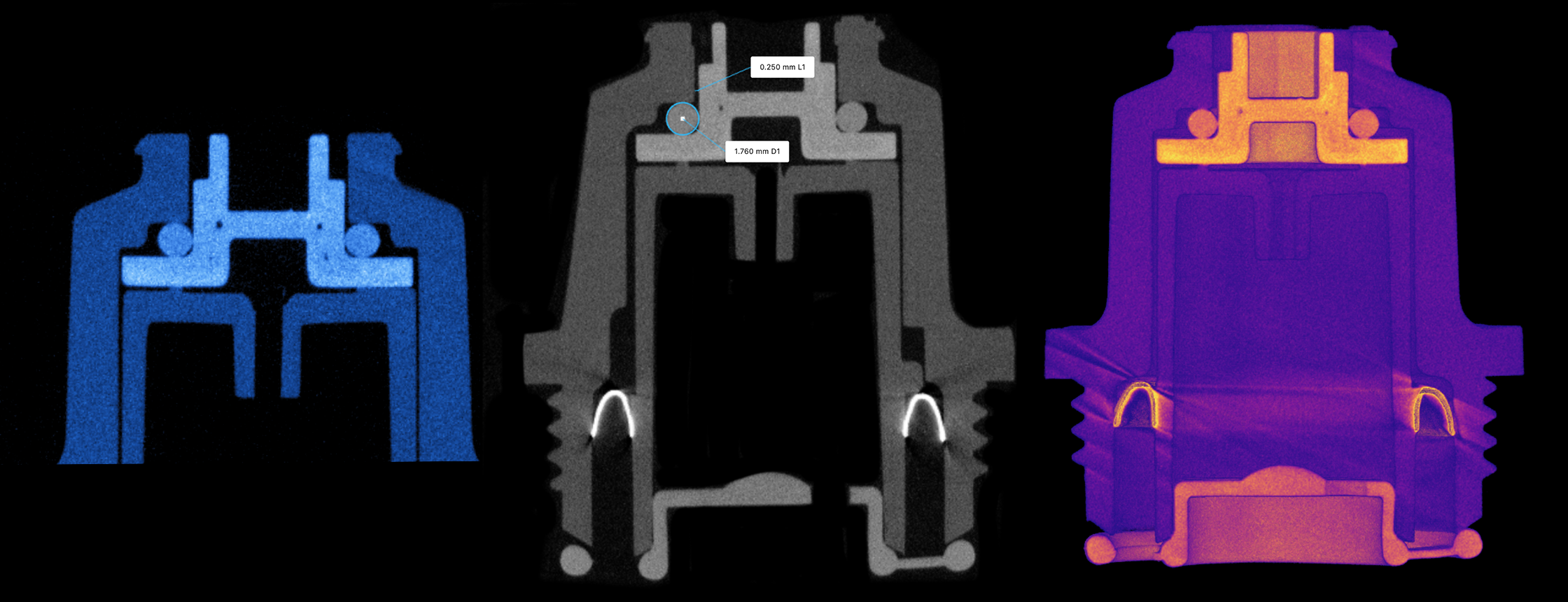
iFixit uses Lumafield's platform to plan teardowns, understand design choices, and advocate for consumers' right to repair their own electronics.
iFixit’s mission is simple: make everything repairable. Their work requires clarity about how consumer electronics are built, why they fail, and which choices make service easier or harder. To keep up with the breakneck speed of product launches, the team uses Lumafield to look inside every device on day zero. They scan, measure, and share interactive models that inform clean disassembly and validate findings while turning hidden systems into teardown guides that anyone can understand and follow for themselves.
We take things apart to figure out how fixable they’re going to be. We score them on a scale of 0 to 10. And we talk about the choices that designers made to make products more or less fixable.
— Elizabeth Chamberlain, Director of Sustainability
As iFixit’s Director of Sustainability Elizabeth Chamberlain explains, “Right to repair is the idea that you should be able to fix everything you own, and manufacturers shouldn’t be able to stop you by controlling access to parts, tools, and documentation.” That principle lies at the heart of their daily work. “We take things apart to figure out how fixable they’re going to be. We score them on a scale of 0 to 10. And we talk about the choices that designers made to make products more or less fixable.” Since 2003, iFixit has worked to advocate for more repairable products while finding ways to make wasteful design a thing of the past.
From 24-hour waits to day-zero ground truth
Before iFixit had in-house scanning, the team shipped devices out for X-rays and waited. That lag forced guesswork on fragile, expensive hardware on extremely tight timelines, and it made clean teardowns harder than they needed to be.
We would either send devices out or have partners obtain their own devices to X-ray. That process would take at least 24 hours to get those images back.
— Shahram Mokhtari, Lead Teardown Technician
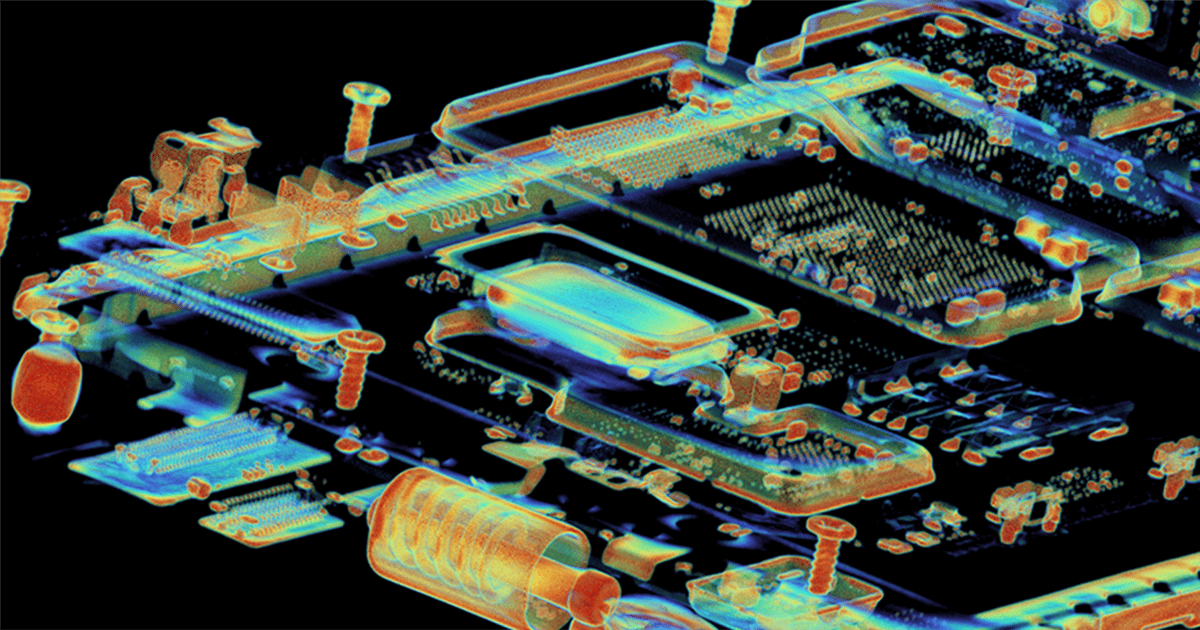
As Lead Teardown Technician Shahram Mokhtari remembers, they would “either send devices out or have partners obtain their own devices to X-ray,” and even what they then considered a quick turnaround “would take at least 24 hours” to get images back. Today, the workflow starts right downstairs. The team places a sealed device in a Lumafield Neptune, collects quick radiographs to locate fasteners and clips, and runs a full CT scan when a volumetric model could reduce risk for the first cut or strengthen the story. Results live in Lumafield's browser-based Voyager software, so editors, engineers, and advocates can all study the same dataset in parallel. The old way of doing things was, in Shahram’s words, “very different from walking downstairs, putting our teardown device in the CT scanner, and instantly seeing the image there.”
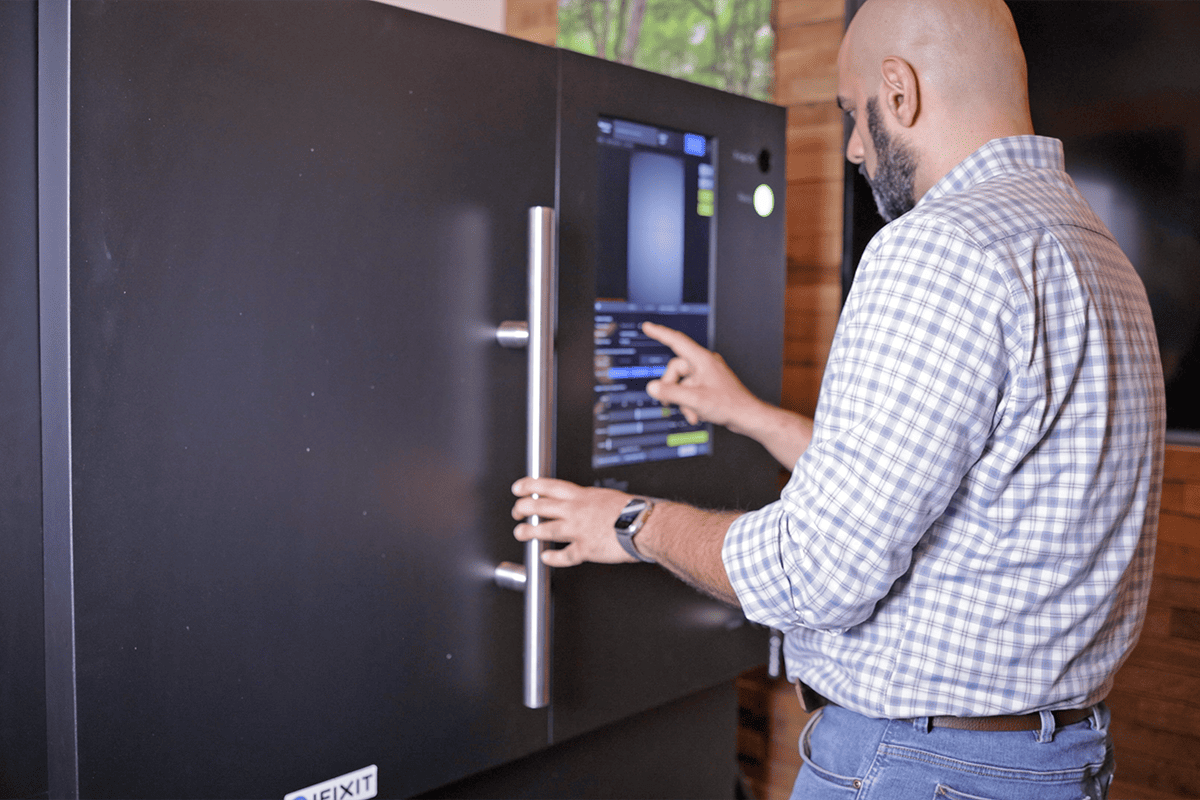
The change to their process began with CT storytelling. Late one evening at the office, iFixit CEO and co-founder Kyle Wiens walked in and asked if Shahram had seen Lumafield’s Scan of the Month series. He scrolled through models that were “beautifully laid out,” and Shahram was “floored” by what Lumafield made visible. From there, they started imagining the possibilities for incorporating it into their workflow. A strong partnership has formed since, including joint events and content collaborations.
Where visibility data fits into an iFixit teardown
iFixit uses scanning prior to a teardown to decide their first move. The team separates screws from clips and adhesive, picks safe pry zones, and maps cable paths that tend to tear. Shahram notes, “It’s very reassuring to see where the screws are. Wherever there aren’t any screws, we know they’re using clips or glue. Heat and a little prying pressure is easier to apply when you know you’re not going to break the device.”
CT scans form part of every teardown we perform at multiple stages.
— Shahram Mokhtari, Lead Teardown Technician
After the device is open, scanning lets iFixit tell the story without unnecessary damage. The team saw this firsthand when tearing down a pair of Oakley Meta glasses. The wearable's assembly was fully glued, so the team scanned before opening to locate the battery in one temple and the processor in the other. During the teardown, the team confirmed cable clearances. Afterward, they scanned the charging case to visualize the 18650 cell, the BMS, and the wiring without cracking the plastic enclosure.
“CT scans form part of every teardown we perform at multiple stages,” Shahram says. The process is collaborative by design. “With every teardown, it’s a group effort. We have electrical and mechanical engineers supporting the teardown team, and being able to resource part of that team to look at the CT scans while we’re working is immensely helpful.”
Cheat code for speed, safety, and clarity
Time-savings on teardown are quickly adding up. A short scan of the AirPods Max USB-C refresh confirmed the change was confined to the connector, which spared a full teardown. A comparison of iPhone generations in Voyager offered clear proof of exactly when the MagSafe ring was dropped from the design and how that added space was then used. Foldable phones and tablets make the benefit obvious because early scans expose hinge geometry and load paths. “We can see how a mechanical hinge is designed in really high detail immediately, instead of having to painstakingly take it apart. I can give insights before they even start tearing the phone down,” says Repairability Engineer Carsten Frauenheim.
The CT scanner in our workflow is a cheat code. It speeds up everything. It allows us to see inside devices almost immediately.
— Carsten Frauenheim, Repairability Engineer
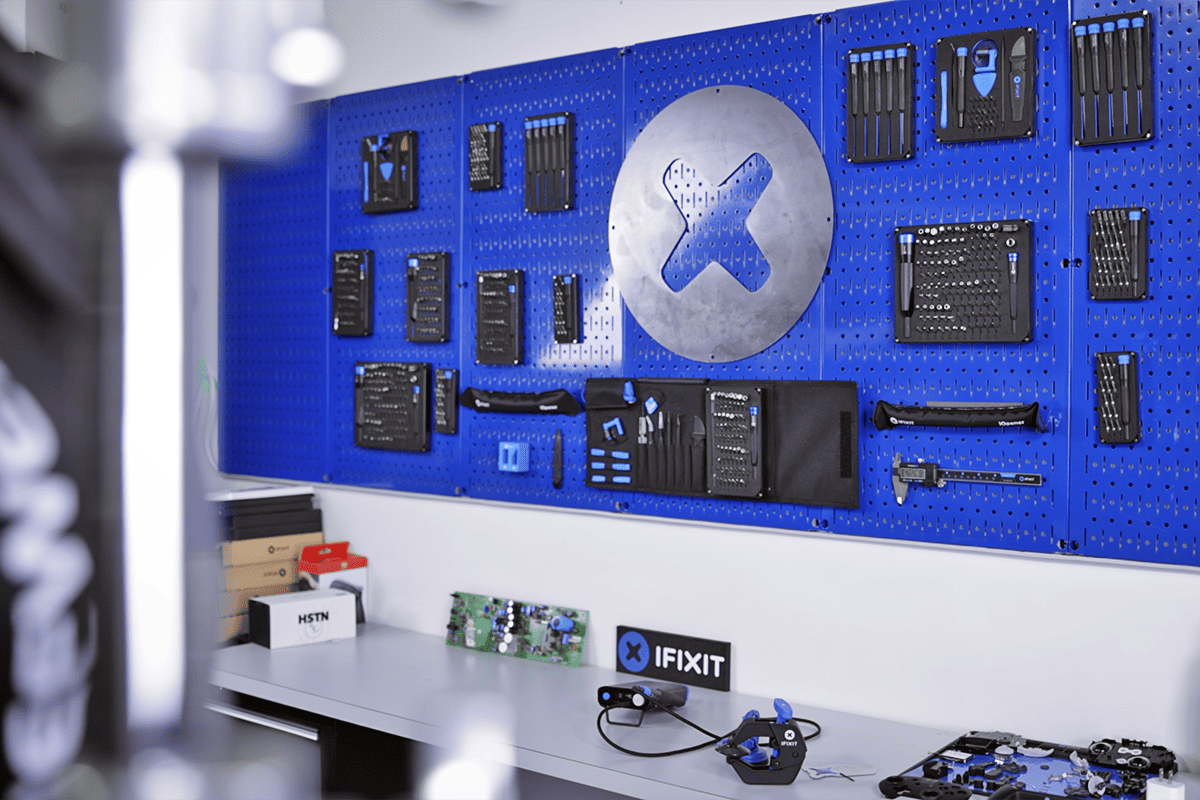
The result is speed and confidence throughout the process. Engineers and editors review the same dataset, decide where to pry, and move forward with confidence. Early scans turn unknowns into facts at the start of the day, which keeps filming on schedule and reduces damage on the bench. “The CT scanner in our workflow is a cheat code. It speeds up everything. It allows us to see inside devices almost immediately,” Carsten says. It also improves communication, since a single Voyager link gives everyone the same view and notes.
Batteries: design, chemistry, and risk
“Industrial CT scanning has given me a convenient, fast, and accessible way of comparing different battery chemistries to see exactly how they’re built, intact.”
— Arthur Shi, Senior Technical Writer
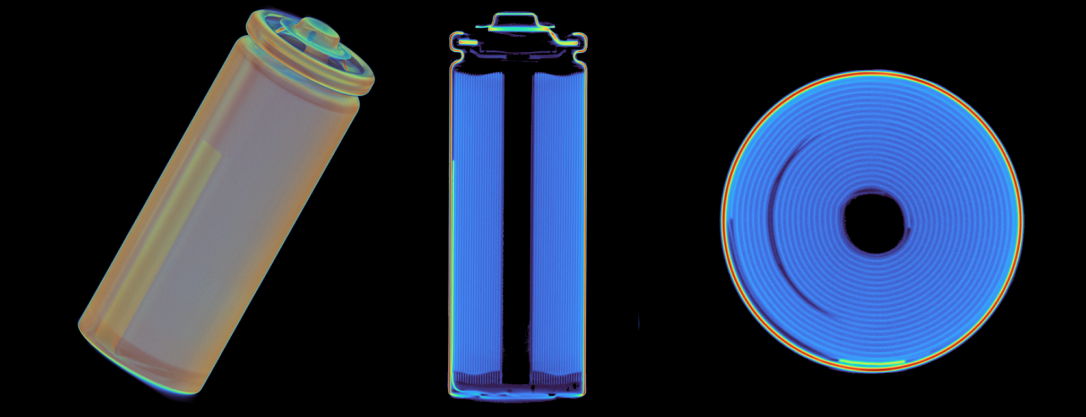
Energy storage presents an inherent risk, and iFixit likes to get specific. Senior Technical Writer Arthur Shi notes that for many people a lithium-ion cell is a mystery pouch that just works, yet the way batteries age across cycles contributes to many different failure modes. “Energy storage is a developing bottleneck for modern devices,” he says. Scanning lets the team see how packs are built before anyone picks up a tool. “Industrial CT scanning has given me a convenient, fast, and accessible way of comparing different battery chemistries to see exactly how they’re built, intact.”
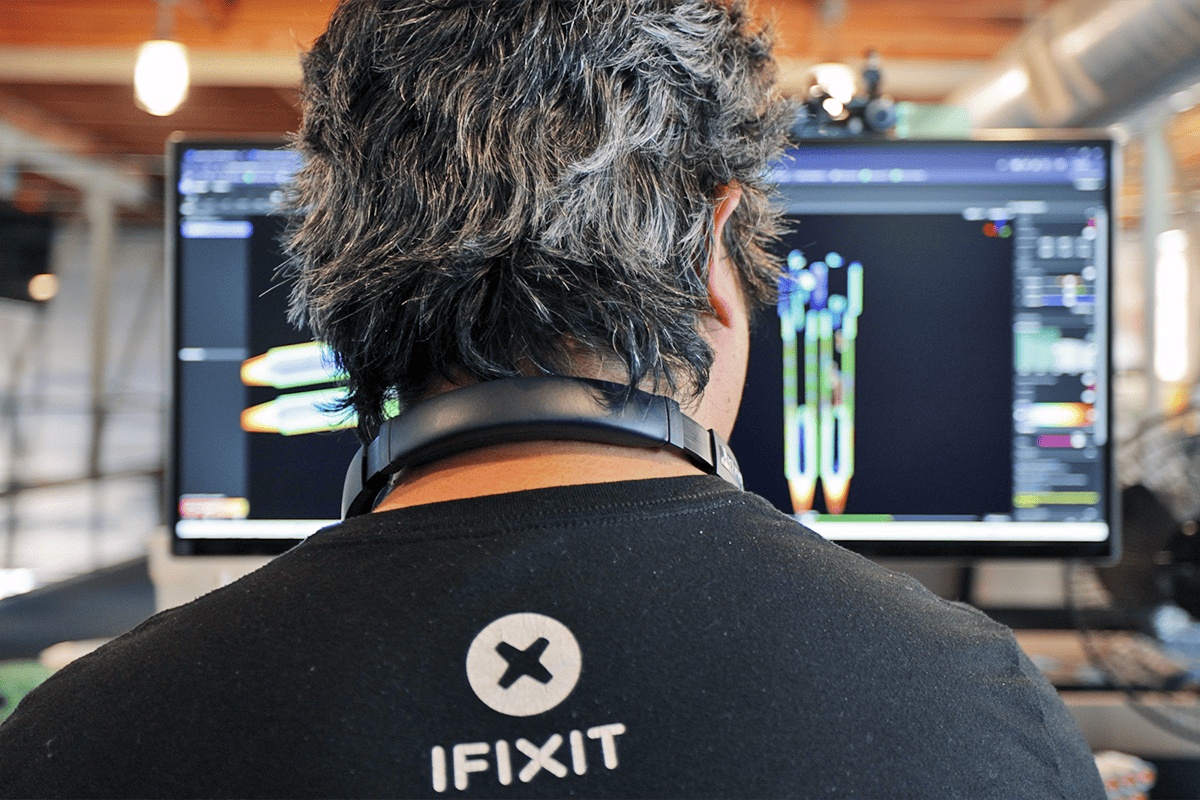
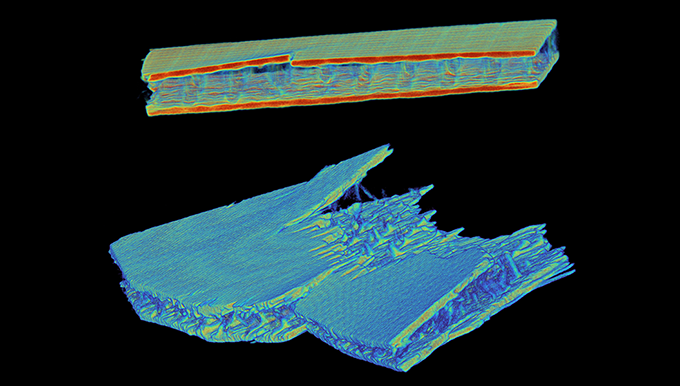
iFixit’s approach tracks with Lumafield’s Battery Quality Report, which CT scanned 1,054 off-the-shelf 18650 cells across 10 brands to quantify anode overhang and edge alignment, reveal defects like cathode overhang concentrated in low-cost and counterfeit stock, and provide practical recommendations to reduce safety risk.
Advocacy through storytelling
The same visibility that guides a clean teardown also strengthens public understanding and policy work. For sealed products such as smart rings and disposable vapes, the team uses scans to study internals that physical access would destroy. “Being able to show what’s inside helps tell the story of e-waste and repairability in a way we couldn’t otherwise,” says Elizabeth Chamberlain.
“We want all of the content we produce to meet smart people where they are and invite them into our world, and hopefully lead them to a place where they feel bought in on the idea that things should be more fixable.”
— Elizabeth Chamberlain, Director of Sustainability
That clarity shines through in every video and article. “We want all of the content we produce to meet smart people where they are and invite them into our world, and hopefully lead them to a place where they feel bought in on the idea that things should be more fixable.” Elizabeth says.

Viewers respond because the visuals make design intent and service paths obvious. Shahram has observed the uptake, noting “Our audience has responded very positively to the scans and animations we’ve incorporated into our videos. It has opened up a new avenue for us to educate.” The result is a virtuous cycle where evidence changes minds, and better questions from the audience and lawmakers accelerate better designs.
What manufacturers can learn from iFixit’s playbook
Manufacturers are using the same approach to close the loop on their own hardware. Teams scan early builds to validate design changes and verify clearances, analyze field returns to pinpoint assembly or component issues, and share Voyager models so suppliers and internal groups work from the same evidence. The aim is the same across these efforts: replace guesswork with ground truth.
CT scans really bring the device to life in a way that would otherwise be hidden to everybody other than the people who worked on it. That ability helps us show what’s inside consumer electronics, and why those design choices matter.
— Shahram Mokhtari, Lead Teardown Technician
And iFixit isn’t slowing down anytime soon. They plan to keep scoring electronics and pushing for parts, tools, and documentation that actually help consumers. Visibility data lets them do that work faster and with more precision. It also strengthens the evidence behind the stories that matter. Once more people understand why a product is hard to fix (and that it doesn't have to be), manufacturers can begin addressing repairability and changing the baseline for responsible end-of-life. As Shahram puts it, “CT scans really bring the device to life in a way that would otherwise be hidden to everybody other than those who worked on it. That ability helps us show what’s inside consumer electronics, and why those design choices matter.”