Trek uses Neptune and Voyager to analyze manufacturing processes and accelerate product development.
Summary
- Trek engineers use Lumafield’s industrial CT technology to inspect prototypes, analyze manufacturing processes, conduct failure analysis, and accelerate product development.
- Voyager allows Trek engineers to access, share, analyze, and visualize scan data seamlessly. With its browser-based and user-friendly interface, colleagues collaborate, leave comments, and resolve issues in real-time.
- CT provides Trek engineers with deep insights into battery enclosure design, latching mechanisms, and overall performance.
- With CT, Trek can comprehensively study how impacts affect various bike and helmet materials. The ability to perform precise measurements after impacts provides engineers with invaluable information for analyzing designs.
Background
Our goal is to make only products we love. To do that, we need to have access to the best tools. Over the years, our products have become more complicated, and the tools we use have gotten more sophisticated.
- Chad Manuell, Global Director of Engineering, Trek
Trek Bicycle is on a mission to make the world a better place to live and ride. Despite humble beginnings in a Wisconsin barn, Trek has been on the cutting edge from day one. Starting with its visionary early entry into carbon fiber bike frames, Trek’s engineering teams continue to embrace new technologies that will benefit their riders.
CT scanning had been on Trek’s wishlist for a long time, but the complexity and cost of legacy systems kept this vital inspection tool out of reach. Easy to use and an order of magnitude less expensive than competitors, the Lumafield Neptune scanner and Voyager analysis software made it possible for Trek to add CT to its frontline toolkit for the first time. Chad Manuell, Global Director of Engineering, recalls, “When we got the opportunity to bring a Neptune in-house, we jumped on it.” Ever since, the Neptune scanner and Voyager analysis software have been delivering actionable insights to help Trek create products that both they and their customers love.
Modernizing product development
Believe it or not, the go-to inspection technique for most products is still to cut them open with a saw. The process is time-consuming, messy, and often destroys the very features that need to be inspected.
When you tear a part down, you only get one shot, and you may damage it in the process.
- Jason Schuster, Bontrager Product Design Engineer, Trek
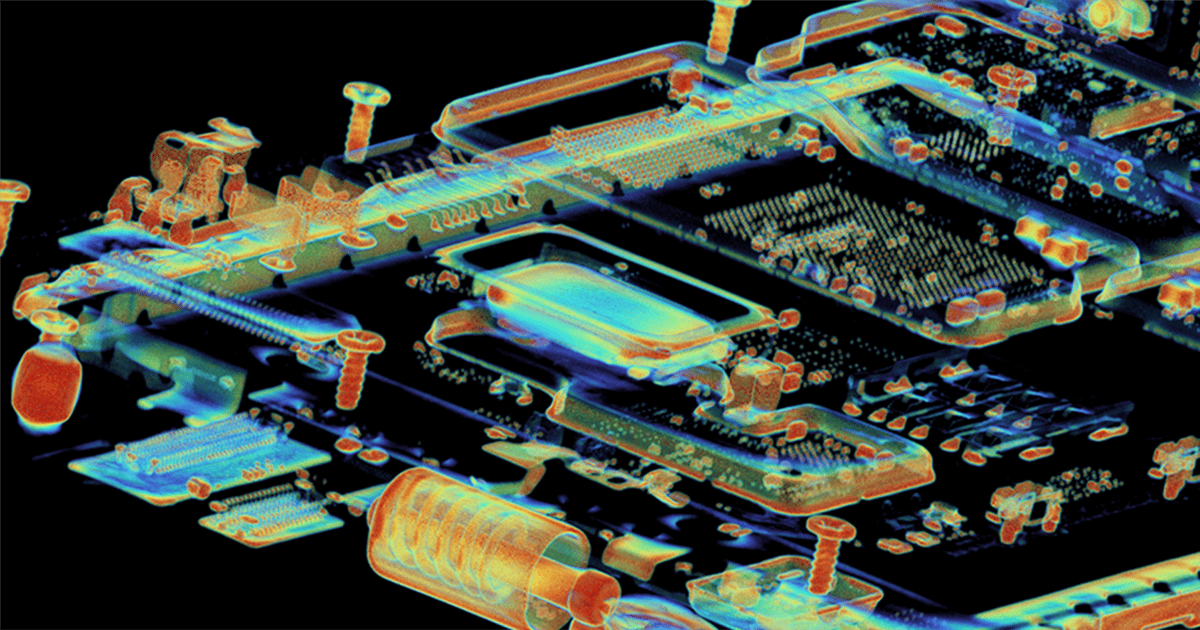
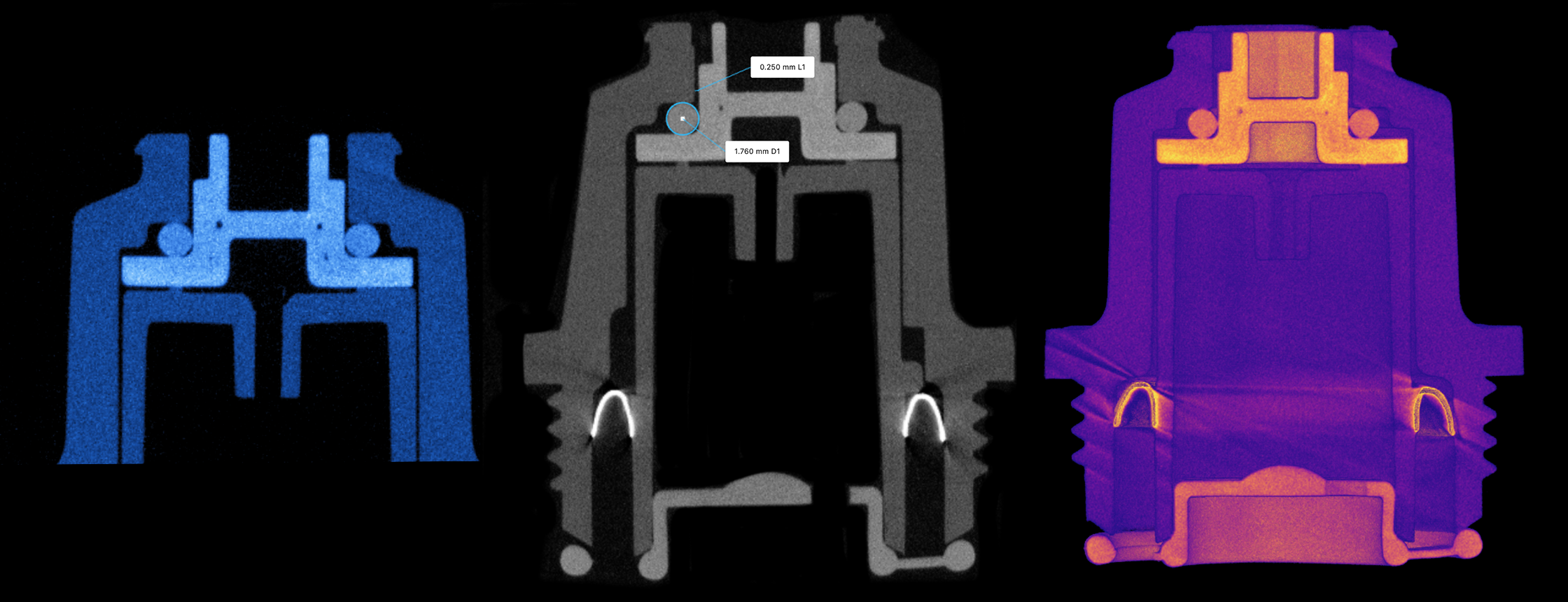
Examining parts non-destructively with industrial CT allows Trek to understand the implementation of their designs. Larry Lardieri, Product Design Engineer, notes that “The Neptune scanner has given us the ability to look at our prototypes even more closely. It helps us investigate potential issues like adhesion, porosity, and plastic part design shrinkage.”
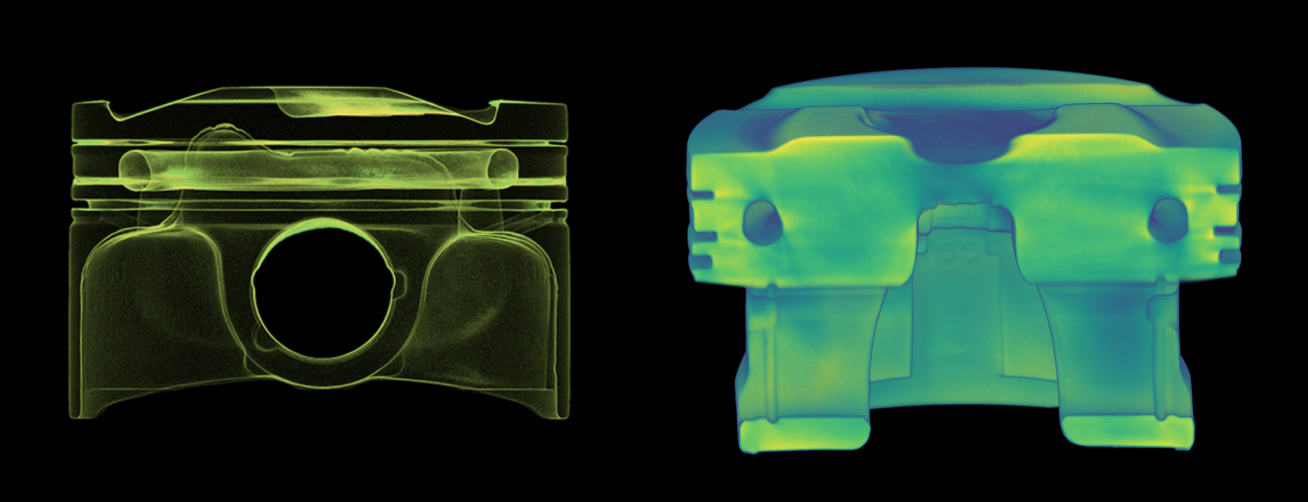
Using Voyager’s suite of comparative analysis tools, including CAD Comparison, Trek can tune design and production parameters to adapt to a manufacturing process. By overlaying a CAD file on a scan of a finished physical product, Voyager computes deviation from the design and visualizes it using color maps.

Saving valuable time as well as the number of pre-production parts needed, industrial CT smooths the way for Trek to quickly and reliably bring the cycling products of the future to market.
The Neptune scanner really speeds up the product development process.
- Chad Manuell Global Director of Engineering, Trek
Harnessing the power of collaborative analysis
Legacy CT systems process and store data locally, usually requiring a dedicated operator and hardware system. Interacting with this invaluable data has traditionally been restricted to technicians. Lumafield's cloud-based software, however, gives engineers direct access to their scan data, and lets them share it with colleagues.
One of the great parts about Voyager is that anybody from Trek is able to go in, look at the scans, and look at your regions of interest.
- Larry Lardieri, Product Design Engineer, Trek
Lumafield’s Voyager analysis software allows Trek engineers to easily access and share scan data, collaborate on analysis workflows, and visualize both external and internal features — all within their own web browser. Colleagues can author bookmarks, leave comments, and resolve problems in real-time using Voyager’s user-friendly interface. Trek engineers also use Voyager’s high-resolution images of both 2D slice planes and 3D volumetric reconstructions for internal presentations, enabling them to solicit feedback from across teams and chart the progress of product development.
Advancing e-bike battery technology
The electronics of the future are powered by lithium-ion batteries, which must be carefully integrated into products. This is especially true of products that push the limits of size, weight, and ergonomics. Trek has emerged as an industry leader in electric bikes, and its engineers are constantly innovating on battery integration.
CT scanners are an important technology for understanding the inner workings of batteries in the e-bike space.
- Zach Medeiros, eSystems Mechanical Design Engineer, Trek
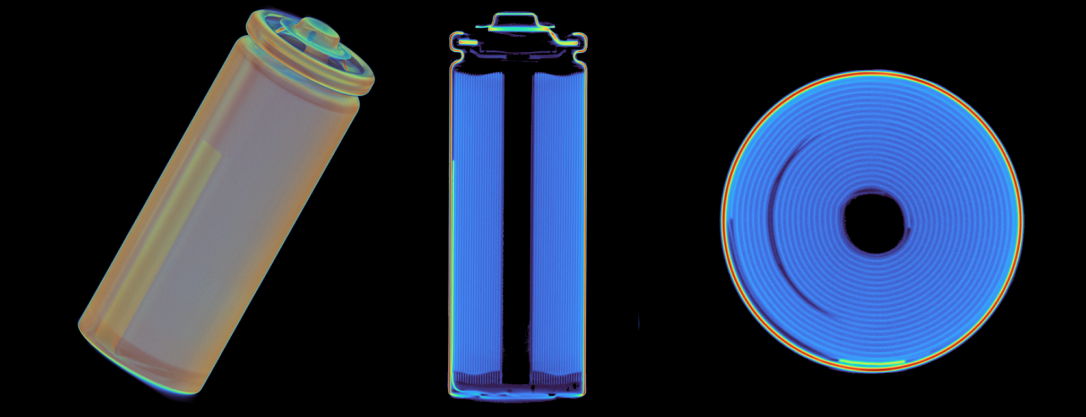
For Trek’s eSystems team, CT scanning has emerged as a safe and effective way to inspect the details of these critical components. For batteries, destructive testing not only deprives engineers of insight, it can also be also dangerous. As eSystems Mechanical Design Engineer Zach Medeiros puts it “The last product you should tear down with a hammer, vice, or a clamp is a battery, because it’s actually a hazard to do that.” With industrial CT, Trek engineers gain deep insights into battery enclosure design, latching mechanisms, and overall performance. Voyager’s advanced dimensioning tools allow for automated measurements that can help elucidate the integrity and performance of lithium-ion batteries.
Enhancing safety by quantifying impact
Rider safety is a top priority at Trek, and CT scanning can provide insights for both bike frame and helmet design by illuminating how they respond to impacts. With Neptune and Voyager, Trek engineers can comprehensively study the way impacts affect a wide variety of materials used in bike parts and helmets.

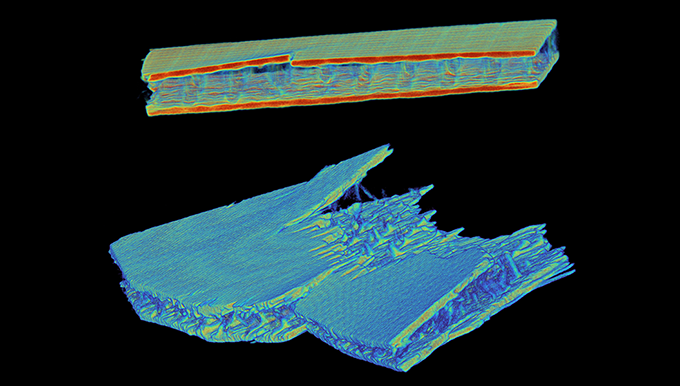
To understand which materials and frame designs are less susceptible to everyday impacts from rock strikes and collisions, Trek engineers intentionally impact sections of bike frames and then analyze them with Lumafield’s CT scanning platform. Voyager enables engineers “to be able to do some real exact measurements of the impact site after the first hit, second hit, third hit,” Chad Manuell says, which “allows us much more information than was previously available.”
Megan Bland-Rothgeb, a Helmet Research Engineer at Trek, is able to use CT to quantify helmet impacts. This allows Trek to analyze designs to create high-performance helmets. Lumafield’s Expanded Scan Volume feature broadens the field of view on the Neptune scanner, enabling the inspection of parts that are up to 80% larger than before. Many bike helmets fall into this range and can now be fully scanned at high resolution.
Expanded Scan Volume allows me to take fewer steps to quantify the damage to a helmet.
– Megan Bland-Rothgeb, Helmet Research Engineer, Trek
Trek’s meticulous, data-driven approach to understanding bike frame and helmet impact dynamics fuels the development of longer-lasting and more reliable products.
The future of innovation
The Neptune scanner has given us the ability to not only test products that we’re working on, but also take a finalized product, look backwards, and make sure it meets our specifications.
– Jason Schuster, Bontrager Product Design Engineer, Trek
Trek harnesses the power of Lumafield’s Neptune CT scanner and Voyager analysis software to fortify their product development process. From non-destructive testing of bike frames and parts to advancing e-bike battery integration and enhancing safety through quantifying impact, Trek is poised to advance its mission of getting more people on bikes by guiding the next phase of cycling innovation.
.png)