New Performance scanners are here >
Platform
Solutions
All Industries
Aerospace and Defense
Agriculture and Food
Athletic Equipment
Automotive
Batteries
Consumer Packaged Goods
Electronics
Medical Devices
Applications
Resources
White Papers
Case Studies
Webinars
Blog
Insights from lumafield
Go/No-Go
Manufacturing podcast
First Article
Editorial Publication
Company
About
Careers
Press
Events
Launch Voyager
Contact Sales
Menu
PlatformSolutions
Industries
All Industries
Agriculture and Food
Electronics
Aerospace and Defense
Automotive
Athletic Equipment
Consumer Packaged Goods
Medical Devices
Batteries
Applications
Resources
Resources
White Papers
Case Studies
Webinars
Blog
Go/No-Go Podcast
First Article
Company
Company
About
Careers
Press
Events
Contact Sales
Launch Voyager
© 2000 Lumafield. All Rights Reserved.
Application

Failure Analysis

Find the root cause before it becomes a repeat failure.

When a part fails, the investigation starts with a question that traditional methods often can't answer cleanly: did this fail because of how it was designed, how it was made, or how it was used? Destructive analysis destroys the evidence it's trying to read. Visual inspection stays at the surface. Industrial CT gives engineers a complete three-dimensional record of the failed part, intact, before anything is cut, sectioned, or altered.

CT scanning reveals the internal condition of a failed component at the resolution failure analysis requires. Crack origin, propagation path, void distribution, inclusion location, and interface condition are all visible and measurable from a single scan. The investigation starts with complete information rather than inferences drawn from a cross-section that may or may not have captured the relevant geometry.

This Integrated Circuit (IC) has damage to the die and wire bonds, causing it to fail. With Microfocus Neptune, these fine features can be resolved to determine the root cause of the issue.
Plastic regrind comes with the risk of inclusions that could initiate cracks due to their difference in density from the surrounding plastic. Industrial CT helps pinpoint and mitigate this failure mode.

The industries where failure analysis is most consequential are the ones where CT delivers the most clarity. Aerospace and defense manufacturers use CT to investigate fatigue cracks and material failures in turbine blades, structural elements, and engine components where the cost of a missed root cause is a repeat failure in a safety-critical system. Medical device teams use CT to identify internal defects in implants and surgical instruments that preceded failure, producing documented findings that support regulatory response and design correction. In automotive and electronics, CT accelerates warranty part analysis and field return investigation by compressing the time from failed part to documented root cause from weeks to hours.

Lumafield's platform connects failure findings to the corrective action workflow. Scan results live in Voyager, where they can be annotated, shared across teams, and linked to process data to close the loop between what failed in the field and what changes on the line.

Assess your inspection program

Contact our team

Assess your inspection program

Contact our team

Crack origin and propagation

CT resolves the three-dimensional geometry of a fracture from initiation point through propagation path, giving engineers the evidence to distinguish fatigue from overload, identify the stress concentration that started the crack, and determine whether the origin was a material defect, a geometric feature, or an assembly condition. Athletic equipment and aerospace teams use this capability to investigate helmet failures, structural cracks, and component fractures where propagation geometry is the key to understanding mechanism.

Learn More

Material and process defects as failure precursors

Many field failures trace back to defects that were present before the part ever left the factory: porosity in a casting, an inclusion in a molded component, a delamination in a composite, a void at a weld interface. CT identifies these precursors in the failed part and connects them to the failure mechanism, giving process engineers the data to determine whether the defect was a one-off or a systematic production issue. This is the finding that turns a failure investigation into a line improvement.

Learn More

Non-destructive investigation that preserves the evidence

Sectioning a failed part to examine it internally destroys the context the investigation depends on. CT produces a complete internal record without altering the part, preserving it for follow-on testing, legal hold, or regulatory review while delivering more complete three-dimensional data than any single cut plane can provide. For medical devices subject to MDR reporting and forautomotive warranty parts under active litigation, this is not a convenience: it is a requirement.

Learn More
Dowload

What’s a Rich Text element?

What’s a Rich Text element?

The rich text element allows you to create and format headings, paragraphs, blockquotes, images, and video all in one place instead of having to add and format them individually. Just double-click and easily create content.

The rich text element allows you to create and format headings, paragraphs, blockquotes, images, and video all in one place instead of having to add and format them individually. Just double-click and easily create content.

Static and dynamic content editing

Static and dynamic content editing

A rich text element can be used with static or dynamic content. For static content, just drop it into any page and begin editing. For dynamic content, add a rich text field to any collection and then connect a rich text element to that field in the settings panel. Voila!

A rich text element can be used with static or dynamic content. For static content, just drop it into any page and begin editing. For dynamic content, add a rich text field to any collection and then connect a rich text element to that field in the settings panel. Voila!

How to customize formatting for each rich text

How to customize formatting for each rich text

Headings, paragraphs, blockquotes, figures, images, and figure captions can all be styled after a class is added to the rich text element using the "When inside of" nested selector system.

Headings, paragraphs, blockquotes, figures, images, and figure captions can all be styled after a class is added to the rich text element using the "When inside of" nested selector system.

Heading

This is some text inside of a div block.

Related Features

No items found.

Related Applications

No items found.

Featured Resources

No items found.
Featured Case study
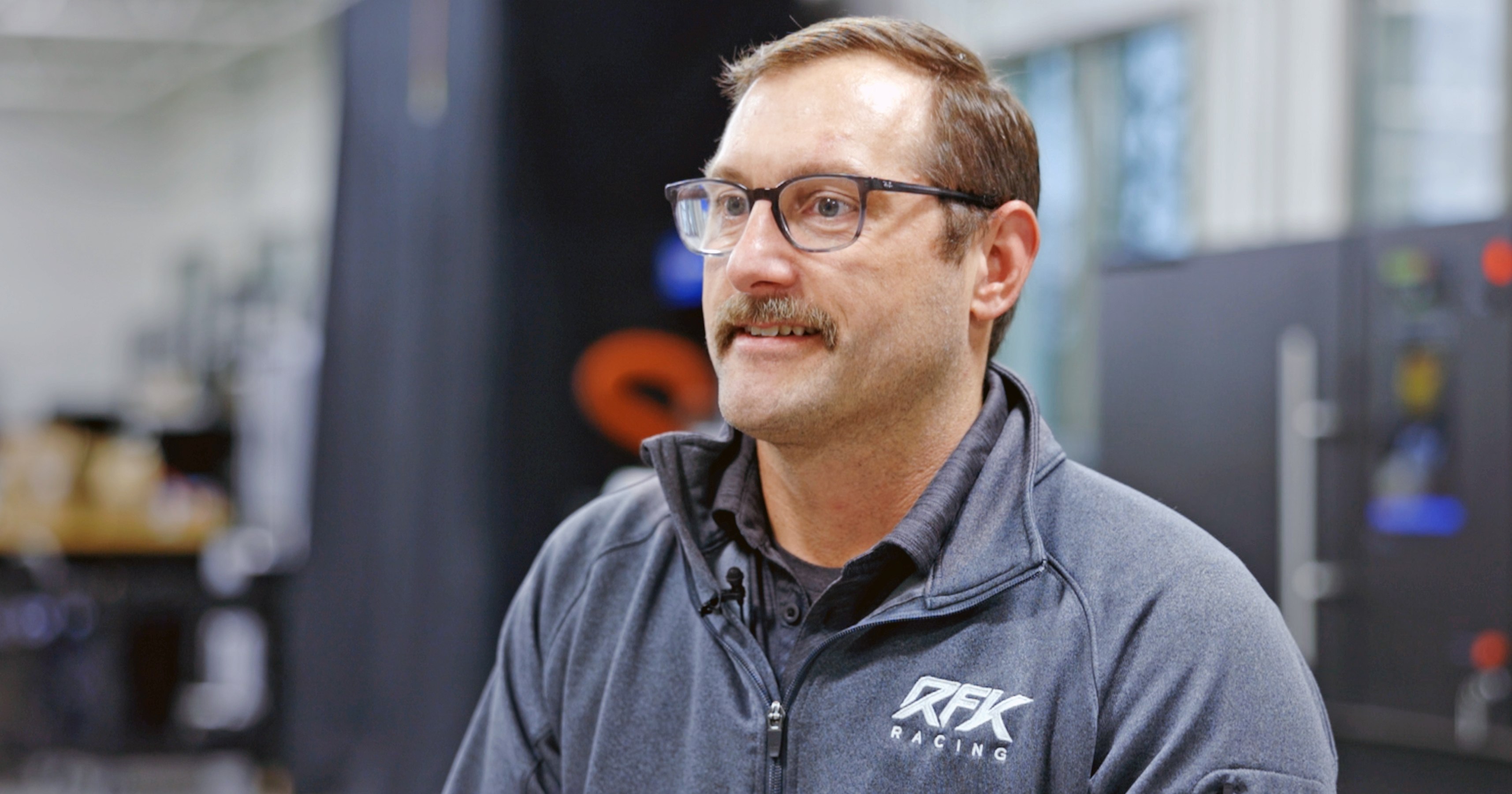
Customer Story: RFK Racing

RFK Racing uses Lumafield's platform to validate parts before they even reach the track.

View Featured Case Study
Featured Case study
Case Study:
Improving Returns Analysis Efficiency

A leading manufacturer of small household appliances reduced their failure analysis time from weeks to hours.

View Featured Case Study

Never ship another bad product.

Protect your reputation and bottom line with CT inspection.

Contact our team
changing the way
the world makes
everything
Solutions
Aerospace and Defense
Agriculture and Food
Athletic Equipment
Automotive
Batteries
Consumer Packaged Goods
Electronics
Medical Devices
All Industries
Applications
Assembly Verification
Competitive Benchmarking and Analysis
Defect Detection
Design Verification and Validation
Dimensional Measurement
Failure Analysis
First Article Inspection (FAI)
Material Characterization
Non-Destructive Testing (NDT)
Quality Assurance and Control (QA & QC)
Reverse Engineering
Supplier Qualification
All Applications
Products
NeptuneTritonVoyagerAtlas
Resources
LearnFirst ArticleWhite PapersEventsWebinarsSupportCase StudiesCT 101Engineers' Blog
Company
LoginAboutCareersPressBlogContact

Sign up for our newsletter

info@lumafield.com
PrivacyInformation SecurityDeployment Services Agreement
© 2000 Lumafield. All Rights Reserved.