New Performance scanners are here >
Platform
Solutions
All Industries
Aerospace and Defense
Agriculture and Food
Athletic Equipment
Automotive
Batteries
Consumer Packaged Goods
Electronics
Medical Devices
Applications
Resources
White Papers
Case Studies
Webinars
Blog
Insights from lumafield
Go/No-Go
Manufacturing podcast
First Article
Editorial Publication
Company
About
Careers
Press
Events
Launch Voyager
Contact Sales
Menu
PlatformSolutions
Industries
All Industries
Agriculture and Food
Electronics
Aerospace and Defense
Automotive
Athletic Equipment
Consumer Packaged Goods
Medical Devices
Batteries
Applications
Resources
Resources
White Papers
Case Studies
Webinars
Blog
Go/No-Go Podcast
First Article
Company
Company
About
Careers
Press
Events
Contact Sales
Launch Voyager
© 2000 Lumafield. All Rights Reserved.
Application

Design Verification and Validation

Confirm your design works before you commit to production.

The gap between a design that looks correct and one that performs correctly is where development programs lose time. Dimensions that conform on paper, assemblies that pass functional tests, and components that meet spec individually can still fail in combination, under load, or at the tolerances production actually delivers. Industrial CT closes that gap by giving engineers a complete, non-destructive view of how a design was actually built and how it actually behaves, before full-scale production locks in the consequences.

CT scanning produces a three-dimensional record of every internal and external feature in a part or assembly. Wall thickness, internal geometry, component position, and material condition are all measurable against CAD nominal without cutting anything open. Deviations from design intent are visible and quantifiable at the stage where they're still cheap to fix.

Industrial CT allows for streamlined design validation and verification to ensure the internal pump assembly inside this insulin delivery system functions as intended.
By overlaying a CAD file in Lumafield's Voyager software, we’re able to compute deviation from the design and visualize it using color maps.

The industries where DV/PV failures carry the highest cost are the ones where CT delivers the most value. Medical device manufacturers use CT to confirm that implants, drug delivery systems, and surgical instruments perform as designed before regulatory submission, catching internal geometry deviations that functional testing alone won't surface. Aerospace teams verify turbine blade geometry, airframe structures, and composite layups against design intent with dimensional precision no other non-destructive method matches. In automotive development, CT replaces destructive sectioning for powertrain and structural components, preserving the part while delivering more complete data. Electronics and athletic equipment teams use the same approach to validate complex geometries and material performance in prototypes before tooling investments are made.

Lumafield's platform connects verification and validation data to the teams that need it. Scan results live in Voyager, where they can be compared against CAD, shared across sites, and carried directly into design review without reformatting or manual handoff.

Assess your inspection program

Contact our team

Assess your inspection program

Contact our team

First article against CAD

The first parts off a new tool rarely match design intent perfectly. CT measures every internal and external feature against CAD nominal in a single scan, identifying dimensional deviations, wall thickness variation, and internal geometry errors before production volume amplifies them. What used to require destructive sectioning and manual measurement now happens non-destructively with a complete digital record.

Learn More

Tolerance stack analysis across an assembly

Individual components can each pass inspection while their combined tolerances produce an assembly that doesn't perform. CT captures the actual position of every component in a built assembly, allowing engineers to measure real-world tolerance accumulation against design predictions and identify stack conditions that functional testing won't catch until late in the development cycle.

Learn More

Destructive test replacement

Sectioning, potting, and physical teardown destroy the evidence they're meant to analyze. CT produces the same dimensional and structural data non-destructively, preserving the part for further testing while delivering a more complete three-dimensional record. For low-volume prototype builds and high-cost components, this is the difference between having one data point and having many.

Learn More
Dowload

What’s a Rich Text element?

What’s a Rich Text element?

The rich text element allows you to create and format headings, paragraphs, blockquotes, images, and video all in one place instead of having to add and format them individually. Just double-click and easily create content.

The rich text element allows you to create and format headings, paragraphs, blockquotes, images, and video all in one place instead of having to add and format them individually. Just double-click and easily create content.

Static and dynamic content editing

Static and dynamic content editing

A rich text element can be used with static or dynamic content. For static content, just drop it into any page and begin editing. For dynamic content, add a rich text field to any collection and then connect a rich text element to that field in the settings panel. Voila!

A rich text element can be used with static or dynamic content. For static content, just drop it into any page and begin editing. For dynamic content, add a rich text field to any collection and then connect a rich text element to that field in the settings panel. Voila!

How to customize formatting for each rich text

How to customize formatting for each rich text

Headings, paragraphs, blockquotes, figures, images, and figure captions can all be styled after a class is added to the rich text element using the "When inside of" nested selector system.

Headings, paragraphs, blockquotes, figures, images, and figure captions can all be styled after a class is added to the rich text element using the "When inside of" nested selector system.

Heading

This is some text inside of a div block.

Related Features

No items found.

Related Applications

No items found.

Featured Resources

Featured Resource
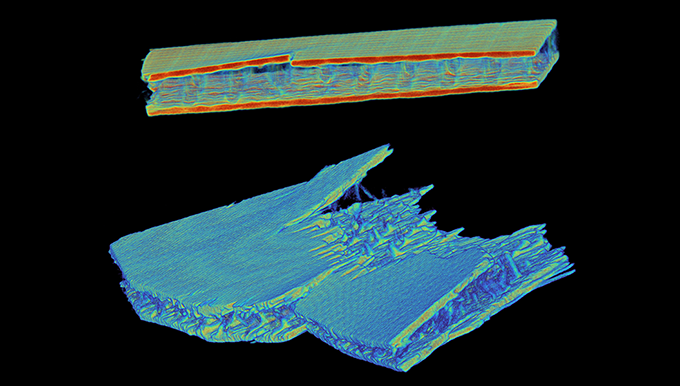
Virtual Validation with industrial CT

Industrial CT provides comprehensive data and improves simulations for Virtual Validation and Verification.
Read More
Featured Case study
Case Study: From Destructive Testing to Optimized DV/PV

A global automotive supplier streamlined the Design Verification and Production Validation (DV/PV) process.

View Featured Case Study
Featured Case study
Customer Story: Alloy Enterprises

An advanced manufacturing operation uses Lumafield’s CT platform to validate the invisible—from complex liquid cooling systems to the machines that build them.

View Featured Case Study

Never ship another bad product.

Protect your reputation and bottom line with CT inspection.

Contact our team
changing the way
the world makes
everything
Solutions
Aerospace and Defense
Agriculture and Food
Athletic Equipment
Automotive
Batteries
Consumer Packaged Goods
Electronics
Medical Devices
All Industries
Applications
Assembly Verification
Competitive Benchmarking and Analysis
Defect Detection
Design Verification and Validation
Dimensional Measurement
Failure Analysis
First Article Inspection (FAI)
Material Characterization
Non-Destructive Testing (NDT)
Quality Assurance and Control (QA & QC)
Reverse Engineering
Supplier Qualification
All Applications
Products
NeptuneTritonVoyagerAtlas
Resources
LearnFirst ArticleWhite PapersEventsWebinarsSupportCase StudiesCT 101Engineers' Blog
Company
LoginAboutCareersPressBlogContact

Sign up for our newsletter

info@lumafield.com
PrivacyInformation SecurityDeployment Services Agreement
© 2000 Lumafield. All Rights Reserved.