New Performance scanners are here >
Platform
Solutions
All Industries
Aerospace and Defense
Agriculture and Food
Athletic Equipment
Automotive
Batteries
Consumer Packaged Goods
Electronics
Medical Devices
Applications
Resources
White Papers
Case Studies
Webinars
Blog
Insights from lumafield
Go/No-Go
Manufacturing podcast
First Article
Editorial Publication
Company
About
Careers
Press
Events
Launch Voyager
Contact Sales
Menu
PlatformSolutions
Industries
All Industries
Agriculture and Food
Electronics
Aerospace and Defense
Automotive
Athletic Equipment
Consumer Packaged Goods
Medical Devices
Batteries
Applications
Resources
Resources
White Papers
Case Studies
Webinars
Blog
Go/No-Go Podcast
First Article
Company
Company
About
Careers
Press
Events
Contact Sales
Launch Voyager
© 2000 Lumafield. All Rights Reserved.
Application

Defect Detection

Find what's wrong inside before it becomes a problem outside.

Most product failures originate at defects that are invisible to surface inspection. A void in a casting, a delamination in a composite, a solder joint that looks intact but isn't: none of these show up until a part fails in testing, in the field, or in a patient. By the time they're visible, the cost has already compounded. Industrial CT finds them first.

CT scanning produces a complete three-dimensional record of a part's interior without cutting, probing, or destroying it. Every void, crack, inclusion, and interface condition is visible and measurable. Engineers can locate defects precisely, quantify their size and distribution, and determine whether they fall inside or outside acceptable limits, all from a single scan.

Ready to learn more about detecting defects with CT?
Industrial CT uncovers solder voids on the PCB of this endoscope, which could lead to product failure and jeopardize patients’ lives.
In this scan of a coffee bottle, we find an unreliable seal that does not make contact with the inner wall of the lid, resulting in a leak.

The defects CT catches are the ones that matter most to product integrity. In automotive castings and powertrain components, porosity and shrinkage voids concentrate stress and accelerate fatigue. In medical devices, solder voids and internal cracks in surgical tools and implants create failure modes that regulatory inspection cannot detect. In battery cells and packs, anode overhang, debris, and internal shorts are invisible until they become safety events. In consumer packaged goods, seal failures and structural inconsistencies reach customers because no inspection method short of CT can find them reliably at speed.

Lumafield's platform connects defect detection to the decisions that follow. When a scan identifies a defect, Voyager captures the finding in a traceable record that can be shared across teams, linked to process data, and carried into root cause analysis. The gap between seeing a problem and acting on it closes.

Assess your inspection program

Ready to learn more about detecting defects with CT?

Contact our team

Assess your inspection program

Contact our team

Porosity and voids

Internal voids form during casting, molding, and additive manufacturing when gas becomes trapped or material shrinks unevenly during solidification. CT maps void location, size, and distribution in three dimensions, giving engineers the data to determine whether a part meets acceptance criteria or needs to be scrapped before it travels further down the line.

Learn More

Cracks and delamination

Subsurface cracks and layer separations in composites, welds, and bonded assemblies are among the hardest defects to detect by any other method. CT resolves fine crack geometry and delamination extent across the full part volume, not just at the surface.

Learn More

Solder voids, inclusions, and foreign material

In electronics and medical devices, solder voids reduce thermal and electrical conductivity at joints that are critical to function. Foreign material inclusions introduce unpredictable failure modes. CT identifies both with the resolution and repeatability production quality control requires.

Learn More
Dowload

What’s a Rich Text element?

What’s a Rich Text element?

The rich text element allows you to create and format headings, paragraphs, blockquotes, images, and video all in one place instead of having to add and format them individually. Just double-click and easily create content.

The rich text element allows you to create and format headings, paragraphs, blockquotes, images, and video all in one place instead of having to add and format them individually. Just double-click and easily create content.

Static and dynamic content editing

Static and dynamic content editing

A rich text element can be used with static or dynamic content. For static content, just drop it into any page and begin editing. For dynamic content, add a rich text field to any collection and then connect a rich text element to that field in the settings panel. Voila!

A rich text element can be used with static or dynamic content. For static content, just drop it into any page and begin editing. For dynamic content, add a rich text field to any collection and then connect a rich text element to that field in the settings panel. Voila!

How to customize formatting for each rich text

How to customize formatting for each rich text

Headings, paragraphs, blockquotes, figures, images, and figure captions can all be styled after a class is added to the rich text element using the "When inside of" nested selector system.

Headings, paragraphs, blockquotes, figures, images, and figure captions can all be styled after a class is added to the rich text element using the "When inside of" nested selector system.

Heading

This is some text inside of a div block.

Related Features

No items found.

Related Applications

No items found.

Featured Resources

No items found.
Featured Case study
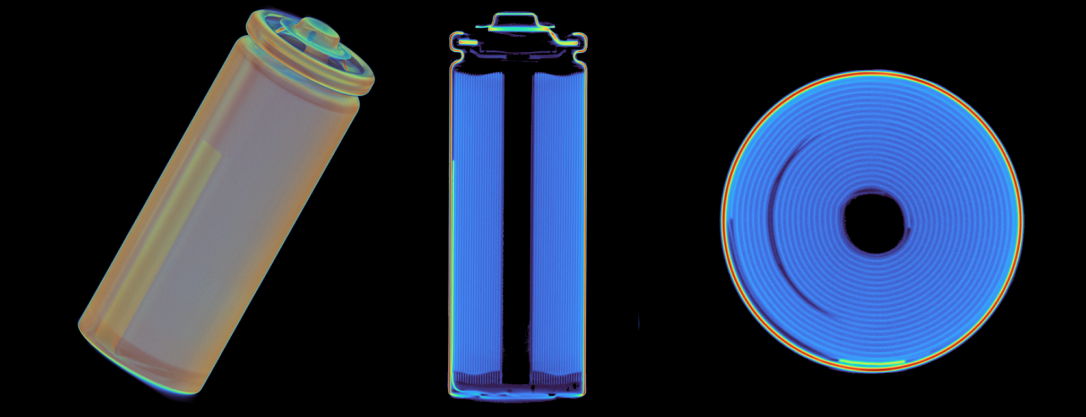
Case Study: Maximizing Testing Quality for Life-Saving Components

A global automotive safety leader saved over $100K annually on X-ray machine maintenance.
View Featured Case Study
Featured Case study
Case Study:
350% ROI on Lithium Battery Testing

A global CPG leader streamlined battery quality control by replacing costly outsourced inspection.

View Featured Case Study

Never ship another bad product.

Protect your reputation and bottom line with CT inspection.

Contact our team
changing the way
the world makes
everything
Solutions
Aerospace and Defense
Agriculture and Food
Athletic Equipment
Automotive
Batteries
Consumer Packaged Goods
Electronics
Medical Devices
All Industries
Applications
Assembly Verification
Competitive Benchmarking and Analysis
Defect Detection
Design Verification and Validation
Dimensional Measurement
Failure Analysis
First Article Inspection (FAI)
Material Characterization
Non-Destructive Testing (NDT)
Quality Assurance and Control (QA & QC)
Reverse Engineering
Supplier Qualification
All Applications
Products
NeptuneTritonVoyagerAtlas
Resources
LearnFirst ArticleWhite PapersEventsWebinarsSupportCase StudiesCT 101Engineers' Blog
Company
LoginAboutCareersPressBlogContact

Sign up for our newsletter

info@lumafield.com
PrivacyInformation SecurityDeployment Services Agreement
© 2000 Lumafield. All Rights Reserved.