New Performance scanners are here >
Platform
Solutions
All Industries
Aerospace and Defense
Agriculture and Food
Athletic Equipment
Automotive
Batteries
Consumer Packaged Goods
Electronics
Medical Devices
Applications
Resources
White Papers
Case Studies
Webinars
Blog
Insights from lumafield
Go/No-Go
Manufacturing podcast
First Article
Editorial Publication
Company
About
Careers
Press
Events
Launch Voyager
Contact Sales
Menu
PlatformSolutions
Industries
All Industries
Agriculture and Food
Electronics
Aerospace and Defense
Automotive
Athletic Equipment
Consumer Packaged Goods
Medical Devices
Batteries
Applications
Resources
Resources
White Papers
Case Studies
Webinars
Blog
Go/No-Go Podcast
First Article
Company
Company
About
Careers
Press
Events
Contact Sales
Launch Voyager
© 2000 Lumafield. All Rights Reserved.
Application

Non-Destructive Testing (NDT)

Inspect the full part instead of a sample. Find what's wrong without destroying the evidence.

Non-destructive testing is the practice of inspecting a part or material without altering it. The methods that fall under NDT, including ultrasonic testing, dye penetrant inspection, X-ray film, and visual inspection, exist because the alternative is worse: cutting, sectioning, or destroying the part to see what's inside. Every conventional NDT method makes a tradeoff between what it can reveal and what it leaves unseen. Industrial CT changes that tradeoff.

CT scanning produces a complete three-dimensional record of a part's interior in a single pass. Every void, crack, inclusion, wall thickness variation, and interface condition is visible and measurable without probes, couplants, or cut planes. Where ultrasonic testing samples a region and X-ray film collapses a three-dimensional structure onto a two-dimensional image, CT resolves the full volume. Nothing is inferred from a projection. Nothing is missed because the probe didn't reach it.

Destructive testing of batteries can be dangerous. Industrial CT streamlines precise inspection of anode overhang and separator integrity without damaging sensitive power cells.

The industries where NDT requirements are most demanding are the ones where CT delivers the most value over conventional methods. Aerospace and defense manufacturers use CT to inspect composite structures, turbine blades, and weld integrity where volumetric coverage is a requirement, not a preference. Medical device teams replace destructive test steps with CT to satisfy FDA validation requirements without consuming prototype inventory. Automotive suppliers use CT for PPAP and incoming inspection where internal defect documentation is required by OEM quality standards. Electronics manufacturers inspect solder joints, PCB assemblies, and connectors where X-ray film and 2D inspection leave voids and bridging unresolved in three dimensions.‍

For production environments where speed matters as much as coverage, Lumafield's platform extends NDT across the full inspection spectrum. Inline X-ray systems deliver 2.5D pass/fail inspection at up to five parts per second, integrating directly into the production line for 100% inspection without sampling. Where Neptune provides the complete volumetric record for lab investigation, process development, and high-stakes inspection decisions, Mars handles the production floor. Together they cover the full range from inline screening to detailed internal investigation under one software platform.

Lumafield's platform connects NDT findings to the decisions that follow. Scan results live in Voyager, where they can be annotated, shared across sites, compared against CAD, and linked to process data without manual transcription or reformatting.

Assess your inspection program

Contact our team

Assess your inspection program

Contact our team

Full volumetric coverage vs. sampling

Conventional NDT methods inspect regions, not volumes. Ultrasonic testing covers the area a probe touches. X-ray film captures a projection that compresses depth into a single plane. CT scans the entire part in three dimensions, resolving every internal feature at the same resolution regardless of location or geometry. For complex parts with internal features that vary in three dimensions, sampling is not inspection: it is a guess about where the defect isn't.

Learn More

Speed and throughput at production scale

Manual NDT is slow, operator-dependent, and difficult to scale without sacrificing coverage. CT-based inspection produces a complete volumetric record in a single automated scan, with results that are consistent across operators and repeatable across production lots. For inline applications, automated 2.5D X-ray inspection at production speed enables 100% part screening without the throughput limits that CT carries in a lab environment.

Learn More

Elimination of destructive test steps

Destructive testing is NDT's most expensive alternative. Sectioning, potting, and physical teardown produce one data point from one part and consume the evidence in the process. CT replaces these steps with a non-destructive record that is more complete, three-dimensional, and permanent. For low-volume builds, high-cost components, and parts under regulatory or legal hold, this is not an incremental improvement: it is a different category of capability.

Learn More
Dowload

What’s a Rich Text element?

What’s a Rich Text element?

The rich text element allows you to create and format headings, paragraphs, blockquotes, images, and video all in one place instead of having to add and format them individually. Just double-click and easily create content.

The rich text element allows you to create and format headings, paragraphs, blockquotes, images, and video all in one place instead of having to add and format them individually. Just double-click and easily create content.

Static and dynamic content editing

Static and dynamic content editing

A rich text element can be used with static or dynamic content. For static content, just drop it into any page and begin editing. For dynamic content, add a rich text field to any collection and then connect a rich text element to that field in the settings panel. Voila!

A rich text element can be used with static or dynamic content. For static content, just drop it into any page and begin editing. For dynamic content, add a rich text field to any collection and then connect a rich text element to that field in the settings panel. Voila!

How to customize formatting for each rich text

How to customize formatting for each rich text

Headings, paragraphs, blockquotes, figures, images, and figure captions can all be styled after a class is added to the rich text element using the "When inside of" nested selector system.

Headings, paragraphs, blockquotes, figures, images, and figure captions can all be styled after a class is added to the rich text element using the "When inside of" nested selector system.

Heading

This is some text inside of a div block.

Related Features

No items found.

Related Applications

No items found.

Featured Resources

Featured Resource
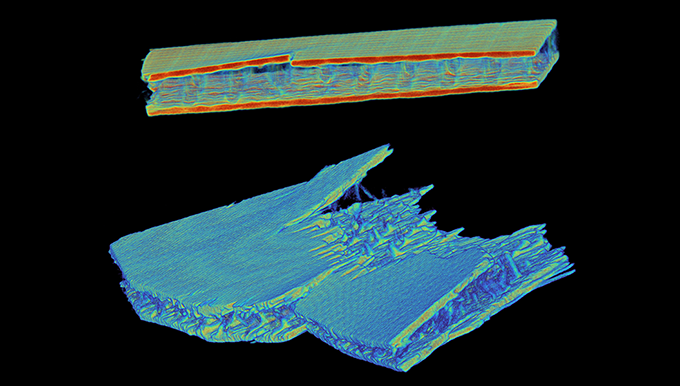
Manual sectioning vs. industrial CT

Industrial CT provides deeper insights than destructive testing, and is faster, safer, and non-destructive.
Read More
Featured Case study
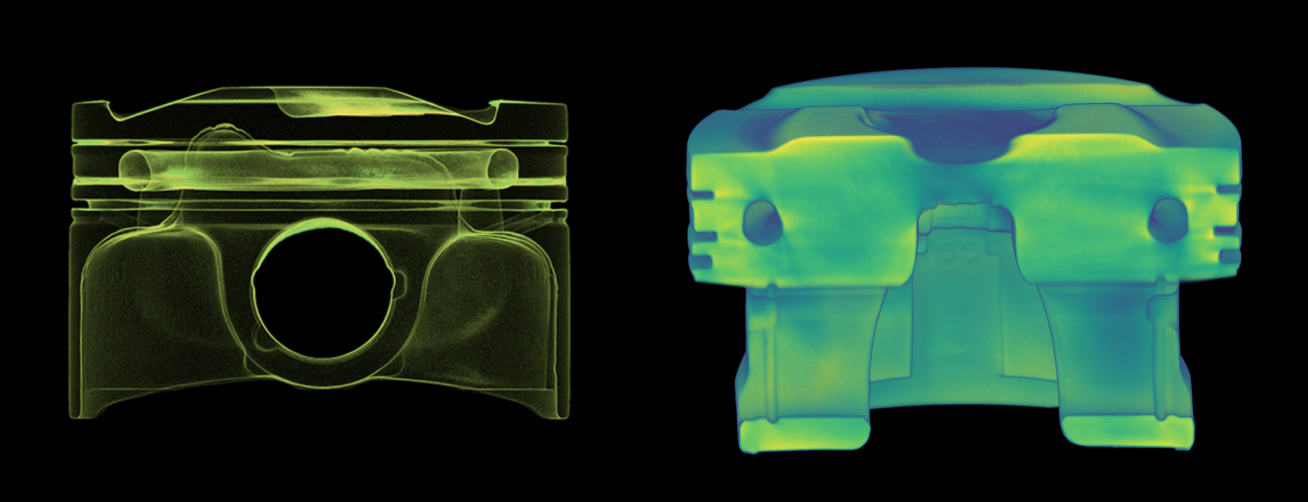
Case Study: From Destructive Testing to Optimized DV/PV

A global automotive supplier streamlined the Design Verification and Production Validation (DV/PV) process.
View Featured Case Study
Featured Case study
Case Study: Maximizing Testing Quality for Life-Saving Components

A global automotive safety leader saved over $100K annually on X-ray machine maintenance.

View Featured Case Study

Never ship another bad product.

Protect your reputation and bottom line with CT inspection.

Contact our team
changing the way
the world makes
everything
Solutions
Aerospace and Defense
Agriculture and Food
Athletic Equipment
Automotive
Batteries
Consumer Packaged Goods
Electronics
Medical Devices
All Industries
Applications
Assembly Verification
Competitive Benchmarking and Analysis
Defect Detection
Design Verification and Validation
Dimensional Measurement
Failure Analysis
First Article Inspection (FAI)
Material Characterization
Non-Destructive Testing (NDT)
Quality Assurance and Control (QA & QC)
Reverse Engineering
Supplier Qualification
All Applications
Products
NeptuneTritonVoyagerAtlas
Resources
LearnFirst ArticleWhite PapersEventsWebinarsSupportCase StudiesCT 101Engineers' Blog
Company
LoginAboutCareersPressBlogContact

Sign up for our newsletter

info@lumafield.com
PrivacyInformation SecurityDeployment Services Agreement
© 2000 Lumafield. All Rights Reserved.