FREE WHITE PAPER

Heading

Date
This is some text inside of a div block.
FREE WHITE PAPER

Heading 1

Heading 2

Heading 3

Heading 4

Heading 5
Heading 6

Lorem ipsum dolor sit amet, consectetur adipiscing elit, sed do eiusmod tempor incididunt ut labore et dolore magna aliqua. Ut enim ad minim veniam, quis nostrud exercitation ullamco laboris nisi ut aliquip ex ea commodo consequat. Duis aute irure dolor in reprehenderit in voluptate velit esse cillum dolore eu fugiat nulla pariatur.

Block quote

Ordered list

  1. Item 1
  2. Item 2
  3. Item 3

Unordered list

  • Item A
  • Item B
  • Item C

Text link

Bold text

Emphasis

Superscript

Subscript

Heading 1

Heading 2

Heading 3

Heading 4

Heading 5
Heading 6

Lorem ipsum dolor sit amet, consectetur adipiscing elit, sed do eiusmod tempor incididunt ut labore et dolore magna aliqua. Ut enim ad minim veniam, quis nostrud exercitation ullamco laboris nisi ut aliquip ex ea commodo consequat. Duis aute irure dolor in reprehenderit in voluptate velit esse cillum dolore eu fugiat nulla pariatur.

Block quote

Ordered list

  1. Item 1
  2. Item 2
  3. Item 3

Unordered list

  • Item A
  • Item B
  • Item C

Text link

Bold text

Emphasis

Superscript

Subscript

Download Resource
Thank you! Your submission has been received!
Oops! Something went wrong while submitting the form.

Inside a Mythbusters origin story with Adam Savage

Edited by
Date
December 19, 2022

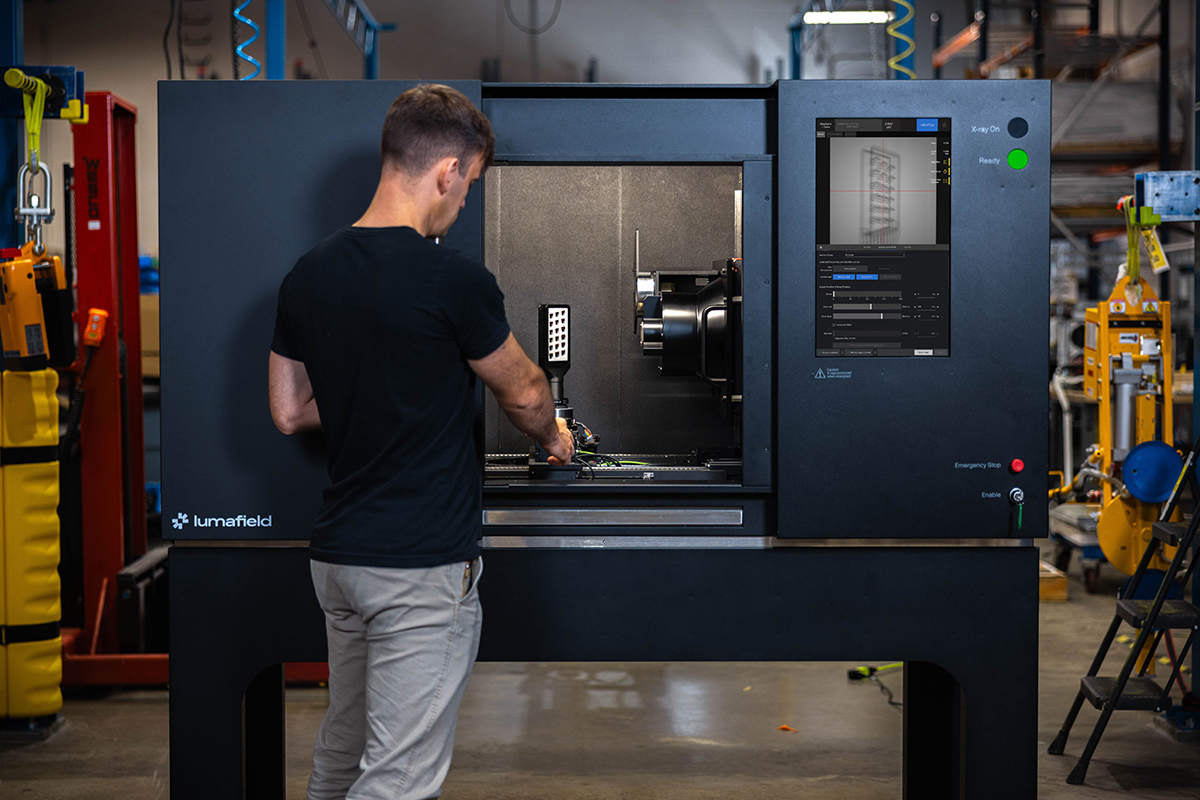
Adam Savage and the Tested team dropped by Lumafield’s San Francisco office once again, this time to use our Neptune industrial CT scanner to excavate a Mythbusters origin story.

Our Voyager software combines thousands of x-ray images taken from different angles into a 3D model that allows us to see an object’s structure—both external and internal. Engineers rely on our technology throughout the design and manufacturing process to perfect their products—everything from lithium-ion batteries to medical devices.

Buster, the “sixth host” of the original Mythbusters—after Adam, Jamie Hyneman, Tory Belleci, Kari Byron, and Grant Imahara—is a Hybrid II crash test dummy designed to measure human reaction to automotive impact. He survived untold abuse and damage over the course of 10 years on the show, beginning with an initial drop from 170 feet when he withstood 700 G of force (seven is enough to kill a person).

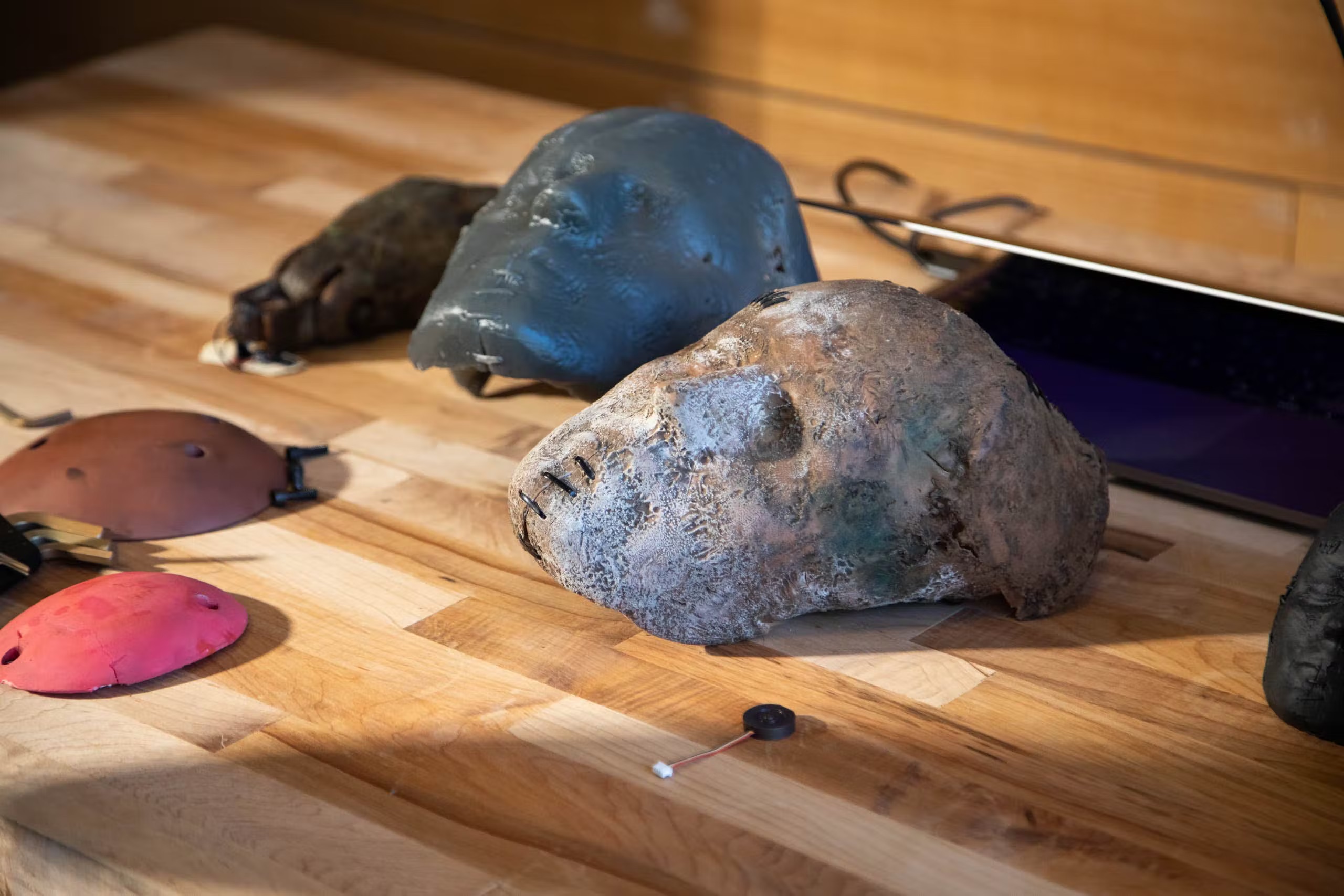
“This might be the grossest thing I’ve ever CT scanned” is really saying something coming from Lumafield CEO and co-founder Eduardo Torrealba. Eduardo walked Adam through scans of Buster’s hand and face, then turned to the tech hidden inside a modern crash test dummy. At the end of the episode, Eduardo hands over a special memento: a 3D printed rendition of Buster's face, created from our CT scan, that captures features as small as his improvised stitching.

With CT scanning, we can isolate materials and peel back the vinyl on Buster’s hand to see the steel “bone” underneath. More than the difference in densities between these component parts, our software allows a glimpse at the dummy's manufacturing process, which has changed surprisingly little since the 1970s. A slice view shows exactly how the two elements interact when clamped together.

Buster’s face, though not a complex mechanical assembly, still tells a story. Adam recalls how Kari Byron sewed the stitches that kept Buster together; with CT, you can see underneath them to fully appreciate her craftsmanship. Crowning Buster’s head is a compacted spot of higher density—evidence of just how many times he’s been dropped on his head.

Adam also shared the small head of a child crash test dummy, an analog to a 10-year-old. Inside a plate on the back of its head, you’d typically find a transducer to measure impacts—likely using a wheatstone bridge with four resistors. In this instrument, three legs of the bridge have set resistance values, but the fourth is a variable resistor. By measuring the change in voltage across the circuits, you can determine how much force the head endures during impact.
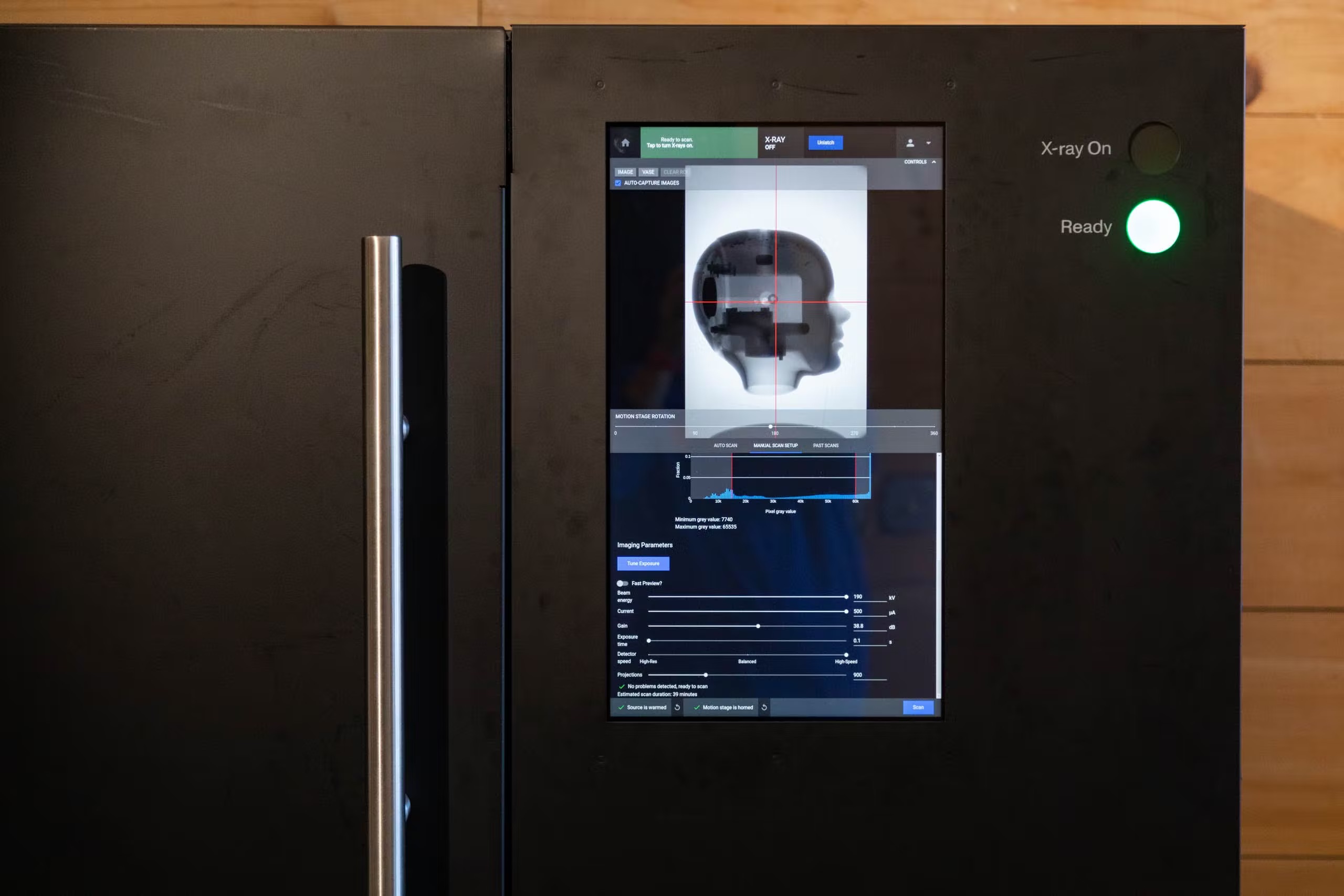
The way Eduardo and Adam examine these components is a lot like how our customers use the Neptune scanner. They want to know if they’re positioning sensors correctly, if their fasteners are screwed in the right way, and if their molding processes are sound. Industrial CT gives engineers the confidence to know exactly what’s there, even down to the smallest stitch.

As a parting gift, we brought Buster back to life. Having extracted STL models from our scan, Eduardo presented Adam with a pair of highly detailed 3D prints of Buster, scars and all. You can learn more about the process of getting from CT scan to 3D print here.
Engineers working on everything from performance athletic equipment to consumer packaging would agree with Adam when he says that “every time I’m looking at one of these scans, it gives me insight.” If you’re interested in exploring how industrial CT can help you develop this unparalleled insight into your application, contact us!

Article
Article

Inside a Mythbusters origin story with Adam Savage

December 19, 2022
Article

Inside a Mythbusters origin story with Adam Savage

Adam Savage and the Tested team dropped by Lumafield’s San Francisco office once again, this time to use our Neptune industrial CT scanner to excavate a Mythbusters origin story.

Our Voyager software combines thousands of x-ray images taken from different angles into a 3D model that allows us to see an object’s structure—both external and internal. Engineers rely on our technology throughout the design and manufacturing process to perfect their products—everything from lithium-ion batteries to medical devices.

Buster, the “sixth host” of the original Mythbusters—after Adam, Jamie Hyneman, Tory Belleci, Kari Byron, and Grant Imahara—is a Hybrid II crash test dummy designed to measure human reaction to automotive impact. He survived untold abuse and damage over the course of 10 years on the show, beginning with an initial drop from 170 feet when he withstood 700 G of force (seven is enough to kill a person).

“This might be the grossest thing I’ve ever CT scanned” is really saying something coming from Lumafield CEO and co-founder Eduardo Torrealba. Eduardo walked Adam through scans of Buster’s hand and face, then turned to the tech hidden inside a modern crash test dummy. At the end of the episode, Eduardo hands over a special memento: a 3D printed rendition of Buster's face, created from our CT scan, that captures features as small as his improvised stitching.

With CT scanning, we can isolate materials and peel back the vinyl on Buster’s hand to see the steel “bone” underneath. More than the difference in densities between these component parts, our software allows a glimpse at the dummy's manufacturing process, which has changed surprisingly little since the 1970s. A slice view shows exactly how the two elements interact when clamped together.

Buster’s face, though not a complex mechanical assembly, still tells a story. Adam recalls how Kari Byron sewed the stitches that kept Buster together; with CT, you can see underneath them to fully appreciate her craftsmanship. Crowning Buster’s head is a compacted spot of higher density—evidence of just how many times he’s been dropped on his head.

Adam also shared the small head of a child crash test dummy, an analog to a 10-year-old. Inside a plate on the back of its head, you’d typically find a transducer to measure impacts—likely using a wheatstone bridge with four resistors. In this instrument, three legs of the bridge have set resistance values, but the fourth is a variable resistor. By measuring the change in voltage across the circuits, you can determine how much force the head endures during impact.

The way Eduardo and Adam examine these components is a lot like how our customers use the Neptune scanner. They want to know if they’re positioning sensors correctly, if their fasteners are screwed in the right way, and if their molding processes are sound. Industrial CT gives engineers the confidence to know exactly what’s there, even down to the smallest stitch.

As a parting gift, we brought Buster back to life. Having extracted STL models from our scan, Eduardo presented Adam with a pair of highly detailed 3D prints of Buster, scars and all. You can learn more about the process of getting from CT scan to 3D print here.

Engineers working on everything from performance athletic equipment to consumer packaging would agree with Adam when he says that “every time I’m looking at one of these scans, it gives me insight.” If you’re interested in exploring how industrial CT can help you develop this unparalleled insight into your application, contact us!

Voyager Inspection Workflows
Introduction to Voyager
Introduction to Neptune
Introduction to Industrial CT
Advancing Automotive Inspection: Industrial CT for Better Outcomes
Introducing Neptune Performance and Triton Performance
Manufacturers Know Quality Costs Money. Most Don't Know How Much.
The Real Cost of a Product Recall and How to Prevent One
What Industrial CT Scanning Does for Manufacturing Quality
Next-Generation Drones: Protecting Performance with Industrial CT
Explore more posts
メインコンテンツへスキップ
World Cup Scan of the Month >
プラットフォーム
分野別ソリューション
すべての業界
バッテリー
医療機器
消費財
スポーツ用品
自動車
航空宇宙/防衛
農業と食品
電子機器
用途別アプリケーション
各種資料
技術資料
ケーススタディ
オンラインセミナー
Blog
Insights from lumafield
Go/No-Go
Manufacturing podcast
First Article
Editorial Publication
企業情報
会社概要
採用情報
プレスリリース
Events
Voyager を起動
お問い合わせはこちら
メニュー
製品業界
業界
すべての業界
電子機器
医療機器
自動車
消費財
バッテリー
農業と食品
航空宇宙/防衛
スポーツ用品
[アプリケーション]
リソース
リソース
ホワイトペーパー
101
オンラインセミナー
最初の記事
Go/No-Go Podcast
First Article
会社
会社
について
採用情報
プレス
Events
セールスに問い合わせる
ボイジャーを起動
© 2000 Lumafield. All Rights Reserved.
世界の”ものづくり”を変える。
分野別ソリューション
バッテリー
医療機器
消費財
スポーツ用品
自動車
航空宇宙/防衛
農業と食品
電子機器
すべての業界
用途別アプリケーション
リバースエンジニアリング
ファースト・アーティクル・インスペクション (FAI)
品質保証と品質管理
寸法測定
故障解析
材料特性評価
欠陥検出
競合ベンチマークと分析
組み立て検証
設計検証と妥当性の確認
サプライヤー適格性評価
非破壊検査 (NDT)
すべてのアプリケーション
製品
ネプチューントリトンボイジャーアトラス
各種資料
学習コンテンツメディア技術資料ウェビナーオンラインセミナー初回CTスキャン分析ガイドケーススタディCT入門エンジニアブログ
企業情報
ログイン会社概要採用情報プレスリリースブログお問い合わせ

ニュースレターに登録する

info@lumafield.com
プライバシー情報セキュリティ導入サービス契約
© 2000 ルマフィールド。全著作権所有。