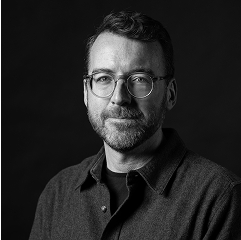
In this episode:
Federico Faggin designed the first microprocessor. The Intel 4004 was the chip that first made it possible to put an entire programmable computer on a single piece of silicon. The process technology he developed at Fairchild Semiconductor became the foundation for every microprocessor, memory chip, and logic device built in the half-century since. The touchscreen on your phone exists because of work he went on to do at Synaptics in the 1990s, when his team replaced the trackball with capacitive touch. In between, he spent years in the 1980s building hardware for neural networks at a moment when the AI research establishment considered the whole idea a dead end. History has proven him right.
Faggin joined Jon to recount the physical reality of early chip design, from drawing transistors by hand at 500 times scale to sizing circuits with a slide rule and building the Z80 with 11 people and $400,000. Decades of working at the vanguard of silicon technology led him to confront the ultimate capabilities of computers. That question has consumed the second half of his career. He has written a book, Irreducible (2024), arguing that consciousness is not something a classical computer can produce, no matter what it seems able to accomplish, and he cautions against allowing AI enthusiasm to make us forget what makes us human in the first place.
Links from the discussion:
Irreducible: Consciousness, Life, Computers and Human Nature (Essentia Books): https://www.collectiveinkbooks.com/essentia-books/our-books/irreducible-consciousness-life-computers-human-nature
Irreducible on Amazon: https://www.amazon.com/dp/1803415096
Silicon: From the Invention of the Microprocessor to the New Science of Consciousness on Amazon: https://www.amazon.com/Silicon-Invention-Microprocessor-Science-Consciousness/dp/1949003418
Federico’s profile at the Computer History Museum: https://computerhistory.org/profile/federico-faggin/
Tom Wolfe, "The Tinkerings of Robert Noyce" (Esquire, 1983): https://web.stanford.edu/class/e145/2007_fall/materials/noyce.html
Transcript:
My guest today is Federico Faggin. He's an Italian physicist, engineer, inventor, and entrepreneur who's had a critical role in the development of computing during the 20th century, and now is a leader in thinking about artificial intelligence as well. Federico, it's wonderful to have you with us.
Thank you, it's a pleasure.
Give us a little bit of background. How did you come to the world of semiconductors, where you're known principally for designing the original Intel 4004 processor? How did you wind up there?
I was working in Italy after graduation from university at SGS Fairchild, a company that was linked to Fairchild Semiconductor, the company that invented the integrated circuit in Silicon Valley. In early 1968, in an exchange of engineers, I was sent to Palo Alto, to the R&D division of Fairchild. And there I developed the MOS silicon gate technology, which was the fundamental technology that made it possible to build an entire computer with the same technology in a piece of silicon. Before that, it could not be done. You could not do dynamic random access memories, you could not do non-volatile memories, analog devices of high capacity, or the microprocessor. That technology made possible all the future developments in microelectronics related to making computers.
The first integrated circuits to use it were five times faster. You could put twice as many transistors. The leakage current was 500 times less than the original MOS. The performance was so powerful that it made possible everything I mentioned. The first integrated circuit to use it was a device from Fairchild, the 3708, which I designed as well. It was in production by the end of '68.
Intel actually took that technology — they copied it, and saying "copied" is a gentle way to put it. They decided to design dynamic RAM with that technology, which was of course the fortune of Intel. But they also had a project waiting — a custom project where they wanted to build a CPU. The only technology that could do it was the silicon gate technology, but there were a couple of additional inventions they needed, which I brought with me when I joined Intel in 1970.
So I designed the first microprocessor, the 4004, at Intel, and then the first 8-bit microprocessor, the 8008, and the first high-performance microprocessor, the 8080, which was six times faster than the first microprocessor using P-channel technology. With that performance, the market really took off. The first personal computers used the 8080. There was sufficient performance to do that.
And then I started my first company after that. Intel did not understand that microprocessors were the future. The 8080, for example — they waited nine months to let me do it. The microprocessor I had invented would have been so much better than what we were doing before.
Intel thought of itself as a memory company at the time.
Absolutely. And I got so frustrated, because we lost nine months to the competition. Six months after the 8080 was in the market, Motorola brought their own first microprocessor to market — the first competitor we had. That was in 1974. I said, we cannot afford to lose the battle here, because the other people are seeing this as the future. And when it came to the successor to the 8080, Intel was still waiting it out. I said, forget it. I'm gone.
So I started my own company, Zilog, and developed the Z80 microprocessor. It was the first third-generation microprocessor — twice as fast and much better than the 8080, though compatible with it. That made the fortune of Zilog.
Then I started other companies. In 1986, I started a company to develop chips for neural networks, to make computers that could learn. That was 40 years ago, when the AI experts were laughing at us. "Neural networks will never work. What a silly idea." But in the last ten years, neural networks are the ones that solved the problems those people were never able to solve.
It was during that time that I became interested in neuroscience and biology, trying to understand how the brain works, and also in consciousness — despite continuing to work as an entrepreneur and CEO of startup companies. Eventually, by 2009, I started to get out of everything I was doing to focus on the study of consciousness, trying to join physics with the spiritual aspects that consciousness shows. In 2011, I started the Federico and Elvia Faggin Foundation to study consciousness and provide funds for institutes and universities doing that work. And now we have the first scientific theory of consciousness — scientific, because it can make predictions and can be falsified.
I'd like to return to the beginning of this trajectory, to 1968 when you were at Fairchild and came to Palo Alto. What was the atmosphere like in the semiconductor industry at the time? Did you and your colleagues understand what you were advancing?
It was the very beginning of the adventure. In those days, the MOS technology could hardly do several hundred gates of random logic — not enough to make CPUs. It was slow. Bipolar was fast, but the density was very, very small. You could do at most medium-scale integration, hardly a CPU on a chip. The only technology that eventually made all of this possible is the technology developed in 1968. That was the missing link. And then everything started growing.
At that time, it was pioneer land almost. The semiconductor industry had started — in '57, I believe, with Fairchild Semiconductor. The first silicon transistors were sold in '59, and the first integrated circuit was sold in '61 or '62. A Swiss engineer, Jean Hoerni, developed the planar process, which was the way to do many transistors on a slice of silicon, on a wafer made of single-crystal silicon. That was really the basic invention. It's surprising that Jean Hoerni is never mentioned, but he is really the inventor of the integrated circuit. His technology was then used for bipolar integrated circuits. And in '64 and '65, the first company, General Microelectronics, came out with the first commercial MOS integrated circuits.
Those were the very pioneering years. I would venture to say that maybe 20,000 or 30,000 people were employed in the semiconductor industry in all of Silicon Valley. Now there are probably a couple million, because the entire Bay Area is involved in high tech. In those days, it was probably not even two million people inhabiting that whole area. It was orchards all over the place, which now there's no memory of. But it was fun, because nobody could claim they were from Silicon Valley — there were only a few farmers there that were born there. Everybody came from the US or from other parts of the world. Silicon Valley was a land of immigrants.
Transient opportunity.
Yeah.
Tom Wolfe wrote a really wonderful essay about those years — Fairchild and Shockley and Intel — and traces the roots of modern Silicon Valley commercial culture to that era. At a time when business was really men in dark suits going to office towers having formal meetings, this was an environment where everyone sat in an open bullpen and spoke to each other very informally. Was that your experience?
That's fairly true, though Hewlett Packard was already there. Hewlett Packard had started, I believe, in 1939, just prior to World War II. They were making instruments, started by people who had studied at Stanford — Mr. Hewlett and Mr. Packard. So there was something else going on too, but really the semiconductor industry was the real deal there.
I imagine the process of developing a processor in those days was very tangible. You were masking out these designs physically, and then they'd be optically reduced. Were you close to the production process as well, or was it abstracted the way it is today?
MOS silicon gate technology was a production process — a new way of making integrated circuits. In those days, the people doing the process were generally separate from the people designing the chips. But because of my horizontal preparation, I had actually designed and built small computers when I was 19 at Olivetti. So I had the full picture, from computers to semiconductors to the physics of semiconductors. That's the reason I was able to do what I did, because most people were already specialized. If they understood how to make integrated circuits, they didn't know much about computers or architecture or logic design.
To do a microprocessor, the problem was having the technology that could allow you to do it. It was hard work. You had to draw everything at 500 times scale — all the transistors, by hand. There was no computer-aided design to help. If I remember correctly, there were three or four large sheets that had to be done, and they had to coincide perfectly. The different layers were obtained by cutting and stripping a thin film of red mylar over a thicker mylar, creating areas of dark and light, transparent and opaque. Very painful and prone to error.
And Intel didn't even want me to use computers for simulation because it was too expensive. So I developed a simple method to size the transistors using a slide rule and graphic simulations. But it worked.
Is the design of the 4004 something you can completely hold in your mind and comprehend fully — unlike a modern processor, where no individual can understand every detail, or even the Google search algorithm, where there's no one person who can explain what's going on?
Absolutely. I would know the function of every transistor, every capacitor, every resistor.
It was my skill with both circuit design and semiconductor physics that allowed me to solve problems that other people thought were impossible. The two inventions I brought with me were of that nature. One was doing bootstrap loads with silicon gate, which everybody thought was impossible. It was difficult for me to figure out too, but I managed. The other was how to make direct contact between polysilicon and silicon, so we could have two layers of interconnection. That's what made it possible to put twice as many transistors in the same area — and therefore fit the roughly 2,500 transistors necessary to build the simplest CPU possible.
As you moved on to Zilog after Intel and became CEO of your own company, did that give you a new perspective on product development? How did you temper your pure engineering perspective into one suited for a CEO?
It was the school of hard knocks. At Intel I was head of one of the two R&D departments and had about 80 people working for me. But finance? Administration? Production? Marketing and sales? Those were all new. How do you make a business plan? I'm a quick study, so I was able to figure it out.
In those days it was almost impossible to get money. That's why we ended up taking money from Exxon Enterprises — which was good in one way, because we got the money. In 1975, the total amount of venture capital invested in the US that year was $10 million.
This is what Stanford undergraduates roll out of bed and find on the floor.
Now it's seed money for one company. I built the Z80, the development system, all the software, and everything else with $400,000 and 11 people — the minimum number needed. And I drew about two-thirds of the layout of the Z80 myself. That's the reason I wear glasses now. I worked 80 hours a week for five months. It was grueling, but we had to make up for the time lost at Intel. After nine months of delay on the 8080, I said, not again.
At the time, was there a contract manufacturing ecosystem — a TSMC you could send a design to? Or were you entirely responsible for manufacturing the Z80?
We were able to start using the only company that had the process and was providing foundry service. It was called Synertek. I think we were the first semiconductor company to ever use foundry service.
You're the pioneer of the fabless semiconductor company.
Well, I didn't define it — I think it was Carver Mead who proposed the idea. But we used Synertek, and their yield was awful. Fortunately we had an investor with deep pockets, so six months later we had our own fab. In those days, fabs were not $20 billion items. You could build one for $4 or $5 million — a small fab, but properly done. In today's dollars, maybe $50 to $70 million. Still a relatively small amount.
Very different from what's required today. Your next company was called Synaptics. Tell us what Synaptics did.
At Synaptics, I wanted to build computers that could learn by themselves using neural networks — analog neural networks, as opposed to digital, because digital neural networks weren't fast enough yet. With analog there was a way to do it, but with low precision — about four bits, which would have been fine for inference, what people call inference these days, but not for learning.
We were able to develop a character recognizer for Chinese — the first product in China where people could convert handwritten characters into computer form. About 3,000 characters. By '92 or '93, it was very clear that neural networks were the way to go, but the computers weren't ready yet — too slow and too expensive for training, and we didn't have enough data. The technology was clearly the future, but it took a long time to take off. Only companies like Google, which had large amounts of data available, were able to take advantage of it early. Google was using neural networks in their search engines from the very beginning, though they weren't saying so.
At that point, since it was clear we were too early, we had to find some product to make or else close the company. I came up with the idea of replacing the trackball on laptops with a solid-state solution. Together with four or five other engineers, we invented the touchpad and the touchscreen, which changed the way we interface with computers. In '94 we had our first touchpad.
By 2000, I saw that phones becoming more intelligent could take advantage of a touchscreen using gestures. So we built touchscreens and went to Nokia, Motorola, and RIM showing them how to replace keyboards. They were laughing at us. I kept insisting with my team to keep trying, because I could see it was going to happen sooner or later. Eventually we reached Apple. Apple wanted exclusivity and we said no. So they made their own, and in doing so created the market for us with second sourcing. It worked out. But it took a lot of ingenuity to get there, and a commitment to the vision.
So this was the birth of the capacitive touch surface. Touchscreens in the late '90s and early 2000s — listeners might remember using some of them. They were terrible. Resistive touchscreens for the most part.
Those required a pen, and you had to press hard. They were okay for drawing entry, because you have a pen in your hand anyway. But not for touch — touch is the finger. You would have to pick up a pen every time you wanted to move a cursor. Useless. So they couldn't serve the same purpose. Anyway, Synaptics became quite successful — the company is still around. And then I got interested in consciousness, and that's really what I consider my best work, even though I was part of a major change in the industry.
You've written a book called Irreducible that describes some of your thinking on this topic. It's very relevant now, as a lot of people who use cutting-edge tools from OpenAI, Anthropic, Google, and others have developed a sense that there is actually a consciousness inside these tools. And you're arguing that they cannot achieve consciousness.
Absolutely. It is, sorry to say, really silly to think that a computer can be conscious. Consciousness is just impossible with mechanical things, and computers are mechanical things. There is no emergent property from mechanical things. The classical bit is simply 0 or 1, and we are imposing that definition on the hardware. The hardware is analog — it's not digital — but it is used as a digital structure. If you open a computer, you don't see bits. You see analog signals. But we design circuits so that they can reliably recognize a state that we call zero, which exists in our minds, not in the computer, and a state that we call one. By designing properly, you can have a computer that does what we want — which is to build a machine, something that responds exactly like a machine would. And a machine cannot be conscious.
Just think about it. Your conscious experience is private. The love that you feel — can you transfer it? Not the words. The feelings. Can you transfer the feelings to another person?
I think you can communicate your feelings to another person.
But the communication of the feeling is not what you feel. Communication is your interpretation. If you say "I love you," that is not what you feel. You don't feel words — you feel feelings. Those feelings are not representable with classical information. They can only be representable with quantum information.
Quantum computers, though, are structures that do not have free will. They are deterministic. We are building quantum computers to perform algorithms realized with quantum states, and eventually you make a measurement and get the result. Quantum computers are doing only what classical computers can do — they can do certain things faster, but that's it.
In the theory I have developed, only a quantum field has the capacity to actually feel its own state. Consciousness means that the system in that state actually experiences its own state. The state is a mathematical thing, but the feeling is not mathematical at all. And it cannot occur in classical computers.
A quantum field has much vaster properties than what physicists now attribute to quantum fields. The cells of our body are working according to quantum and classical information in ways we still don't understand. Those structures in space and time can communicate with quantum fields that do not exist in space and time — that exist in a deeper reality. Entanglement is the first manifestation that quantum systems go way beyond what classical systems can do. You cannot entangle classical bits. Every classical bit is isolated from every other. But in quantum physics, you can have correlations between quantum bits — that's where the real magic is.
Particles don't exist as such. Quantum field theory tells us there is no particle, no object. An electron is not a little ball or even a wave. It is a state of the field, inseparable from the field — just like the wave of the sea is a property of the sea. It doesn't have its own separate existence.
Determinism is a characteristic of computers. And I think one of the things that makes users of modern AI systems suspicious is that they don't seem deterministic. You can get different answers to the same question, and there are these expressions of emotion in the responses. But ultimately they are deterministic — just at a level no individual human can fully comprehend, and so it feels alive.
We are attributing feelings to the computer because feeling people have taught the computer how to respond. All those parameters that contain the learning we have given to these computers are probabilities. If you give a prompt to the computer, the algorithms determine what is the next word with the highest probability of following that structure. And the computer gives you that next word.
Often there is more than one word that could follow. So a quasi-random number generator picks among equally probable words. That's why if you ask the same question later, you get a different answer. And so it seems like the computer is thinking — but it's thinking nothing. It's following whatever program we gave it. It is really disingenuous to say that AI is now conscious, or will be in a couple of years because it's an emergent property. There is nothing emergent in a computer the way we are doing it.
The computer will never give you something completely creative — something that never existed before in any form. New combinations of known things, sure. But those combinations are not the meaning of the phrase. We are the ones that provide the meaning. We can ask the same question in different ways, get different answers, and use those to improve our own comprehension. The computer cannot do that.
Do you think we will ever arrive at a point where a computer becomes powerful enough to fully describe the human body from atoms up to neurons and discover that we are deterministic systems as well?
No. The notion of emergent property — that consciousness is an emergent property of the brain — is wrong. There are no emergent properties even in physics that come from classical physics alone. They always come from quantum aspects of reality. An atom of hydrogen, for example, has properties much greater than the sum of the properties of the electron and proton that combined. But that combination is quantum, not classical. We call complexity "emergent property" — but it's always related to the quantumness of reality, which is the deeper aspect where consciousness exists, where feelings exist, that science hasn't yet recognized or studied.
The chemical properties of different compounds are quantum properties, not classical. The properties of crystals — because the atoms are positioned very regularly, there is a huge level of quantum coherence in that structure. If you try to make a transistor with the same atoms randomly positioned, it doesn't work. Or if it works, the mobilities are hundreds of times lower than what you get with a coherent system. We call emergent what is not emergent from classical physics. It always emerges from quantum physics. And that's an area where there's a lot of confusion.
I'm not someone who usually experiences emotion from AI, but occasionally I worry about what separates humanity from computers. This discussion has been a reassurance to me in a way. Do you find that it's a reassurance to many people you speak to?
Absolutely. It is dramatic what is happening today, especially in the US, where there is this push to believe that AI is actually conscious and will basically be better than us. We are cutting our own legs here. Computers are good enough if we use them for what they are good for. But let's not pretend they're doing something they cannot do.
They're just becoming better and better at making deterministic decisions.
Absolutely. And imitating better and better what we do — because we teach them based on our own comprehension, not their comprehension. We are the ones that understand and say, use this word instead of that one. The trick of the transformer is that we are the ones who say yes or no when the word placed there is better than the word before. It's time to recognize what we're doing. Even one bit controlled by consciousness, by the comprehension of consciousness, can do things that cannot be done by a computer talking to another computer. Because comprehension goes beyond rules. When a computer plays a game against another computer, they get better and better because the rules are deterministic and cannot be disobeyed. That is not what happens between human beings. We violate rules. And in many cases, there are no rules. We are the ones who make the rules.
I'll encourage our listeners to read your book Irreducible for more reflections on this. We always ask our guests on Go/No-Go to describe a Go/No-Go experience from their career. Tell us about a time when you faced a Go/No-Go decision and what did you do?
One of the early decisions of this kind was when I decided to stay in the United States instead of returning to Italy. That happened in 1968. I was supposed to stay six months, and I spent 57 years. Kind of an important decision.
I was struggling a little, because you have to weigh the pros and cons. I had just gotten married — we came here in February of '68, and we had married in September the year before. For us, coming to California was almost like a second honeymoon. In Italy there was fog. Here there was spring.
But in talking with my wife — it was a decision she had to be part of as well. So it was a struggle. Eventually we decided: let's stay for five years. After five years, we'll have had an experience that will probably make us grow much more than if we go back, and then we'll decide. So it wasn't completely irreversible.
It was interesting, because very often we would say, should we buy this sofa? No, let's wait — we don't know if we're going back to Italy. We were living in a kind of limbo. And then eventually I went back to Italy after five years to figure out if it was the right thing to do. It wasn't. I decided to start my first company. That was '74. I went back, took a look, and decided: no. That's it. We stay.
And then we bought the sofa.
Wonderful. I'm very glad you did. Like many of the pioneers of early computing, you came from somewhere else, came to Silicon Valley, and built what we have here today. Thank you so much for joining us. Federico Faggin is the author of Irreducible, and his new book Beyond the Invisible will be available in English soon. It's wonderful to speak with you today.
Thank you. It's been a pleasure.
Go/No-Go is brought to you by Lumafield, which was founded to upgrade manufacturing. You can learn more at lumafield.com. Go/No-Go is produced by Austin Carder and edited by Brian Tran, with additional assistance from Eric Petralia.


Articles Featured in the Episode