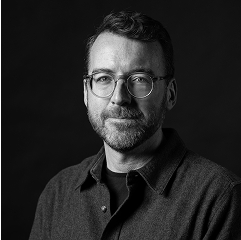
In this episode:
Nick Terzulli is Vice President of Research and Development at Fellow, the San Francisco coffee equipment company whose products can be found everywhere from Target shelves to your favorite third-wave coffee shop. Before Fellow, Nick worked on military robotics and designed medical devices at Stryker and Dextera, before spending several years scrubbing toilets at a coffee shop for $10 an hour just to learn how to make coffee using the best equipment available.
The central problem Terzulli came to Fellow to solve has constrained home espresso since the beginning: 120V household power limits thermal and pressure stability in ways that commercial machines, running on much higher amperage, simply don't face. The best home machines either take 40 minutes to heat up or sacrifice performance to achieve fast heat-up times. Terzulli's answer, which became Fellow’s Espresso Series One, uses three separate heating elements staged in sequence to achieve commercial-level stability with a two-minute heat-up time, a novel approach he holds the sole utility patent on.
The conversation covers how that architecture came together, what it takes to design for both the beginner and the specialist, how Fellow uses firmware and over-the-air updates to build community around its machines, and why designing coffee burrs from scratch was, in his view, the hardest technical challenge of his career.
Links from the discussion:
Fellow: https://www.fellow.com
Espresso Series One: https://fellowproducts.com/products/espresso-series-1
Ode Brew Grinder: https://fellowproducts.com/products/ode-brew-grinder-gen-2
Fellow Drops (coffee subscription): https://fellowproducts.com/pages/fellow-drops
Aiden Precision Coffee Maker: https://fellowproducts.com/products/aiden-precision-coffee-maker
What Roasting Does to a Coffee Bean, Seen From the Inside: https://www.lumafield.com/first-article/posts/the-industrial-ct-guide-to-coffee-roast-levels
Coffee Scan of the Month: https://www.lumafield.com/scan-of-the-month/coffee
Transcript:
Welcome to Go/No-Go. I'm Jon Bruner. This is a podcast about product development, design, manufacturing, engineering, and the calls that can make or break great products. Today we're talking about coffee equipment — an area where we've seen a lot of democratization. It's now possible to create a better cup of coffee at home than you'd get in even a high-end coffee shop, with a product you buy off the shelf at Target. We're going to talk with our guest today about how those products came to be. Go/No-Go is brought to you by Lumafield, whose manufacturing intelligence platform uses X-rays and artificial intelligence to give engineers complete confidence in the products that they're shipping. Our guest today is Nick Terzulli, Vice President of Research and Development at Fellow. Nick, it's great to have you on.
It's a pleasure to be here. I'm genuinely excited to do this with you guys.
We're big fans of your products here at Lumafield. We have your classic pour-over kettle in our office kitchen and I think it's the single most-used piece of coffee-making equipment we have. We have a lot, so that says a lot.
That's amazing. I joined the company after Jake and team put out the kettle, but I'm really happy I get to carry the torch with all the future products we're putting out.
You have a really interesting background — you've been a medical device designer, and before that you worked on military robots. What did you see as an engineer in the world of coffee that drew you to it?
I think the thing that drew me personally was an opportunity to learn, mainly because I got super deep into the specialty coffee rabbit hole. If you don't know about specialty coffee, it's more akin to the wine industry than what people think of as coffee. There's a lot of sensory and a lot of nuance, and I really wanted to understand why all these crazy flavors I was tasting existed and what was behind them. I just saw this black hole of education.
How do you create a mass market product in that context?
It's really wild because my personal goal is to make something that pleases everyone from the beginner all the way to the expert. I've been an engineer for over 20 years and deep in the specialty game for more than a decade. The thing I really try to do is sneak all of the really incredible features and functions into products that maybe the beginner doesn't need to know about, but the pro will appreciate and respect.
Fellow is really unusual in that you have products on the shelves at Target, but you're also the subject of fascination and admiration by people on the coffee forums who are a very exacting group.
Yes, and they can be very, very demanding. I think we do our best to give the people who shop at Target a pro-level product at not quite a pro-level price. That's one of the things that drew me to Fellow to begin with — they were doing things far ahead of everybody else, and not just kettles. When they put out the Ode flat burr grinder, it was around $300 for a 64-millimeter flat burr grinder. I know I'm getting a little nerdy here, but when they put it out, that had never been done before. Fellow has been a real steward of specialty coffee in the home, and that's what drew me to them.
Let's talk about your recent products. You've just shipped something, and you were telling me a moment ago that this has been a gorgeous weekend in San Francisco but you spent it inside helping your customers with their new products. What is it?
We recently launched Espresso Series One. It's the thing I'm probably most proud of in my entire career. I was able to work with an amazing group of engineers and an amazing team at Fellow to invent a brand new way to make espresso. We started selling it about a year ago on pre-order, and this past week we shipped thousands to customers' homes.
Congratulations. That's the moment every product creator wants — to see it in your customer's hands.
Exactly. It's the thing outside of my family that brings me the most joy in my entire life.
What has surprised you about your customers' first experiences with it?
I think the pros are blown away by what it can do for the money. On the beginner end, I've gotten great feedback like, oh, I didn't realize it could be this easy to make this style of drink at home. There's always going to be people who need a little guidance — espresso can be very complicated, you have to explain grinder type, grind size, how water flows, what pressure is, the basics of that. But for the money, it's an absolute rocket ship without being intimidating to someone who just wants to start.
How do you approach that balance? The coffee forums are full of people buying $12,000 commercial machines, getting their houses rewired for 220V, plumbing them in, rebuilding everything — and they're still dissatisfied.
Exactly. I think what Fellow works really, really hard to do is balance the feature set with the price. As VP of R&D, my job is to generate most of the next-generation technology the company can use in future products. I will never push for a feature that doesn't have a direct impact on the customer experience. I've met and worked with engineers who are super brilliant but maybe the thing is too complex, or it doesn't truly add value. For Espresso Series One, the thing I was really trying to solve was pressure stability and thermal stability — two problems that have plagued home espresso on 120V since its inception.
What has made it so difficult to nail that in home machines? Commercial machines seem to have figured it out. What's the difficulty at home?
The biggest barrier is just power out of the wall. In the United States you have 120V and about 15 amps, and that's really all you have. The best home machines on 120V are these really big dual boilers. Even the good ones can take 15, 20, 30, potentially 40 minutes to heat up and become thermally stable. Companies have tried to get around this with three-second heat-up times, but you lose a lot of functionality. When Jake and team came to me and said, hey Nick, we want to make an espresso machine, I said, I've studied espresso machines for the past ten years — how can I take a step back, understand every single architecture that exists, start from a blank piece of paper, and come up with something from scratch based on engineering first principles rather than just iterating on a predicate device?
What did you come up with? What were the first things you got rid of, and the first things you introduced?
I literally got rid of everything. The company said, Nick, you can only spend this much money. I designed three espresso machines — this much money, this performance; this much money, this performance; but for this much money, I think I can deliver a rocket ship. They said, if you really think you can deliver a rocket ship, go build a prototype, prove out the physics, and we'll talk. What I came up with is a way to get legitimately commercial-level thermal stability and pressure stability on 120V with a heat-up time of about two minutes.
No kidding.
This has legitimately never been done before. I'm lucky enough to be the sole inventor on the utility patent. It's probably the thing I'm most proud of in my career.
Most high-end machines have two boilers heating up water, usually also heating up a block of brass in the group head. And really cheap machines have a resistive plate that water passes over at the last minute. What does yours do?
Ours uses three separate heating elements. We have a low thermal mass heater that feeds into a mini boiler that basically acts as a capacitor, and that feeds into an independently heated group head. So you can control temperatures at three different places to get incredible thermal stability at the puck. Instead of having huge boilers that take a long time to heat up, you have three really tiny things that heat up quickly. You can feed hot water into the boiler and the boiler acts as a capacitor, so you can have really high flow and you're not dumping cold water onto your puck. You can truly get a commercial experience with a two-minute heat-up time.
The physics of heating up water are such a classic set of physical constraints. You'd think there's no way around this — it takes a certain amount of energy from the wall to heat up a certain volume of water. But this is splitting the heating process into several different steps.
Exactly. People have been locked into thinking: low thermal mass heater, thermal coil, thermal block, or boiler. If you start from scratch and ask what it means, you open up possibilities. Developing this architecture pushed me and the team really hard to solve additional problems that come with inventing something new — how do we design our solenoid array, how do we design the pressure vessel, how do we actually get the system to do everything we claim and be cost-effective at scale?
What does the supply chain for a machine like that look like?
It's pretty wild. This is definitely the most complex product Fellow has ever tackled. We had to qualify components — all the standard stuff that happens when you build a new product. We vet every single part. We do RHEL for every single part, for every full machine. It's really challenging to have a product like this come together at this price.
You're going into the larger consumer electronics supply chain rather than the traditional coffee machine supply chain — not just the little houses in Italy that make tubing and pumps for coffee machines.
That's part of the challenge, and it's also partly why things have remained the same in home espresso for such a long time. The safe choice is the stainless steel box running a heat exchanger or whatever. For us to take a leap into something that's never been done before — number one, it takes a lot of trust. Number two, it takes a lot of freedom. There are other companies where if I came to them with this crazy idea they'd say, yeah cool, make the same one in a new color, we got revenue to hit. Fellow is a company that allows its engineers to take really big swings, and I'm so grateful for it.
Do you work across all of Fellow's products?
Kind of, as Fellow has grown. I've been at Fellow for about five and a half years, and the company is about 12 years old. When I joined, the company was about 20 people. Now we're over 120, and we're doing over nine figures in revenue. When I came in I was the problem solver. There were six engineers, and every one was a project engineer, not a specialist. My job was to go solve all the craziest problems for all these people. Eventually that changed into me running the whole engineering team across mechanical, electrical, and firmware. Then it came to a point where they said, Nick, you're really good at coming up with new crazy stuff — can you just do that for us? And I said sure. That's how my role has grown and evolved.
Firmware in a coffee machine is the kind of thing that might have surprised someone 15 years ago. What has the development of software and embedded computers meant in the world of coffee?
I think it's the growing edge in the industry. One of the things we're trying to do is put firmware and software in the machines to make them smarter over time. We routinely push over-the-air firmware updates, and we have a full app where you can share profiles and build on the ecosystem of what the machine can do. We also have a program called Fellow Drops where we sell coffee to customers — every week you can get your Fellow Drop, get your recipe, and share your tweaks with friends via the app. It's no longer just a machine on your countertop. It tries to build into the community aspect of helping people make better coffee at home and helping people share coffee with others.
Explain profiling for listeners who aren't familiar with artisanal espresso.
Most espresso machines you buy work like this: you turn on a switch, the pump goes to some fixed value, a mechanical valve releases pressure, water hits the puck, coffee comes out. What our machine does is let you very granularly control temperature and pressure. When you tweak these elements you can make your coffee taste drastically different. You can make one espresso taste very bright with higher acidity, or another with higher body and texture. These are things you're locked out of with traditional machines. With our machine you could take the same coffee and make it taste nine different ways if you want that playful aspect to your daily ritual.
It reminds me a little of how audiophiles approach their setups. Machines like yours can even imitate classic espresso machines, right?
Exactly. And I do find a parallel between home coffee enthusiasts and audiophiles — people who get into hobbies where maybe the actual sensory experience is not the end goal. Maybe the end goal is I love this gear and I love to tinker. There are certain audiophiles who just want the best of the best, and maybe it's not really about the end thing — it's about the journey.
It's the pursuit. I went on the audiophile forums once and started thinking about buying nice equipment. Then I noticed that most of the people on those forums seem unhappy. They're never able to achieve what they set out to achieve.
You're chasing this end goal. Honestly, I can think of times I've had what's called a god shot in espresso — every single variable lines up perfectly, and it's an experience you remember for a really long time. Those experiences of flavor are what keep me going and what helps me work so hard to try to help other customers have that same experience. It's just coffee to a lot of people, but to people who've been in the game for a long time, they appreciate how beautiful coffee can be.
You've been a working barista yourself, right?
Kind of a funny story. Being a mechanical engineer who fell in love with coffee, I was like, I really want to learn about this industry, because I've got to figure out if there's a way I can contribute. I'm about to be 45, so when I was 33 or 34, I started looking for a job as a barista, and I basically got laughed out of every single shop I walked into.
You were a mechanical engineer at Stryker at the time?
I think I had just left Stryker and gone to Cardica — they later changed their name to Dextera. Somewhere between Stryker and Cardica, but big medical device companies — I was making a good salary in Silicon Valley helping design medical devices. I'd walk into a shop and say, hey, can I work for you nights and weekends? And they'd be like, can you get out of here? This is not a game. Why do you want to clean toilets for $10 an hour? I said, because I want to learn. I had to be extremely persistent, make connections, and show people I was dedicated. Eventually one shop gave me the opportunity, and I scrubbed toilets for $10 an hour because I wanted to learn on commercial machines. I knew I could not armchair quarterback this industry without actually working in it. I'm deeply grateful for that opportunity.
Where do you think home coffee stands relative to barista-made coffee now? Fifteen years ago no one would have thought they were making third-wave coffee shop-level coffee at home.
This might be a bit of a hot take, but I truly believe there are home baristas making better coffee than most shops. There has been this really passionate group of people who get so deep into everything — machines, burrs, recipes, water chemistry. I make my own water at home, which seems wild to a lot of people. We're dialing in every single variable, where if you're in a coffee shop with a 20 or 30 person rush you're just slinging drinks and doing the best you can. Someone at home might take 15 minutes to dial in this coffee exactly the way they want it, savor it, and enjoy it. No disrespect to shops at all, but I think home baristas are doing incredible work right now.
Is there a secret code word you use when ordering at a coffee shop to signal to the barista that you'll appreciate their care?
Sometimes I get recognized because Fellow is fairly well known in the industry and they'll just say, Nick, we got you. At other shops I think it's from my order. If you ask something about the coffee, people are either going to think, oh, this guy's a nerd, or — this guy knows what he's talking about and I want to put that extra 10% care in. What I usually do is order an espresso for here and a filter coffee to go, because I like to try what they're doing. When I was a barista, if someone ordered like that, I'd think, okay, you're probably evaluating me on these two things — I should do something good here.
Do you have to build up a caffeine tolerance to do this kind of work?
A lot of people think I drink extreme amounts of coffee. I'll have one very large cup in the morning and then nothing for the rest of the day. If I'm doing sensory analysis and cupping and evaluation for work, I'll have one very small coffee in the morning and go through that process. I'm definitely not the type who drinks coffee all throughout the day. I had a professor in grad school who would drink 10 or 12 cups a day — it'd be 6pm, I'd be in his class, he'd be sipping coffee. That's definitely not me.
Speaking of grinders — this is another area where the industry has really evolved. I grew up with the classic spinning blade grinder. Now this is something people pay a lot of attention to.
People may not realize that the grinder you use can have a substantial impact on coffee flavor. And in terms of burr design — I've been an engineer for over 20 years — designing burrs from scratch has been without a doubt the hardest thing I've ever done in my entire career. Forget medical devices. Forget designing an espresso machine from scratch. Forget military robots. Legitimately the hardest thing I've ever done.
Why?
Because it's a black box. If you take an existing burr design and use it as a reference, I can tell you that if you change these things, you'll change the flavor profile. But if you start from a blank disc or a blank cone, there are very few correlations you can make to predict what it's going to taste like. The best burr designers in the world go through tens or hundreds of sets before they have something they want to release. When I started counting on my first burr set, I got to 23.
Wow.
And they told me to stop. I could have kept going.
Can you model it? Is there an Ansys plugin that predicts burr performance, or is it strictly intuition?
At the time I did it, it was strictly intuition. But the thing I'm really excited about — I know people are talking about AI a lot right now — I hope we get to a day where we can use generative modeling to create a database of burr geometries and particle distributions, so you can say, I want my coffee to taste like this, I want this particle distribution, and the generative model helps you get there. I recently bumped into someone who has actually started working on that. He owns an AI company and I wanted to meet him so badly — he could solve so many problems in this industry.
Closed-loop design. I think it's coming.
I'm excited because I hope to keep working for another 20 or 30 years, and I've got to get with the times.
Are you using AI in a significant way right now?
We definitely use it to solve problems quickly, especially in material science. If I'm looking for a material that can do a certain thing with certain properties, I'll ask ChatGPT and it'll give me materials we've actually used in Fellow products. I'm super grateful for that. We're also using AI for profile generation for certain coffees. With our Aiden coffee brewer, you can scan a bag and it'll say, this region, this altitude, this roast level, here's a profile that will work on your coffee maker. We're trying to remove the barriers to dialing in for customers who don't want to nerd out — they just want to press a button and make great coffee.
Starting from a clean sheet gave you more freedom with materials too.
Yeah. If there's an area where we want to push boundaries a little, we'll explore a material with a higher glass transition temperature or whatever the requirement is. We want to make sure in terms of reliability we always clear a certain bar. Sometimes we start with a material that can't quite hack it. In the case of Series One, we had to change our solenoid material to make sure it wouldn't degrade after five years. We try to push the bounds of materials — some of what we've asked suppliers for, no other espresso machine has ever needed. We'll say, no other espresso machine has ever needed to do this thing, but we really want to make it better for the customer. Can you make us a custom run of this material?
What's the most exotic material in Espresso Series One?
Probably PPS. We use PPS — polyphenylene sulfide — for our dispersion block, and also for some of our solenoids and connectors. It's been coming around in the industry and a couple other espresso machine manufacturers are using it too. If I'm wrong on the chemistry, please don't come for me in the comments.
Send us an email at gng@lumafield.com.
And in terms of heat-up time — I can't go beyond a certain thermal mass because that adds seconds to the heat-up. Marketing wants three seconds. If I come to them and say three minutes, they'll balk. If I say 90 seconds to two minutes, maybe they'll let it slide.
Two minutes is phone-scrolling time. That's not going-off-to-do-something-else time.
Exactly. And I came to the marketing team with actual data. I said, if you want three-second heat-up, you're going to need to pull three or four shots before you get to where you want to be thermally. They said, I understand from a coffee perspective that what you're trying to do will give the customer a better experience — we can live with a two-minute heat-up time.
That's exactly the kind of thing people talk about in reviews of heat exchanger machines — this confusing sequence where you have to bleed it and wait for it to come back up to temperature. If you're making a mass-market machine, you're responsible for that balance.
Exactly. And I was an espresso machine technician for a long time — I repaired machines, worked with customers. I was installing custom thermometers on E61 group heads and explaining what a cooling flush is. It is an art and a science, and we're trying to distill all of that wildness so a customer doesn't have to worry about any of it. They push a button and get the same quality of coffee they'd get in their café at a reasonable price.
Are there other product creators or companies you look to for inspiration?
I'll be honest — there's a company that put out an espresso machine about ten years ago that I was a massive fan of, that I owned. I met with the CEO and said, this looks incredible, I want to help you manufacture it, I want to help you design it. I didn't have the experience at the time. But I learned a lot from being in the industry, and now ten years later I get to design and invent something new. There are a couple of smaller companies in the espresso space that are truly innovating. One particular architecture I know uses two vibration pumps and a water mixing manifold. The question is how do you distill that end result into an architecture that's less complex and costs one third as much? That's where the beauty and the magic is — designing incredible things in the simplest way possible so a customer can get it into their hands at a price that isn't extravagant.
Does your medical device background feed back into your coffee work?
Definitely. I've been able to solve problems in coffee from things I learned in medical device, and vice versa. I used to own a consulting business and one client said, hey Nick, we're developing a wearable medical device and we're testing it in our company shower, and we're wasting a lot of water — we want you to design a recirculating shower test fixture. I knew that line pressure from an espresso machine is about 45 PSI, and that's the same pressure that comes out of a shower head. I needed a pump with a specific duty cycle that could output that pressure for a certain amount of time. If I hadn't worked on espresso machines and understood pre-infusion line pressure, I wouldn't have been able to go to the hardware store and build that fixture in 48 hours. And from the other direction — I've made things in my career where a deep understanding of heat treatment and material science helped me see that a product was getting damaged because it was a really soft stainless steel. Why doesn't anyone make it out of 440C and heat treat it? You get a much higher durability. When you've had as varied a career as I have, working in all these different fields, you retain knowledge from each one and you can cross all of those learnings to solve problems in ways that maybe people haven't thought of before.
I met the founder of Synesso, which makes commercial espresso machines. His background was actually in designing fish processing equipment for factories — a lot of stainless steel sheet metal forming and things that have to be hosed down. That was his starting point.
We're fans of Synesso. I've had fun with Synesso machines in my past, and we're really trying to bring those crazy commercial features and functions into what we do at a very different part of the market.
Let's talk about what it takes to go from prototype to production. Espresso Series One has a patented three-stage heating system with a lot of original research behind it. At some point you have to send it into production and get it onto store shelves. What does that process look like?
Fellow follows a pretty traditional NPI process — MVP, EVT, DVT, PVT, mass production. In terms of getting from idea in my head to first prototype, that's the fun part, the easy part, the most joyous part. For Espresso Series One, first idea to first prototype where I was drinking coffee off of it was less than 90 days.
What did the prototype look like? An 80/20 enclosure?
No — we pulled the guts out of another espresso machine, used a display from another espresso machine, hacked up parts from other machines with our custom boiler, and wrote custom firmware on another board to really hack things up. I have pictures of it from my first visit to the factory when I started testing it. The joy I got from seeing this totally hacked-up machine be able to do the physics I believed was possible was just incredible. Then I flew home, went back to the executive team, and said, this thing is amazing. The physics are proved. Now it's just execution. And everyone laughs — just execution? Yeah, I'm on cloud nine. But now you've got to turn this one prototype into a reliable product for tens of thousands of people. That's when the hard work begins. You have to get the entire company behind the idea and say, now we need to turn this into a manufacturable, scalable, reliable product. We bang through the NPI process, learn as we go, fix bugs as they pop up. Manufacturing and scaling is the hard part.
And you don't want to deliver a Juicero — something overbuilt and too expensive to make.
Exactly. The numbers have to be there, the quality has to be there, and the team has to be there to make sure you're doing everything you need to do to make the customer happy. That goes to after-sales as well. Helping customers on the internet — oh, you're having trouble dialing in, your espresso tastes a certain way, let me help you figure that out and have a good experience.
What's new about Series One that caused people to reach out to you as you're shipping?
We designed the machine to accommodate many styles of coffee, and the way it can pressure profile means the puck can swell, so you need a certain amount of head space in the puck. People were like, oh, my puck is damp. I never thought I'd have people tell me they were concerned about what happens when they knock the portafilter into the knock box. We can make your puck drier if you updose and finish at a high pressure. If you low dose and finish at a low pressure, there's less vacuum from the three-way solenoid flipping at the end of the shot. The name of the game is the machine can do whatever you ask of it, but since it's a new type of espresso machine, we have to teach customers about all this stuff. Whereas someone who just had a machine where you press a button and it's nine bar bang, it's going to be a little different.
You've exposed a lot of new parameters to the public.
Exactly. For better or worse, I hope people enjoy it. As we grow the community of people sharing profiles, I think it'll become more of a household thing. But this is one of those things where it is a truly big swing.
Well, in conclusion, I'd love to ask you the question we ask all of our guests. Can you tell us about a time you faced a go/no-go moment and what you did?
I tend to work extremely hard, and I tend to sometimes overwork myself. There was a period of time where I was designing medical devices, working in coffee, and running a technician business, and I worked for over a year without taking a single day off. I got to a point where I said, I think I've learned enough to, number one, take a break. And I think I've learned enough to make a meaningful contribution to this industry. The no-go is: you have to take care of yourself, take care of your mind, take care of your body — you'll show up better for your partner and your co-workers. And the go is: now I've got enough knowledge, I'm going to go out there and do what I can, even if I fail 100 times, to make a meaningful contribution to this industry.
It seems like you have the backing of a great employer too, one that's willing to underwrite big bets.
I genuinely have to say thank you to the entire Fellow team, especially Jake — he's the CEO. He pushes me really hard to do really wild things, and with Series One he believed in it enough to let the company build it. I know I get to come on podcasts like this sometimes and I'm so grateful for it, but I just want to say thank you to the whole Fellow team. This does not happen without every single engineer, every single person in operations and logistics. I'm so deeply grateful to the whole team for pulling this off with me, because I think we made something incredible.
Well, Nick Terzulli, it's been a pleasure speaking with you today. Thanks so much for joining us.
Thank you so much for having me.
Go/No-Go is brought to you by Lumafield, which was founded to upgrade manufacturing. You can learn more at lumafield.com. Go/No-Go is produced by Austin Carder and edited by Brian Tran, with additional assistance from Eric Petralia.


Articles Featured in the Episode